

The “IEEE 693-2018 Recommended practice for seismic design of transformer substations” standard, developed by the Institute of Electrical and Electronics Engineers (IEEE), contains recommendations for the seismic design of transformer substation buildings and structures and the seismic design and qualification of transformer substation equipment.
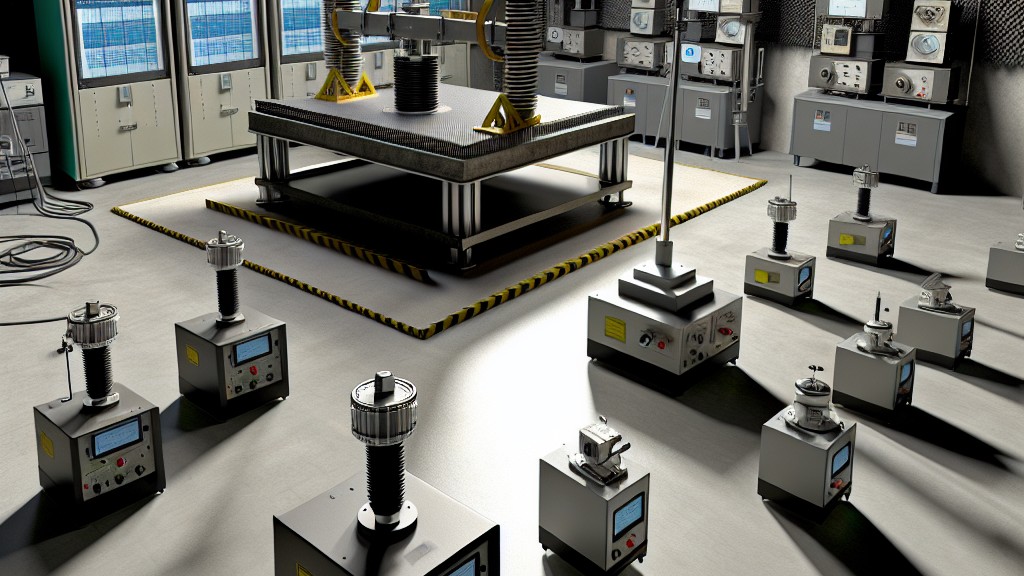
This recommended practice is for new substations and planned additions or improvements to existing substations. Existing substations are not intended to be retrofitted to these recommended practices. Instructions are provided on how to incorporate this recommended practice into the specification. The IEEE 693 standard is designed as an integrated set of requirements for seismic qualification of electric power equipment. Users should use this standard without modification or removal of any requirements other than those permitted herein.
This revised standard discusses seismic design recommendations for transformer substations, including qualification of different types of equipment. The design recommendations consist of seismic criteria, qualification methods and levels, structural capacities, performance requirements for equipment operation, installation methods and documentation.
The IEEE 693 standard is a standard of the Institute of Electrical and Electronics Engineers, also recognized by the American National Standards Institute. The purpose of this standard is to provide a single set of rules and regulations covering the seismic design of both new and existing electrical substations, thereby leading to standardization. This standard provides the minimum requirements to which the design of an electrical substation, excluding nuclear power plants, must conform. This standard includes the design of circuit breakers, transformers, isolating and grounding switches, instrument transformers, circuit switches, surge protectors, and other equipment.
Installation issues are covered in this standard under the following headings:
Qualification methods are discussed under the following headings:
In this standard, three seismic qualification levels are specified: high, medium, and low. For high and medium qualification levels, the zero period acceleration (aka peak ground acceleration) is set to 0,5 g and 0,25 g, respectively (no calculation is required for low qualification equipment). Here, it refers to the acceleration due to gravity. The peak acceleration (i.e., the top of the response spectrum) at 2 percent damping is less than 1,65 g and 0,85 g for high and medium qualification, respectively, and the cut-off frequency is defined as 33 Hz.
Qualification is achieved by one of the following: shake table testing, calculations and experience. This standard recommends that most equipment in the same field be given the same level of qualification (for interchangeability and redundancy).
Today, there is a need and demand for structures that can withstand the great forces that seismic activity can create: both for the integrity of these buildings and for the safety of people. For electrical substations, which act as part of an electricity generation, transmission and distribution system, the sudden release of energy resulting from the rupture of geological faults in the earth's crust must be addressed with unique seismic assessments.
Transformer substations are unique in that they maintain functionality, are composed of unique materials such as porcelain and composites, have relatively low damping and high frequency dynamic properties, and allow equipment to be interconnected via electrical conductors.
The IEEE 693-2018 standard addresses these concerns and numerous associated factors for substations. The recommended practice addresses buildings, foundations, station service, and telecommunications equipment, in addition to various topics in its appendices, such as circuit breakers, transformers, disconnect switches, and capacitors.
In the latest update of this standard, the shaking table test requirements for the qualification of bushings have been changed. Conductive seismic loading effects are now explicitly included as part of the qualification of certain equipment.
Our organization has a strong staff that closely follows the developments in the world in the field of science and technology and constantly improves itself. Among the numerous test, measurement, analysis and evaluation studies provided for businesses in various sectors, there are also test services in accordance with the "IEEE 693-2018 Recommended practice for seismic design of transformer centers" standard.
To get an appointment, to get more detailed information or to request an evaluation, you can ask us to fill in our form and reach you.

