

The European standard "EN 13602 Copper and copper alloys - Drawn round copper wire for the manufacture of electrical conductors" describes the composition, property requirements, including electrical properties, and dimensional tolerances for drawn round copper wire from 0,04 mm to 5,0 mm in the manufacture of electrical conductors intended for the production of bare and insulated cables and flexible cords.
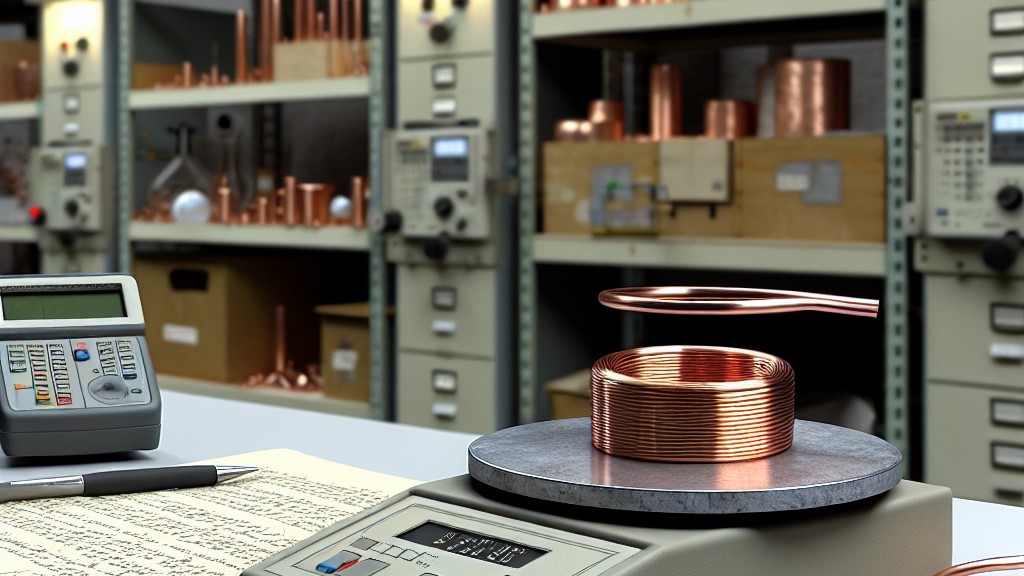
This standard covers plain or tinned, single or stranded, annealed or hard drawn wires. Wires for enamel coating (winding wire, magnet wire), electronic application and contact wire for electric traction are outside the scope of this standard. This standard also includes sampling procedures, test methods for verifying conformity to the requirements of this standard and delivery conditions.
Due to the thermal or mechanical treatment involved in the cable making processes, the properties of the conductors in the final cable or cord differ from the properties of the original wire supplied. Requirements for the conductors removed from the cable or cord are given in the appropriate cable standards.
For the purposes of this standard, the following terms and definitions apply:
A complete conversion between the material conditions designated as R... and A... is not possible. The material condition is specified with only one of the above designations.
This standard on drawn round copper wire for the production of electrical conductors is relevant for the following enterprises:
Copper wire is used by these companies in power generation, power transmission, power distribution, telecommunications, electronic circuits and countless electrical equipment. Copper and its alloys are also used to make electrical contacts. This standard provides guidance to companies on definitions, materials, composition, mechanical properties, electrical properties, dimensions, test methods, declaration of conformity and inspection documents.
The EN 13602 standard specifies the tests to be performed for the inspection steel that helps to maintain the quality of the copper wire. These tests sample the necessary mechanical properties, electrical properties and chemical composition that help to achieve precision in terms of product functionality. In this way, it is possible to be sure of all the properties of a drawn round copper wire. By complying with this standard, high quality drawn round copper wires for the production of electrical conductors are efficiently produced. As a result, it is ensured that the composition complies with the requirements for the material in accordance with the tables given in the standard.
Our organization, which has been trying to support businesses from every sector with its testing, measurement, analysis and evaluation studies carried out in a wide range for years, has a strong staff that closely follows the developments in the world in the field of science and technology and constantly improves itself. In this context, testing services in accordance with the "EN 13602 Copper and copper alloys - Drawn round copper wire for the manufacture of electrical conductors" standard are also provided to businesses.
To get an appointment, to get more detailed information or to request an evaluation, you can ask us to fill in our form and reach you.

