ISO 14644 Cleanrooms and Associated Controlled Environments
The "ISO 14644-1 Clean rooms and associated controlled environments" standard published by the International Standards Organization (ISO) consists of sub-standards published under the same title.
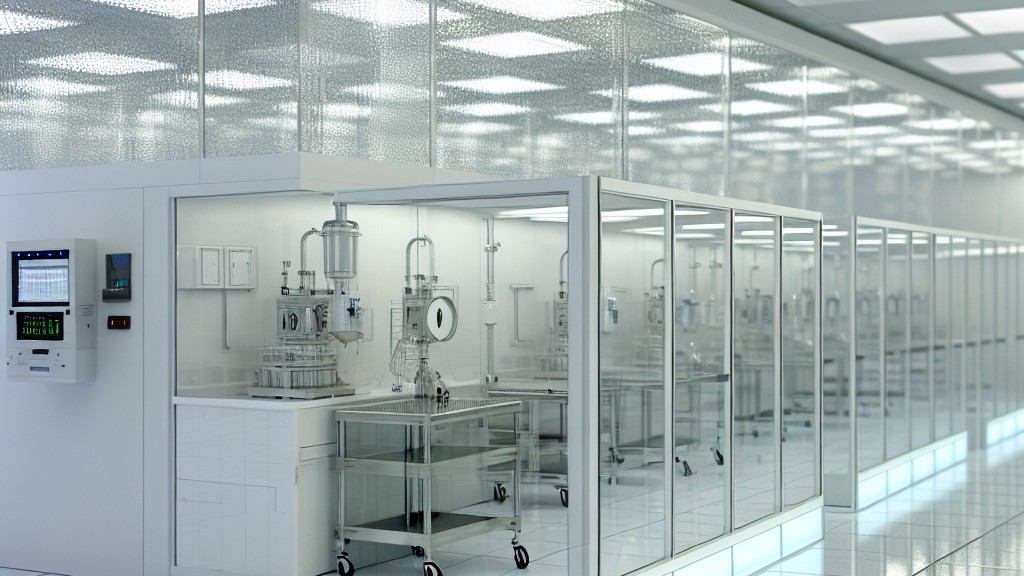
- The standard “ISO 14644-1 Part 1: Classification of air cleanliness by particulate concentration” describes the classification of air cleanliness in terms of the concentration of particles in the air in clean rooms and clean zones and the separator devices as defined in the ISO 14644-7 standard.
This standard only considers for classification purposes particle populations having cumulative distributions based on threshold (lower limit) particle sizes ranging from 0,1 µm to 5 µm. It is also based on the use of a light scattering (discrete) airborne particle counter to determine the concentration of airborne particles equal to or larger than the specified sizes at designated sampling locations.
This standard does not provide classification of particle populations outside the specified lower threshold particle size range of 0,1 µm to 5 µm. Ultrafine particle concentrations (particles smaller than 0,1 µm) are addressed in a separate standard to indicate air cleanliness by nanoscale particles. An M descriptor may be used to quantify populations of macroparticles (particles larger than 5 µm). This standard cannot be used to characterize the physical, chemical, radiological, biotic or other nature of airborne particles.
- The standard “ISO 14644-2 Part 2: Monitoring to provide evidence of cleanroom performance with respect to air cleanliness with respect to particle concentration” describes the minimum requirements for a monitoring plan for cleanroom or clean zone performance with respect to air cleanliness with respect to particle concentration based on parameters that measure or affect the particle concentration in the air.
This standard does not address condition monitoring of aspects such as vibration or general maintenance of engineering systems. It does not provide for monitoring of particle populations outside the specified lower threshold particle size range of 0,1 µm to 5 µm. Ultrafine particle concentrations (particles smaller than 0,1 µm) are addressed in a separate standard.
- The standard “ISO 14644-3 Part 3: Test methods” describes test methods to support the operation of clean rooms and clean zones to meet air cleanliness classification, other cleanliness attributes and associated controlled conditions.
Performance tests are specified for two types of cleanrooms and clean zones: those with unidirectional airflow and those with non-unidirectional airflow. Cleanrooms are based on three possible occupancy states: constructed, standby, and operational.
This standard contains test methods, recommended test apparatus, and test procedures to determine performance parameters. In cases where the test method is affected by the type of cleanroom or clean zone, alternative procedures are recommended.
For some tests, several different methods and apparatus are recommended to meet different end-use considerations. Alternative methods not included in this standard may be used by agreement between the customer and supplier. Alternative methods do not necessarily provide equivalent measurements.
This standard does not apply to the measurement of products or processes in clean rooms, clean zones or separating devices.
- The standard “ISO 14644-4 Part 4: Design, construction and start-up” describes the cleanroom construction process from requirements to design, construction and start-up. This standard is applicable to new, refurbished and modified cleanroom installations. It does not prescribe specific technological or contractual means to achieve these requirements. It is intended for use by users, specifiers, designers, purchasers, suppliers, constructors and performance verifiers of cleanroom installations.
The primary cleanliness consideration is airborne particulate concentration. Requirements that consider key performance parameters are provided, as are detailed checklists for design, construction and start-up. Energy management design approaches are specified to support an energy efficient cleanroom design. Construction guidance is provided, including start-up and verification requirements. A key element of this standard is consideration of aspects, including maintenance, that will help to ensure the continued satisfactory operation of the cleanroom throughout its life cycle.
- The standard “ISO 14644-5 Part 5: Operations” describes the essential requirements for cleanroom operations. This standard is intended for those who plan to use and operate a cleanroom. Safety aspects that do not have a direct impact on contamination control are not addressed in this standard and national and local safety regulations must be followed. This standard addresses all classes of cleanrooms used to manufacture all types of products. Therefore, its scope of application is broad and does not address specific requirements for individual industries. Methods and programs for routine monitoring in cleanrooms are not covered in detail in this standard, but ISO 14644-2 and ISO 14644-3 standards apply for monitoring particles and ISO 14698-1 and ISO 14698-2 for monitoring microorganisms.
- A glossary of terms and definitions related to cleanrooms and associated controlled environments has been created in the standard “ISO 14644-6 Part 6: Vocabulary”. This standard is a summary of the terms and definitions given in other parts of the standard ISO 14644.
- The standard “ISO 14644-7 Part 7: Separating devices (clean air hoods, glove boxes, isolators and mini-environments)” describes the minimum requirements for the design, construction, installation, testing and approval of separating devices, where they differ from the clean rooms described in ISO 14644-4 and 14644-5. The application of this standard takes into account the following limitations:
- User requirements are as agreed upon by the customer and supplier.
- Application specific requirements are not addressed.
- The specific processes to be involved in the installation of the separator device are not specified.
- Fire, safety and other regulatory issues are not specifically addressed; national and local regulations apply where appropriate.
This standard does not apply to full suits.
- The standard “ISO 14644-8 Part 8: Assessment of air cleanliness by chemical concentration (ACC)” describes typical assessment processes for determining rating levels of air chemical cleanliness (ACC) in cleanrooms and associated controlled environments, in terms of airborne concentrations of specific chemical substances (individual, group or category), and provides a protocol for their determination, including test methods, analysis and time-weighted factors. This standard currently only addresses air chemical contaminant concentrations between 100 g/m3 and 10−12 g/m3 under cleanroom operating conditions.
This standard is not suitable for application in industries, processes or productions where the presence of chemical substances in the air is not considered to be a risk to the product or process. It is not the purpose of this standard to define the nature of airborne chemical pollutants. This standard does not give a classification of surface chemical pollution.
- The standard “ISO 14644-9 Part 9: Evaluation of surface cleanliness with respect to particle concentration” describes a procedure for evaluating particle cleanliness levels on solid surfaces in cleanrooms and related controlled environment applications. Recommendations on test and measurement methods and information on surface properties are included in the annexes of the standard (Annex A to Annex D).
This standard applies to all solid surfaces in cleanrooms and related controlled environments, such as walls, ceilings, floors, work environments, tools, equipment and products. The procedure for assessing surface cleanliness based on particle concentration is limited to particles between 0,05 µm and 500 µm.
The following topics are not covered in this standard:
- Requirements regarding cleanliness and suitability of surfaces for specific operations
- Procedures for cleaning surfaces
- Material properties
- References to interactive bonding forces or production processes, often time and process dependent
- Selection and use of statistical methods for evaluation and testing
- Other properties of particles such as electrostatic charge, ionic charges and microbiological status
The standard “ISO 14644-10 Part 10: Evaluation of surface cleanliness with respect to chemical contamination” describes appropriate test processes for determining the cleanliness of surfaces in cleanrooms for the presence of chemical compounds or elements (including molecules, ions, atoms and particles). This standard applies to all solid surfaces in cleanrooms and associated controlled environments, such as walls, ceilings, floors, work surfaces, tools, equipment and appliances.For the purposes of this standard, only the chemical properties of a particle are considered. The physical properties of the particle are not considered and this document does not cover the interaction between the contamination and the surface.
This standard does not include the process of fouling formation or time-dependent effects (e.g. deposition, sedimentation, ageing) or process-related activities such as transportation and handling. It also does not include guidance on statistical quality control techniques to ensure compliance.
- The standard “ISO 14644-12 Part 12: Specification for monitoring air cleanliness by nanoscale particle concentration” describes a procedure for monitoring air cleanliness by particles in terms of the concentration of nanoscale particles in air. For monitoring purposes, only particle populations with a size limit of 0,1 microns (100 nm) or less (nanoscale) are considered. The monitoring given in this standard is primarily for use in operational situations.
For the purposes of this standard, reference is made to nanoscale particles. This means all nano-objects having one (nanosheet), two (nanofiber) or three (nanoparticle) dimensions at the nanoscale. Consequently, the characteristics for monitoring air cleanliness with respect to nanoscale particle concentration in the operating condition of the cleanroom also take into account process characteristics such as the equipment used, personnel behavior, etc.
- The standard “ISO 14644-13 Part 13: Cleaning of surfaces to achieve defined levels of cleanliness in terms of particulate and chemical classifications” describes guidelines for a specified degree of cleanliness on cleanroom surfaces, cleanroom equipment surfaces and cleanroom material surfaces. All surfaces of interest (external or internal) are considered. It provides guidance on the evaluation of cleaning methods to achieve the required surface cleanliness according to surface cleanliness classes according to particulate concentration and chemical concentration, and on which techniques should be considered to achieve these specified levels.
The suitability of cleaning techniques refers to the cleanliness classes and associated test methods described in the ISO 14644-9 and ISO 14644-10 standards. The following general guidance is provided:
- Expected surface cleanliness levels
- Suitability of cleaning methods
- Compatibility of surfaces with cleaning technique
- Assessment of cleaning suitability
The standard “ISO 14644-14 Part 14: Evaluation of suitability of equipment for use with respect to airborne particle concentration” describes a methodology for evaluating the suitability of equipment (e.g. machinery, measuring equipment, process equipment, components and tools) for use in cleanrooms and associated controlled environments with respect to airborne particle cleanliness.Particle sizes range from 0,1 µm to greater than or equal to 5 µm.
When regulatory bodies impose additional guidelines or restrictions, the assessment methodology may need to be adapted appropriately.
The following items are not within the scope of this standard:
- Assessment of suitability in terms of biological contamination
- Testing the suitability of decontamination agents and techniques
- Cleanability of equipment and materials
- Requirements for equipment design and material selection
- Physical properties of materials (e.g. electrostatic, thermal properties)
- Optimizing the performance of equipment for specific process applications
- Selection and use of statistical methods for testing
- Protocols and requirements for local security regulations
The standard “ISO 14644-15 Part 15: Evaluation of suitability for use of equipment and materials with respect to chemical concentration in air” describes the requirements and guidelines for evaluating the chemical airborne cleanliness of equipment and materials intended for use in cleanrooms and associated controlled environments that are based on the ISO standard for cleanliness classes with respect to chemical concentration.The following are outside the scope of this standard:
- Health and safety requirements
- Compatibility with cleaning agents and techniques
- Cleanability
- Biological contamination
- Specific requirements for equipment and materials for processes and products
- Design details of equipment
The standard “ISO 14644-16 Part 16: Energy efficiency in cleanrooms and separator devices” provides guidance and recommendations for optimizing energy use and maintaining energy efficiency in new and existing cleanrooms, clean zones and separator devices. This standard provides guidance for the design, construction, commissioning and operation of cleanrooms.This standard covers all cleanroom specific features and can be used in different areas to optimize energy use in electronics, aerospace, nuclear, pharmaceutical, hospital, medical device, food industries and other clean air applications. It also introduces the concept of benchmarking for performance evaluation and comparison of cleanroom energy efficiency while maintaining performance levels according to ISO 14644 requirements.
- The standard “ISO 14644-17 Part 17: Applications of particle deposition rate” provides guidance on the interpretation and application of the results of measurements of particle deposition rate on one or more sensitive surfaces in a cleanroom as part of a contamination control program. It provides some guidance on how to influence the particle deposition rate on sensitive surfaces and how to reduce the risk of particle contamination.
This standard provides information on how a cleanroom user can use particle deposition rate measurements to determine limits that can be set for macro particles on sensitive surfaces. It also provides a risk assessment method by which an acceptable risk of particle deposition on sensitive surfaces in a cleanroom can be determined and methods that can be used to reduce the particle deposition rate when this is not achieved.
- The standard “ISO 14644-18 Part 18: Evaluation of the suitability of consumables” provides guidance for the evaluation of personal and non-personal consumables for appropriate use in cleanrooms, clean zones or controlled areas based on product and process requirements, cleanliness attributes and functional performance characteristics. The cleanliness attributes considered are particles or chemicals in the air or on surfaces. Biocontamination (viable particles, microorganisms or progeny) is considered as a specific property of the consumables. The identification of associated risks is taken into account.
- The standard “ISO 14644-21 Part 21: Airborne particle sampling techniques” addresses the physical limitations of probe and particle counter placement and any piping connecting the two in providing representative samples, particularly where particles of 5 microns and larger are of interest. The standard also defines the key factors of sampling performance during classification and monitoring, and good practices for determining and maintaining an acceptable compromise between the achievable accuracy of counting and the applicability of counting in real-life situations.
This document includes a decision tree that is used to identify key considerations when sampling airborne particles and to determine if the system requires further evaluation. Additionally, examples are provided to illustrate typical implementation challenges and demonstrate how the decision tree can be used.
This is an explanatory document, not a standard guide. It does not describe the measurement methods discussed in ISO 14644-1 and ISO 14644-2, but provides information to assist in making effective choices of sampling configuration when evaluating a new or existing system.
Our organization has a strong staff that closely follows the developments in the world in the field of science and technology and constantly improves itself. Among the numerous test, measurement, analysis and evaluation studies provided for businesses in various sectors, there are also test services in accordance with the "ISO 14644 Clean rooms and associated controlled environments" standard.



