

The European standard "EN 13468 Thermal insulation products for building equipment and industrial plants - Determination of trace amounts of chloride, fluoride, silicate, sodium ions and pH dissolved in water" describes equipment and procedures for determining trace amounts of chloride, fluoride, silicate and sodium ions dissolved in water in an aqueous extract of the product. A procedure for determining the pH of an aqueous extract is also described. This standard is applicable to thermal insulation products.
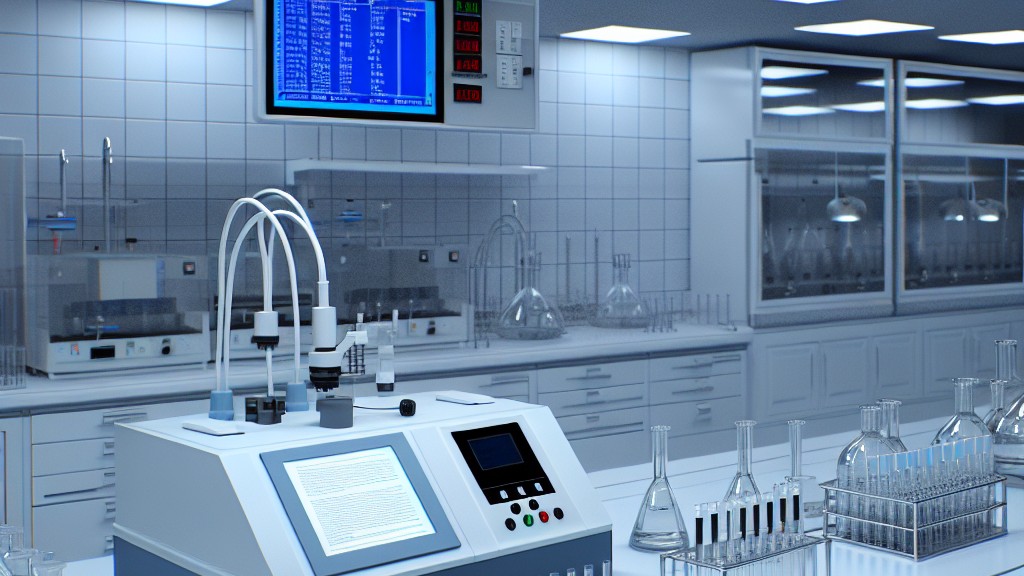
Determination of these parameters may be important for thermal insulation products designed for application to stainless austenitic steel substrates. Under certain conditions, the presence of chloride, fluoride, silicate and sodium ions may affect the risk of stress corrosion cracking. Further information is included in the standard annex (Annex B).
In principle, test samples of the insulation product are boiled or heated in deionized water to leach soluble ions. Tests to determine water-soluble chloride, fluoride, silicate and sodium ions are performed on aliquots of the filtered aqueous extract. A pH value is determined on one of the aliquots.
Essentially, all equipment and working tools used for this purpose must be free of soluble chlorides, fluoride, silicates, sodium ions and grease. Chloride-free solvents should be used to clean equipment and working tools (chlorinated solvents should be avoided). During the performance of the analytical procedure, foreign sources of these ions should be reduced or eliminated.
The following equipment is needed when preparing aqueous extracts during these tests:
The following equipment is needed when performing analyses:
Any device that provides at least the same result with the same accuracy can be used in the analysis.
The following materials are also needed for the analysis:
To ensure that the results are representative of the product, care should be taken to ensure that the test samples are free of any external contamination. Each test sample is removed using a cork borer at positions evenly distributed over the total surface area of a full-size product. To avoid contamination, chloride-free gloves should be worn and the test sample should be placed in a sealed polyethylene bag. Depending on the product family, the weight of each test sample should be at least 7,5 g or 20 g.
The number of test samples shall be as specified in the relevant product standard. If the number is not specified, at least three test samples (three 7,5 g or 20 g weights) shall be used. In the absence of a product standard or other technical specification, the number of test samples may be agreed upon between the parties.
Test samples should be stored at a temperature of 23 degrees Celsius plus/minus 5 degrees Celsius for a minimum of 6 hours and a maximum of 24 hours. In case of disagreement, the samples should be stored at a temperature of 23 degrees Celsius plus/minus 2 degrees Celsius for the period specified in the relevant product standard. In tropical climates, different conditioning and testing conditions may apply. In this case, the conditions should be 27 degrees Celsius plus/minus 5 degrees Celsius and 65 percent plus/minus 5 percent relative humidity , and this should be clearly stated in the test report.
Tests should be conducted in a hot environment of 23 degrees plus/minus 5 degrees. Different conditioning and testing conditions may apply in tropical climates. In this case, conditions should be 27 degrees plus/minus 5 degrees and 65 percent plus/minus 5 percent relative humidity.
When preparing the leaching solution for the test, 20 g plus/minus 0,1 g or 7,5 g plus/minus 0,05 g test sample specified in the relevant product standard is taken and placed in a wide-mouth glass flask. 400 ml plus/minus 5 ml deionized water is added. The flask is closed with a ground stopper and shaken until the test sample is completely wetted and submerged. If the test sample floats, it is kept under water. The water condenser is fixed to the flask and the leaching solution is heated electrically for 5 minutes to 10 minutes until it reaches the test temperature. The leaching process is continued for the specified time under reflux conditions. Depending on the maximum service temperature specified for the product, the test temperature and leaching time are selected as specified in the table given in the standard.
The flask with the condenser is removed from the heat and cooled (e.g. in a water bath) for 10 to 15 minutes until the temperature reaches room temperature. The infiltrating solution is filtered. A blank test is performed using the above procedure but without the insulating product test sample. The filtered solutions are then used for analyses.
Test methods other than those described in this standard may be used if at least the same result is obtained with the same accuracy.
Our organization, which has been trying to support businesses from every sector with its testing, measurement, analysis and evaluation studies carried out in a wide range for years, has a strong staff that closely follows the developments in the world in the field of science and technology and constantly improves itself. In this context, testing services are also provided to businesses in accordance with the standard “EN 13468 Building equipment and thermal insulation products for industrial facilities - Determination of trace amounts of water-soluble chloride, fluoride, silicate, sodium ions and pH”.
To get an appointment, to get more detailed information or to request an evaluation, you can ask us to fill in our form and reach you.

