

The standard "EN IEC 62271-100 High-voltage switchgear and controlgear - Part 100: Alternating current circuit breakers", which is based on a European standard and subsequently published by the International Electrotechnical Commission (IEC), describes test methods for three-phase alternating current (AC) circuit breakers designed for indoor or outdoor installation and for operation at frequencies of 1000 Hz and/or 50 Hz in systems with voltages above 60 Volts. This standard only includes direct test methods for making and breaking tests. For synthetic test methods, the standard "IEC 62271-101 High-voltage switchgear and controlgear - Part 101: Synthetic testing" applies.
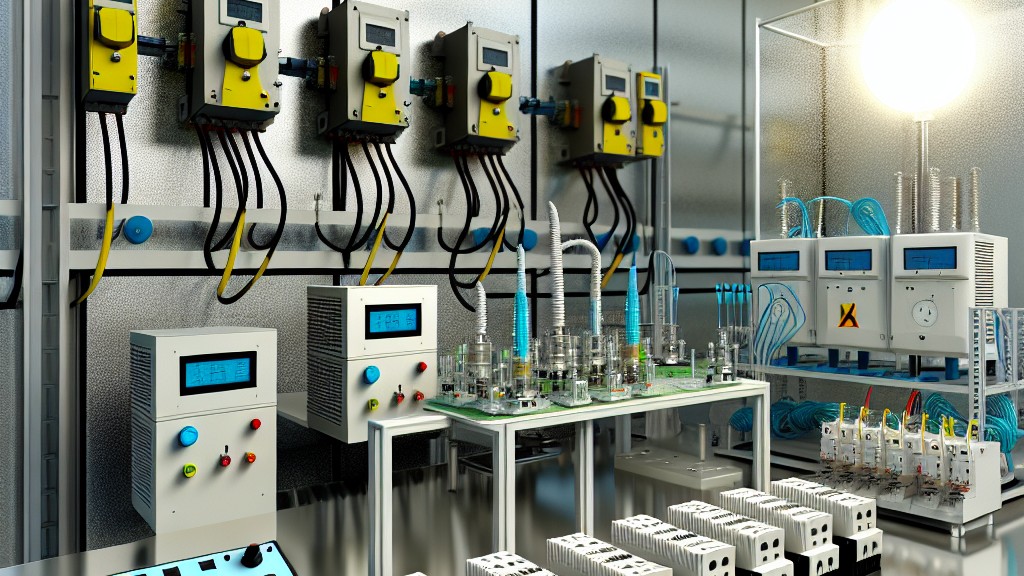
In the direct testing method, a source is used to provide voltage and current during make and break tests.
This standard excludes:
Tests to prove performance under abnormal conditions not described in this standard are subject to agreement between the manufacturer and the user. Such abnormal conditions are those that may occur, for example, in long lines or cables, due to sudden load loss, where the voltage is higher than the rated voltage of the circuit breaker.
The general test methods defined in this standard include:
Routine test methods defined in this standard include:
Switchgear and control devices are usually industrial switches. Switchgear consists of switch disconnectors, fused switches, switch fuses, isolators, while control devices consist of delta contactors, time clocks/switches, relays, overload, stop buttons and printed circuit boards (PLC).
Control devices refer to the components required to control the electrical operation of lamps. These devices also include means for converting the supply voltage, correcting the power factor and providing the conditions necessary for starting the lamps, either alone or in combination with a starting device.
Switchgear works by isolating certain components for maintenance or repair. Fault interrupters control the flow of electrical energy through circuit breakers and switching devices. When a fault is detected, the switchgear quickly isolates the problem while keeping the rest of the system energized. Once the problem is resolved, circuits can be safely re-energized. Safety features are vital to switchgear functionality, with overcurrent protection playing a vital role in preventing damage from excessive current flow in a circuit.
High voltage switchgear is designed to handle voltages above 35kVolt. It is usually associated with power transmission networks and finds application in large scale industrial facilities. Such switchgear plays an important role in ensuring safe and reliable transmission of electricity over long distances.
Our organization has a strong staff that closely follows the developments in science and technology in the world and constantly improves itself. Among the numerous test, measurement, analysis and evaluation studies provided for businesses in various sectors, there are also test services in accordance with the "EN IEC 62271-100 High voltage switchgear and controlgear - Part 100: Alternating current circuit breakers" standard.
To get an appointment, to get more detailed information or to request an evaluation, you can ask us to fill in our form and reach you.

