

The standard "EN IEC 60811-1-2 Common test methods for insulation and sheathing materials of electric cables - Part 1-2: General application methods - Thermal ageing methods", which is based on a European standard and later published by the International Electrotechnical Commission (IEC), describes the thermal ageing methods applied to the most common insulation and sheathing compounds, elastomeric, polyvinyl chloride (PVC), polyethylene (PE), polypropylene (PP) and similar compounds.
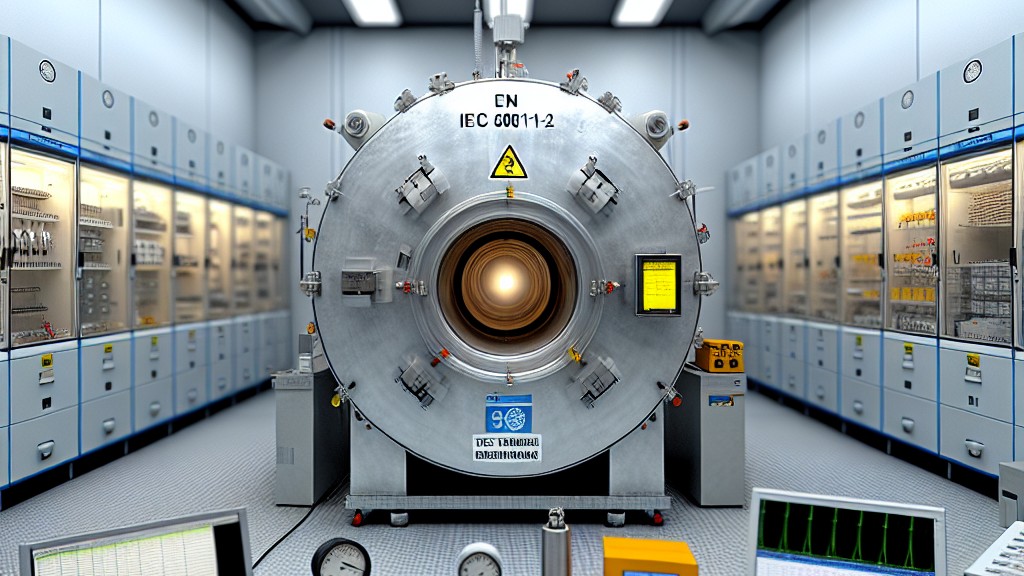
This standard includes test methods to be used in testing polymeric insulation and heating materials of electrical cables used for electrical distribution and communication, including cables used on ships.
Accelerated aging tests allow the performance of the cables to be examined over a short period of time by simulating how the materials they are made of will perform in the long term. In general, aging in this case is carried out in a hot air oven with natural or forced air circulation. The samples are placed in the middle of the oven and held at the set temperature for the time specified in the specific standard for the cable. At the end of the accelerated aging process, the samples are allowed to return to room temperature and then subjected to a mechanical property test to check the effects of the process on the sample.
Thermal ageing refers to the long-term, irreversible changes in the structure, composition and morphology of materials that occur as a result of exposure to temperatures likely to be encountered in service. These changes may result from a combination of mechanical loading and chemical changes. Of these, oxidation through contact with atmospheric oxygen is usually the most important. In practice, the life of a plastic material subject to physical ageing is defined in terms of a critical threshold for an easily measurable physical property, such as the fracture stress.
The degree of change in the insulation performance of electrical cables determines the aging level of insulation materials. If the insulation performance of the material reaches a certain value, the degree of insulation aging is serious. The value at which the insulation cannot be used safely is called the end of insulation life.
Common factors that cause insulation aging are thermal aging, electrical aging, chemical aging or mechanical aging, but more than 80 percent of cable failures are caused by heat, and the key to shortening the service life of the cable is thermal aging, with temperature as the main factor. Therefore, the impact of thermal aging on cable life is significant.
In short, the essence of thermal aging is the complex chemical and physical changes caused by high ambient temperature or long-term current-carrying heat during cable operation, causing the insulation temperature to rise and the performance of the insulation layer to decline. This causes the insulation temperature to rise and the performance of the insulation layer to decline.
Common methods for cable thermal aging life prediction include traditional evaluation and accelerated evaluation. The former is an internationally recognized life test method with high reliability, but the test time is too long. The latter is a rapid method to simulate the aging mechanism of the cable. Its principle is to accelerate the physical and chemical reaction of materials by increasing the insulation aging temperature to simulate the aging process. By testing the characteristic value of cable life by this method, the function between cable life, aging time and aging temperature is established. The test data is analyzed to obtain the prediction model of thermal aging life, so that the service life of the cable is calculated under the normal operation of the insulation. Weibull model and Arrhenius model are often used to analyze the aging life of cables.
Our organization, which has been trying to support businesses from every sector with its testing, measurement, analysis and evaluation studies carried out in a wide range for years, has a strong staff that closely follows the developments in the world in the field of science and technology and constantly improves itself. In this context, testing services are also provided to businesses in accordance with the standard “EN IEC 60811-1-2 Common test methods for insulation and sheath materials of electrical cables - Part 1-2: General application methods - Thermal aging methods”.
To get an appointment, to get more detailed information or to request an evaluation, you can ask us to fill in our form and reach you.

