

The standard "EN ISO 9261 Agricultural irrigation equipment - Emitters and emitter pipes - Specification and test methods", which is based on a European standard and later published by the International Organization for Standardization (ISO), describes the mechanical and functional requirements for agricultural irrigation emitters and emitter pipes and fittings, if any, and provides methods for testing compliance with these requirements. This standard also includes data that must be provided by the manufacturer to ensure correct information, installation and operation in the field.
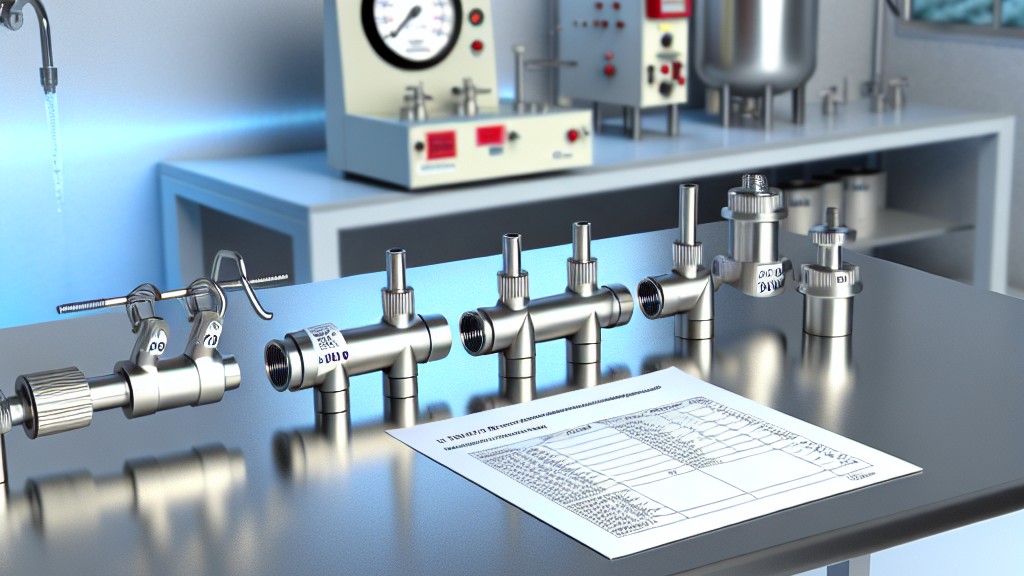
This standard applies to emitters, emitter and dripper (drip) tubes, hoses, collapsible hoses (tapes) and tubes of which emitter units form an integral part, emitters and emitter units, with or without pressure regulation and with flow rates not exceeding 24 l/h per outlet (except during cleaning) and fittings dedicated to the connection of emitter tubes, hoses and tubes. Porous tubes (tubes that are porous throughout their entire length) are outside the scope of this standard and do not cover the performance of tubes with respect to blockage.
For the purposes of this standard, the following terms and definitions apply:
Emitters and emitter tubes are classified according to the following criteria:
Emitters/emitter tubes and fittings must be free from any manufacturing defects that could negatively affect performance. The construction of the emitters/emitter tubes and fittings must allow for easy connection, with or without clamping tapes, whether the connection is made manually or with suitable tools provided by the manufacturer.
In terms of emitter pipe dimensions, the manufacturer shall specify the outer diameter, inner diameter and wall thickness of the product in millimeters, and the actual dimensions of the product shall comply with the values declared by the manufacturer in accordance with this standard. The dimensions of the connecting parts shall match the dimensions of the emitter pipe to ensure easy and reliable connection.
The materials used in the manufacture of emitters/emitter tubes and fittings must be resistant to fertilizers and other chemicals commonly used in agricultural irrigation and must be suitable for use with water at temperatures up to 60 degrees and operating pressures specified by the manufacturer. The materials should not support the growth of algae and bacteria as much as possible. Parts exposed to light must be opaque and protected against UV degradation.
The manufacturer must be able to supply fittings of appropriate size and shape for each type and size of emitter tube to make secure connections to the emitter tube. The joint, with or without clamping bands, must be strong enough to withstand all operating pressures. Compression components such as bands and screws must be made of non-wearing materials or materials that are resistant to wear.
Our organization, which has been trying to support businesses from every sector with its wide range of testing, measurement, analysis and evaluation studies for years, has a strong staff that closely follows the developments in the world in the field of science and technology and constantly improves itself. In this context, testing services in accordance with the "EN ISO 9261 Agricultural irrigation equipment - Emitters and emitter pipes - Specification and test methods" standard are also provided to businesses.
To get an appointment, to get more detailed information or to request an evaluation, you can ask us to fill in our form and reach you.

