

Hydrostatics is the science that studies the behavior of liquids at rest. The pressure resulting from acceleration in these liquids is called hydrostatic pressure. It is a test performed to determine the material strength and life by measuring the deformation caused by hydrostatic internal pressure under constant temperature and pressure in plastic or thermoplastic pipes such as polypropylene, polyethylene, polyvinyl chloride. Temperature, pressure and similar values and other conditions are covered in some international standards.
Today, the transfer of many important resources is provided by pipes. The durability of pipes is important in terms of human life, resource waste and prevention of environmental pollution. Therefore, the pipes produced must comply with the standards determined according to the area in which they will be used. In order for polyethylene (PE), polypropylene (PP), polyvinylchloride (PVC) and high-temperature-resistant polyethylene (PE-RT) pipes to be used safely, their working conditions and service life at certain temperature and pressure values according to the area in which they will be used must be known. In order to determine these conditions, the pipes are subjected to a hydrostatic internal pressure test. The values obtained are compared with the standards and it is determined whether they are suitable for use.
The following standards are standards that explain in detail the rules to be followed in the hydrostatic internal pressure test and the conditions that the test environment and test elements must have:
In these standards, the shapes of the connecting elements and the methods of connecting the elements are determined. The dimensioning of the sample to be tested must also comply with ASTM D2122 and ASTM D3567 standards.
According to EN 921 and D1598-23 standards, the sensitivity of the conditioning and pressure devices to be used in the test should be at the level of plus/minus 2 percent. The temperature of the environment, fittings and test liquid should be 23 degrees. Pipes with a diameter of 150 mm and smaller should be at least five times the outer diameter of the pipe. For pipes with a larger diameter, this value should be at least three times the outer diameter.
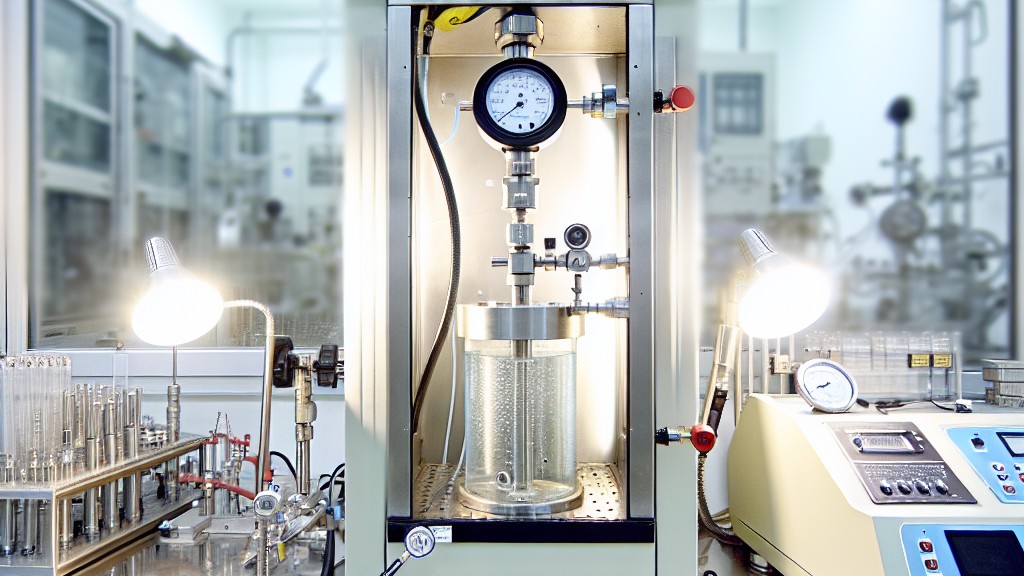
The test system consists of a top and bottom cover, clamps to secure these covers, mounting and sealing elements, conditioner, liquid tank and pressure device.
The sample selected in accordance with the standards is closed with end caps at both ends. It is filled with liquid brought to the desired temperature with the help of a conditioner so that no air remains inside. Then, the sample is supported so that it will not bend due to the weight and completely immersed in the conditioned environment and made ready for testing.
According to the EN 921 standard, samples with a wall thickness of less than 3 mm must be subjected to conditioning for 1 hour, those with a wall thickness of 3-8 mm for 3 hours, those with a wall thickness of 8-16 mm for 6 hours, and those greater than 16 mm for 16 hours.
The pressure level is adjusted with a pressure machine and applied to the prepared sample, and the test is started by operating the counter at the same time. The change in the deformation in the sample over time is recorded. The pressure to be applied to the samples is calculated with the equation given in the standard:
If a puncture or leakage occurs in the sample while the test is in progress, the test is stopped and the type of deformation is recorded as brittle or ductile. According to the EN 921 standard, if the failure occurs closer to the closure cap than 0,1 times the pipe length, the test is cancelled and the test is repeated with a new sample.
Precautions should be taken in case of explosion during the test and if gas is used instead of liquid, the potential energy storage capacity of the gases should not be ignored. The equipment and environment to be tested should be free from oil and dirt.
If the pipes exposed to pressure during the test do not burst within the time specified in the standards, namely 20 hours at 100 degrees and 80 hours at 165 degrees, or if values above the deformation specified in the graphs are not observed, the pipe is deemed suitable for use.
Plastic and thermoplastic pipes have found wide use due to reasons such as easy workmanship, low cost, low maintenance and not being exposed to corrosion. They are widely used in network systems because they can carry resources such as natural gas, clean water and geothermal water as well as wastewater. In addition to these, they continue to be used in agricultural irrigation. Hydrostatic pressure testing is included in the safe use of plastic pipes in these sectors.
In short, hydrostatic testing is the most common method used to test pipes and pressure vessels. Using this test helps maintain the safety standards and durability of a vessel over time. Newly manufactured parts are initially qualified using hydrostatic testing. They are then re-verified at regular intervals against the relevant standard. In some cases where hydrostatic testing is not feasible, pneumatic pressure testing is an acceptable alternative method.
Our organization, which has been trying to support businesses from every sector with its testing, measurement, analysis and evaluation studies carried out in a wide range for years, has a strong staff that closely follows the developments in the world in the field of science and technology and constantly improves itself. In this context, hydrostatic internal pressure test services are also provided to businesses.
To get an appointment, to get more detailed information or to request an evaluation, you can ask us to fill in our form and reach you.

