

The “ANSI BIFMA X5.4 Lounge and public seating area” standard, jointly published by the American National Standards Institute (ANSI) and the Commercial and Institutional Furniture Manufacturers Association (BIFMA), aims to provide manufacturers and users with a common basis for evaluating the safety, durability, and structural adequacy of business and institutional lounges and public seating areas.
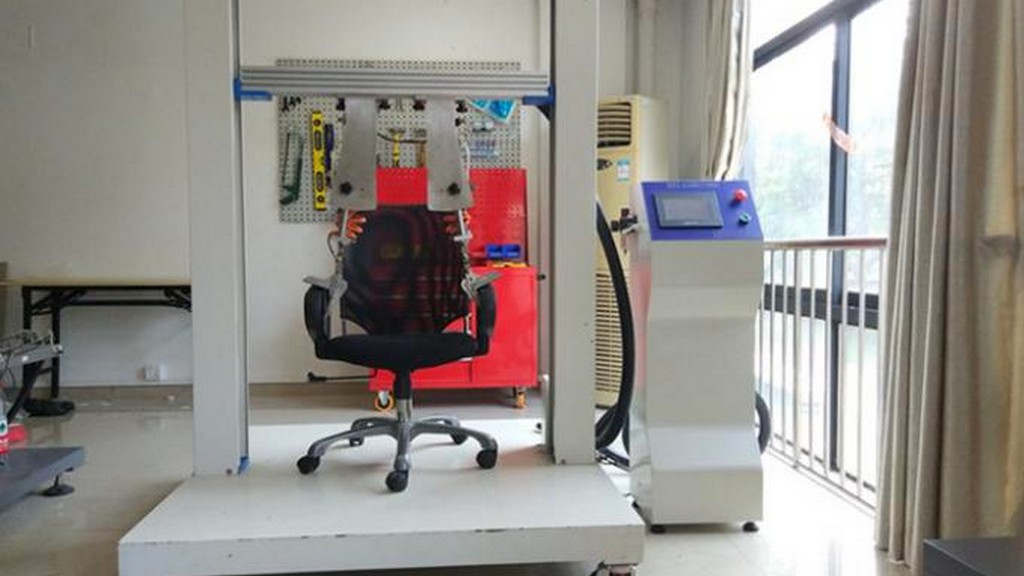
Long, public seating is typically used in enclosed public areas such as waiting areas, reception areas, or assembly areas. Lounge and public seating includes products that include single seating units, units with multiple seating positions within a unit, or combined seating units. Lounge and public seating may be attached to the building structure or prevented from being moved independently. Lounge and pub seating products are generally not adjustable for personal use. This standard does not cover general-purpose or task-oriented office chairs or seating used in high-use public seating areas such as stadiums, auditoriums, lecture halls, airports, train stations, and similar high-use public seating areas.
If a product may be covered by more than one ANSI/BIFMA standard, the manufacturer must determine which standard provides the most appropriate testing conditions. If a product is intended for use outside of commercial offices and related areas, in institutional environments, it is the user's responsibility to determine whether this standard is suitable for use in such evaluations.
This standard describes test methods and acceptance levels to help ensure reasonable safety and performance, regardless of construction materials, manufacturing processes, mechanical designs, or aesthetic designs. However, this standard does not address flammability, surface material durability, cushioning materials, product emissions, or ergonomic considerations.
The acceptance levels in this standard are based on actual field and testing experience of BIFMA International members. Where appropriate, a database indicating that 95 percent of males weigh 115 kg was used in test development.
Tests were developed with an estimated product life of ten years based on continuous single-shift operation. Product life is affected by user size and weight, product use, maintenance and repair, the environment, and other factors, and therefore, product compliance with this standard does not necessarily guarantee a ten-year product life. This standard may not apply to seating arrangements for medically compromised individuals frequently found in certain healthcare settings, such as physical therapy and weight loss clinics. These environments may require specific product designs that are not adequately met by the requirements of this standard.
The tests in this standard are designed only to evaluate the performance of new products. They are not designed to evaluate a product in use.
In short, the ANSI BIFMA X5.4 standard covers products with single or multiple seating units. Public and recreational seating can be joined or otherwise connected. Tests are based on a body weight of approximately 115 kg.
Testing and evaluating a product to this standard may require the use of materials or equipment that could be hazardous. This standard is not intended to address all safety aspects associated with the use of such materials or equipment. Anyone using this standard has the responsibility to consult with the appropriate authorities before using the materials or equipment described and to determine health and safety practices and applicable regulatory requirements.
The types of tests to be used fall into these general categories:
According to this standard, two types of load levels are used:
The tests described in this standard are intended to evaluate the entire unit, including the base, tilt mechanism, height adjustment device, locking mechanisms, seat/backrest connection, and the like.
Each manufacturer's model or unit type in any configuration shall comply with the applicable requirements when tested in accordance with this standard. Only worst-case models for a given unit type need be tested. The worst-case condition must be representative of all models or units of the type tested.
The test methods in this standard require the use of fixtures or load adapters to perform the tests. Some products or structures may require special test fixtures or load adapters to perform these tests in accordance with the intent of the standard.
If a test procedure cannot be performed as specified in the procedures due to the design of the product, it should be performed as described, as far as possible, and any deviations from the procedure should be recorded in the test report.
All tests in this standard are not intended to be performed on a single unit. Tests may be performed on a series of units with the manufacturer's permission. When a test requires the application of a functional load and a proof load as part of the test criteria, the functional and proof loads must be applied to the same component or unit. Tests may be performed in any order unless otherwise specified in a specific test section; the functional load must always precede the proof load.
The test methods defined in the ANSI BIFMA X5.4 standard are:
Endurance tests typically include over 100.000 cycles to simulate years of use.
Loads used are based on 95th percentile body weights to ensure safety for most users.
The tests are non-destructive (unless failure criteria are met) and simulate real-world wear.
Our organization, which has been supporting businesses across all sectors for years through a wide range of testing, measurement, analysis, and evaluation activities, has a strong team of employees who closely follow global developments in science and technology and are constantly improving themselves. In this context, we also provide testing services to businesses that comply with the ANSI BIFMA X5.4 Lounge and General Seating Area standard.
To get an appointment, to get more detailed information or to request an evaluation, you can ask us to fill in our form and reach you.

