

The ASTM F3340 Standard Test Method for Determining the Thermal Resistance of Camping Mattresses Using a Protected Heating Plate Apparatus, developed by the American Society for Testing and Materials (ASTM), describes a test method for measuring the thermal resistance of camping mattresses under steady-state heat transfer conditions using a two-plate apparatus.
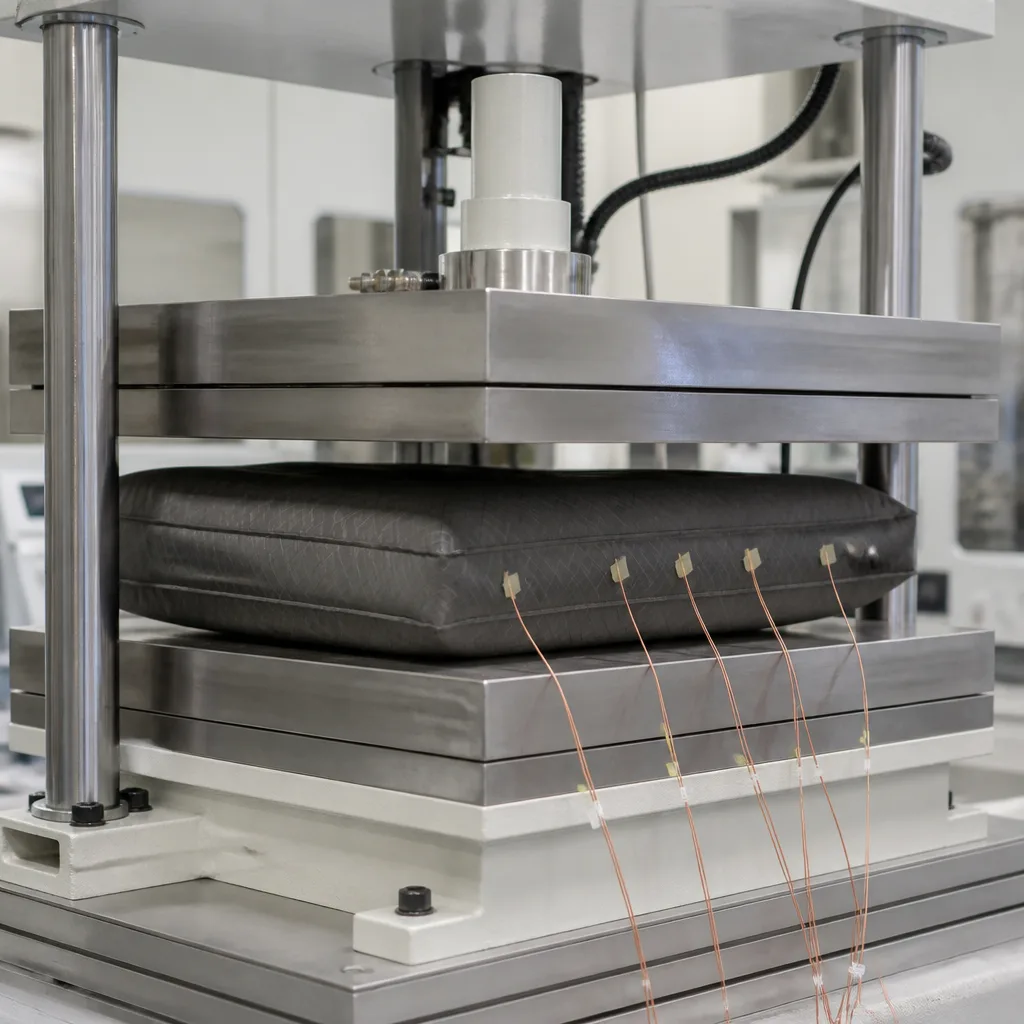
The camping mattress is held under a constant compression force between a protected hot plate and a cold plate. For this method, the primary heat transfer is one-dimensional vertically across the thickness of the camping mattress. Therefore, this measured thermal insulation value is a repeatable comparative measurement. However, it should be noted that this value may not always match the actual insulation performance, as real-world heat transfer can vary slightly due to potential additional heat losses (e.g., edge heat loss, open surface heat loss, compression rate variations, or posture changes during sleep).
This testing method applies to all types of camping bedding. For example, insulated or uninsulated inflatable air mattresses, inflatable air mattresses with reflective material, self-inflating open-cell foam mattresses with or without a core, and closed-cell non-inflatable foam mats. Any type of auxiliary insulation should not be included in the measurement. Auxiliary insulation materials are any materials that can be removed from the mattress (e.g., sleeping bags, mattress covers).
The sample thickness must not exceed the limit specified in this standard regarding heating plate dimensions.
The thermal resistance of camping mattresses is a key indicator of their insulation performance. This testing method establishes criteria for consistently measuring this property under appropriate conditions. The measured value can be used to evaluate the thermal insulation performance of camping mattresses, thus aiding in product construction and design and providing guidance to consumers in mattress comparison and selection.
In short, the ASTM F3340 standard defines a uniform method for measuring the thermal resistance (R-value) of camping mattresses and sleeping pads. This standard provides manufacturers, testing laboratories, retailers, and consumers with a reliable way to evaluate and compare the insulation performance of camping mattresses.
When camping in cold environments, a significant amount of body heat is lost through contact with the ground. A camping mattress acts as an insulating barrier between the sleeper and the cold surface.
Prior to the ASTM F3340 standard, manufacturers often used different test methods, making it difficult to compare advertised R-values. The ASTM F3340 standard establishes a standardized laboratory procedure that ensures thermal resistance measurements are repeatable and consistent across different products.
This standard applies to virtually all types of camping beds, including:
This standard excludes removable insulation accessories such as:
During the test, only the bed itself is evaluated.
The test determines how effectively a camping mattress resists heat flow. During the test, a mattress sample is placed between:
The mattress is compressed under a specified load to simulate real use during sleep. After ensuring balanced heat transfer, the energy required to maintain the temperature difference is measured. From these measurements, the thermal resistance (R-value) of the mattress is calculated.
The following equipment is used in these tests:
The shielded heated plate minimizes edge heat loss, ensuring that heat flows primarily in one direction across the bed.
The primary value measured in these tests is thermal resistance (R-value). Higher R-values indicate better insulation against heat loss to the floor. Typical interpretations include:
Actual performance also depends on sleeping bags, clothing, shelter, wind, humidity, and the user's metabolism.
A unique aspect of the ASTM F3340 standard is that the bearing is tested while compressed under a controlled force. This is important because:
The ASTM F3340 standard offers several important advantages:
Manufacturers can also use this test to evaluate new insulation materials and optimize product designs.
The ASTM F3340 standard is widely used by the following industries:
Many major outdoor brands now include R-values, determined by this test, in their product specifications.
However, while the ASTM F3340 standard provides an accurate laboratory measurement, it does not fully reflect every real-world sleep condition. Factors that are not fully represented include:
Therefore, ASTM R values should be viewed as standardized comparative ratings rather than precise predictions of field performance.
Many camping mattress manufacturers today advertise ASTM-tested R-values on their packaging and data sheets. This allows consumers to compare products using a common measurement method, rather than relying on proprietary or non-standard testing procedures. The adoption of the ASTM F3340 standard has significantly increased transparency in the outdoor equipment market.
Consequently, the ASTM F3340 standard has become the industry standard for measuring the thermal resistance of camping mattresses. Using a protected hot plate device under controlled laboratory conditions, the standard provides consistent and repeatable R-value measurements that improve product development, quality assurance, and consumer decision-making. While laboratory results may not account for every environmental factor encountered outdoors, this standard offers the most reliable and widely accepted method for comparing the insulation performance of camping sleeping pads and mattresses.
For many years, our organization, with its competent and experienced team, has been understanding the needs of its clients, providing the advanced testing services they require, and assisting them in the establishment, implementation, and improvement of management systems. Within this framework, we also provide testing services in accordance with the ASTM F3340 standard.
To get an appointment, to get more detailed information or to request an evaluation, you can ask us to fill in our form and reach you.

