

The European standard "EN 14350 Child use and care products - Drinking equipment" consists of the following subsections published under the same title:
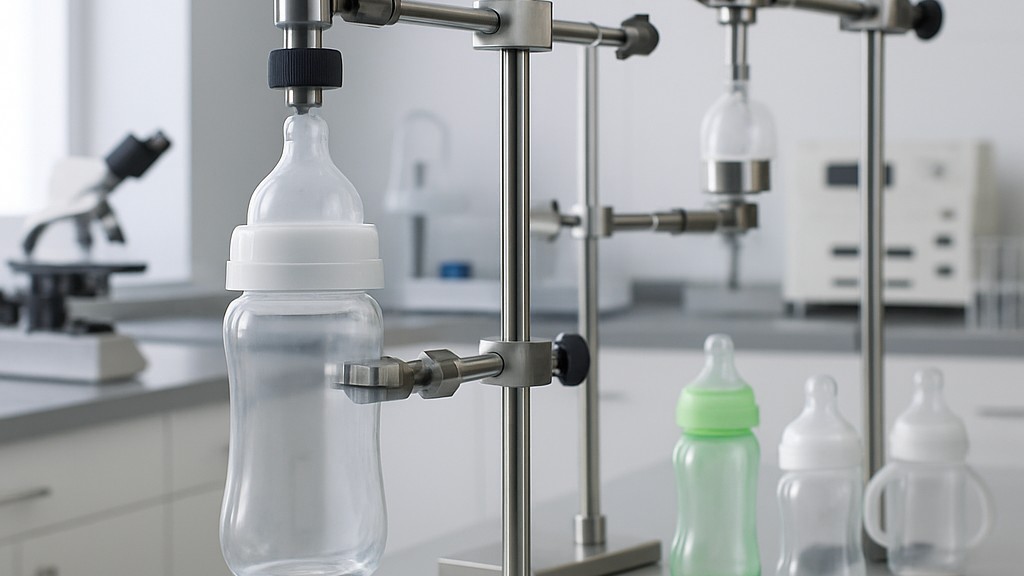
This standard contains test methods for specified mechanical safety requirements. This standard does not apply to drinking equipment designed for medical applications or for use under medical supervision. Furthermore, this standard does not apply to pacifiers. Safety requirements and test methods for pacifiers are contained in EN 1400-1, EN1400-2, and EN 1400-3.
This standard harmonises minimum safety requirements and test methods for children's drinking equipment for the first time. Some provisions are taken from other existing European standards.
A significant choking hazard can occur if the component parts of drinking equipment become separated during use. This hazard is addressed by the inclusion of a safety test in this standard. However, because the user is responsible for securing such products to the container, the risk of accidents cannot be completely eliminated. This standard specifies labeling requirements that parents or caregivers should not leave children unattended while feeding with a product containing a feeding nipple or drinking accessory, and that children should not be allowed to use feeding nipples as pacifiers.
The safety of baby and children's products is paramount, especially when it comes to products that come into direct contact with food and drink. EN 14350-1 is a safety standard that specifies the requirements for children's drinking equipment, such as feeding bottles, straws, and cups. This standard is part of a broader framework that helps ensure the safe use of such products by young children.
The EN 14350-1 standard outlines specific mechanical and physical safety requirements. It aims to prevent injuries, drowning, and other hazards by establishing clear criteria for how these products should be designed and tested.
This standard applies to reusable and disposable drinking equipment designed for children under 48 months of age. This includes: baby bottles, droppers and teats, training cups, valves, and straws. However, this standard does not apply to: products made entirely of glass, products designed for medical purposes, and products not intended for direct contact with children (e.g., bottle warmers).
The EN 14350-1 standard includes a series of requirements and tests to ensure that products:
This standard also includes drop tests, bite resistance tests, and tensile tests to simulate real-world use and misuse by children.
This standard contains test methods for specified chemical safety requirements. This standard does not apply to drinking equipment intended for medical applications or for use under medical supervision. Furthermore, this standard does not apply to pacifiers. Safety requirements and test methods for pacifiers are specified in EN 1400-1, EN 1400-2, and EN 1400-3.
In general, materials used in the manufacture of drinking equipment must be subjected to and comply with the tests listed in the table titled "Tests to be performed on materials." The materials mentioned in this table include: vulcanized rubber, silicone rubber, thermoplastic elastomers, glass, and thermoplastics.
When tested in accordance with this standard, the migration of elements from all materials used in the manufacture of drinking equipment shall not exceed the limits given in the table. If the drinking equipment contains components manufactured from different materials or in different colors, all components shall be tested separately. Decorations shall be considered part of the materials on which they are printed.
When tested to this standard, the total release of N-Nitrosamines and N-Nitrosatabilites from any elastomer or rubber component shall not exceed the limits given in the table.
When elastomeric components of drinking equipment are tested according to this standard, the migration of specified chemicals shall not exceed the specified values.
Parents and caregivers rely on safe and reliable products for feeding babies and young children. These include feeding bottles, teat cups, and similar drinking equipment. EN 14350 is one of the most important standards developed to ensure safety, hygiene, and performance.
The EN 14350-2 standard clearly specifies the chemical requirements and test methods for:
This standard aims to prevent exposure to harmful chemicals that may leach from materials during feeding. It establishes migration limits for a wide range of substances, including:
Manufacturers must demonstrate that all substances potentially released from the product remain below specified limits when tested under standard conditions simulating normal use.
The EN 14350-2 standard contains detailed test methods for simulating use:
The EN 14350-2 standard plays a key role in protecting babies and young children from the chemical hazards associated with drinking equipment. By setting strict limits and defining comprehensive testing procedures, it provides clear guidelines for manufacturers and gives caregivers confidence in product safety.
Our organization, which has been operating for many years and meticulously follows global developments in science and technology, conducts testing, measurement, and analysis in a wide range of areas for businesses across all sectors with a skilled team and extensive infrastructure. In this context, we also provide testing services in accordance with the "EN 14350 Childcare Products - Drinking Equipment" standard.
To get an appointment, to get more detailed information or to request an evaluation, you can ask us to fill in our form and reach you.

