

The standard “ASTM F2057 Standard Safety Specification for Clothing Storage Units” developed by the American Society for Testing and Materials (ASTM) aims to reduce injuries and deaths to children from hazards associated with tipping over of free-standing clothing storage units, including, but not limited to, chests, chests of drawers, armoires, dressers, bureaus, chests with doors, and dressers 686 mm and above in height.
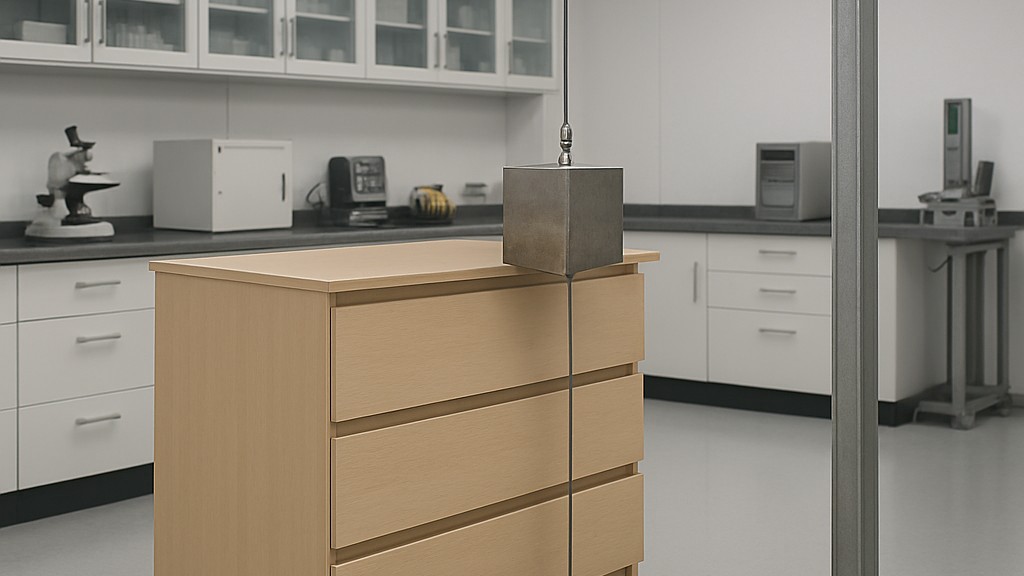
This safety standard does not cover bookcases or entertainment furniture, office furniture, dining room furniture, jewelry cabinets, under-bed storage units, accessory furniture not designed for bedroom use, linen storage or sorting units, nightstands, or built-in units intended to be permanently attached to the building, and it also does not cover garment storage chests as defined in the standard “ASTM F2598 Standard Consumer Safety Specification for Sealed Storage Chests, Such as Cedar Chests, Hope Chests, Blanket Chests, Keepsake Chests.”
This safety standard is intended to cover children up to age five. It replaces PS 110-98, Interim Safety Specification for Chests, Door Chests, and Dressers, an interim standard that covered similar risks but was less widely accepted and less detailed.
ASTM F2057 is a safety specification developed to help reduce the risk of tip-over accidents with clothing storage units such as dressers, chests, and bureaus, particularly to protect young children. This standard aims to minimize tip-over hazards associated with freestanding clothing storage units, which can lead to injury or death, particularly in children under 5 years of age.
The basic requirements in this standard are:
Tip-over incidents have caused countless injuries and numerous deaths. These accidents often involve young children. ASTM F2057 plays a crucial role in helping manufacturers design safer furniture and providing consumers with clear warnings and instructions.
In summary, the benefits of this standard can be listed as follows:
Our organization, which has been supporting businesses across all sectors for years through a wide range of testing, measurement, analysis, and evaluation activities, has a strong team of employees who closely follow global developments in science and technology and are constantly improving themselves. In this context, we also provide testing services in accordance with the ASTM F2057 Standard Safety Specification for Clothing Storage Units.
To get an appointment, to get more detailed information or to request an evaluation, you can ask us to fill in our form and reach you.

