

The European standard “EN 13138 Floating aids for swimming training” consists of the following sub-sections published under the same title:
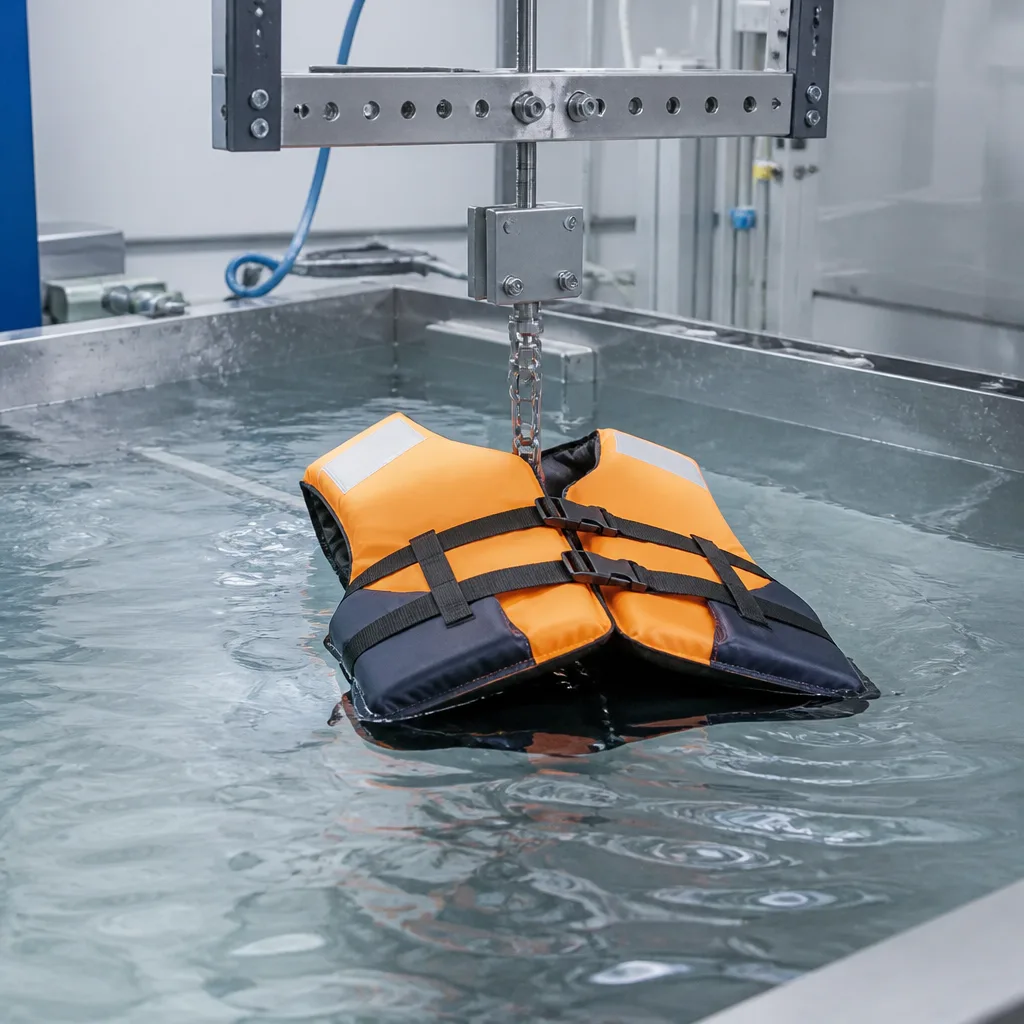
This standard applies only to swim devices designed to be worn, securely fitted to the body, and possessing natural buoyancy or being inflatable. It applies only to Class B swim devices designed to introduce the user to various swimming techniques. It does not apply to Class A or C swim devices, tow floats, swimming rings, life rings, buoyancy aids, life vests, or water toys.
This standard does not apply to products known as infant neck rings, which are intended to keep the user's airways above the water level.
Swimming aids are classified according to the table titled "Classification of swimming aids used for swimming training" as follows.
The EN 13138-1 standard applies to Class B swimming aids, which are specifically designed to support active users as they learn swimming techniques. Typical examples include:
This standard does not apply to:
In short, the main purpose of the EN 13138-1 standard is to provide the following for swimming aids:
This standard applies only to Class C swimming aids designed to be held on the hands or body. Typical swimming aids include push-up boards and tow/push-up boards. These swimming aids are used to help learn to swim or improve swimming techniques and to develop specific elements of technique; they either have natural buoyancy or are inflatable.
This standard does not apply to tow floats, swimming rings, lifebuoys, buoyancy aids, life vests, or water toys.
This standard applies specifically to Class C swimming aids designed to help users improve their swimming skills, refine their stroke techniques, and become accustomed to moving in the water. Typical products covered by this standard include:
This standard does not apply to:
The primary purpose of the EN 13138-2 standard is to improve safety during swimming training by establishing requirements for:
Handheld swimming aids are designed to support these learning phases by helping swimmers maintain body position and perform specific movements safely.
This standard applies only to swimming devices in which the user is seated and which are either naturally buoyant or inflatable, or a combination of both. It applies only to Class A swimming devices designed to allow the user to acclimatize to the aquatic environment. These swimming devices are intended only for children up to 36 months of age with a body mass less than or equal to 19 kg. It does not apply to Class B or C swimming devices, tow floats, life rings, buoyancy aids, life vests, or water toys.
The EN 13138-3 standard focuses on devices designed to help a child safely acclimate to the aquatic environment. These products are classified as Class A swimming devices and are primarily designed for infants and young children learning to get used to the water rather than learning actual swimming techniques. Typical products covered include:
This standard applies only to the following children:
The main purpose of the EN 13138-3 standard is to improve the safety of infant and toddler swimming seats by defining the following requirements:
This standard recognizes that early swimming instruction begins by helping children with the following:
This standard covers Class B devices designed to be securely attached to the body and that are either naturally buoyant or inflatable. These devices are designed to introduce the user to various swimming styles. It does not apply to buoyancy aids, life jackets, or water toys.
Essentially, the structure of the EN 13138-4 standard, unlike the EN 13138-1, EN 13138-2, and EN 13138-3 standards which focus on safety and product requirements, specifically focuses on how swimming aids behave in real water conditions. This standard offers advanced testing procedures using the following methods:
The aim of this standard is to objectively evaluate whether wearable swimming aids truly provide safe and effective support to beginner swimmers.
In short, this standard is a technical extension of the EN 13138-1 standard and focuses not only on structural or material testing, but also on dynamic water performance.
For many years, our organization, with its competent and experienced staff, has been understanding the needs of its clients, providing the advanced testing services they require, and assisting them in the establishment, implementation, and improvement of management systems. Within this framework, we also provide testing services in accordance with the EN 13138 standard.
To get an appointment, to get more detailed information or to request an evaluation, you can ask us to fill in our form and reach you.

