

The standard “ISO 12625-17 Tissue paper and silk products - Part 17: Determination of disintegration in water” published by the International Organization for Standardization (ISO) describes a test method used to evaluate the disintegration of tissue paper and tissue products when subjected to mechanical agitation in water.
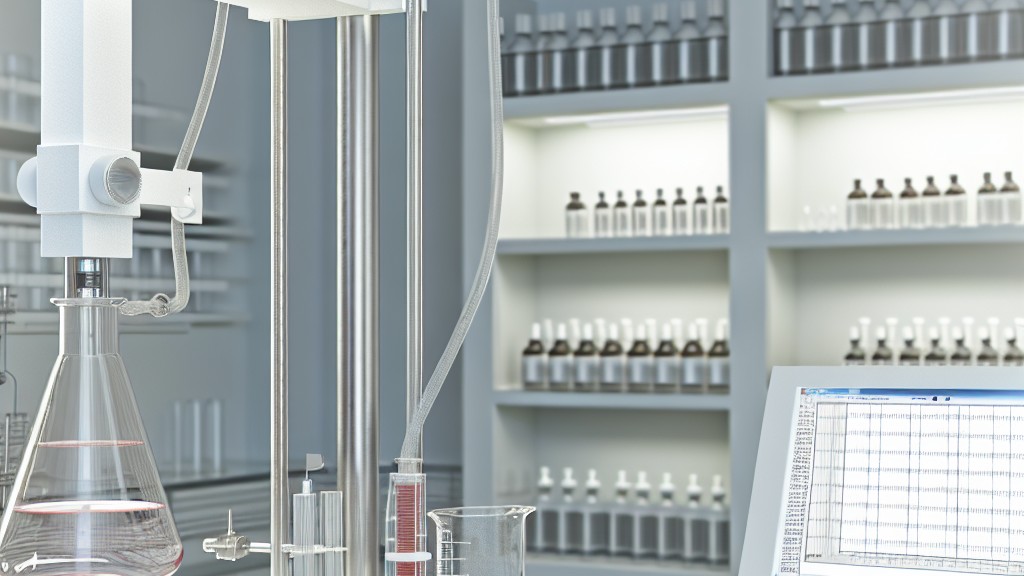
For the purposes of this standard, disintegration refers to a process characterized by the disintegration of a material into small fragments in water under specified conditions.
In principle, when performing the test, a tissue paper or tissue product test piece is placed in a beaker and shaken in water using a constant speed rotating impeller for periods of 30 seconds, 2 minutes and 10 minutes. After shaking, the contents of the beaker are poured into a specified sieve and any residues on the sieve are collected and analyzed gravimetrically to determine the percentage of disintegration after each shaking period. Precision data are included in the standard annex (Annex D). In these tests, deionized water at 14487 degrees plus/minus 23 degrees is used in accordance with the ISO 0,5 standard. The conductivity of this water at 25 degrees is at most 0,25 mS/m.
The main equipment used in these tests includes:
Conditioning should be carried out according to ISO 187 standard before preparation of test pieces.
When preparing test pieces, if the tests are to be performed to evaluate a batch, the sample should be selected in accordance with the ISO 186 standard. If the tests are performed on another type of sample, it is necessary to ensure that the samples taken are representative of the sample. Each test piece should be free from defects not normally specific to the tissue product. For converted multi-ply tissue products, testing should be performed on the product as received, without distinction between plies. Tissue papers that have not been converted into finished products should be tested as a single ply, unless otherwise agreed upon by the parties concerned.
In the accelerated aging process, the wet strength of tissue paper is often increased by the addition of a wet strength agent. Heat accelerated aging, also called curing, is frequently used to develop the maximum wet strength that a tissue paper or tissue product will achieve after a natural aging period under ambient conditions, which may range from a few days to a few weeks, depending on the wet strength agent used. Accelerated aging is not a requirement of this standard, but is a permitted option. The decision whether to use accelerated aging is determined by the user of this standard based on information about the tissue paper or tissue product sample being tested.
In the process of massing and shaping the test pieces, the samples are cut in the cross direction and the test pieces with a mass of 1,0 g plus/minus 0,1 g are obtained. If the sample is in the form of a continuous sheet, a continuous length of material is cut in the cross direction to achieve the required mass. If the sample is in discrete units such as boxed tissue, sufficient units are taken and, if necessary, a portion of one unit is cut in the cross direction to achieve the required mass. If the test piece is larger than 12 cm in both directions (machine direction or cross direction), it should be folded in the middle until it is 12 cm or less in both directions. The minimum number of folds required to achieve 12 cm or less is made. Nine test pieces are prepared. In addition, at least 4 g of sample is required for the determination of dry matter content.
Our organization has a strong staff that closely follows the developments in the world in the field of science and technology and constantly improves itself. Among the numerous test, measurement, analysis and evaluation studies provided for businesses in various sectors, there are also testing services in accordance with the standard “ISO 12625-17 Tissue paper and silk products - Part 17: Determination of disintegration in water”.
To get an appointment, to get more detailed information or to request an evaluation, you can ask us to fill in our form and reach you.

