

The “ES 1481 Household Cookware Coated with Non-Stick Reinforced Plastic Coatings” standard, published by the Egyptian Organization for Standardization and Quality (EOS), concerns household cookware used in home cooking that is coated with non-stick materials based on polytetrafluoroethylene, which prevent food from sticking. These materials are used to coat the inner surfaces of cookware made from household aluminum ores, known by various trade names. The lids of these cookware, and hand rivets if coated with the same material, are also covered by this standard.
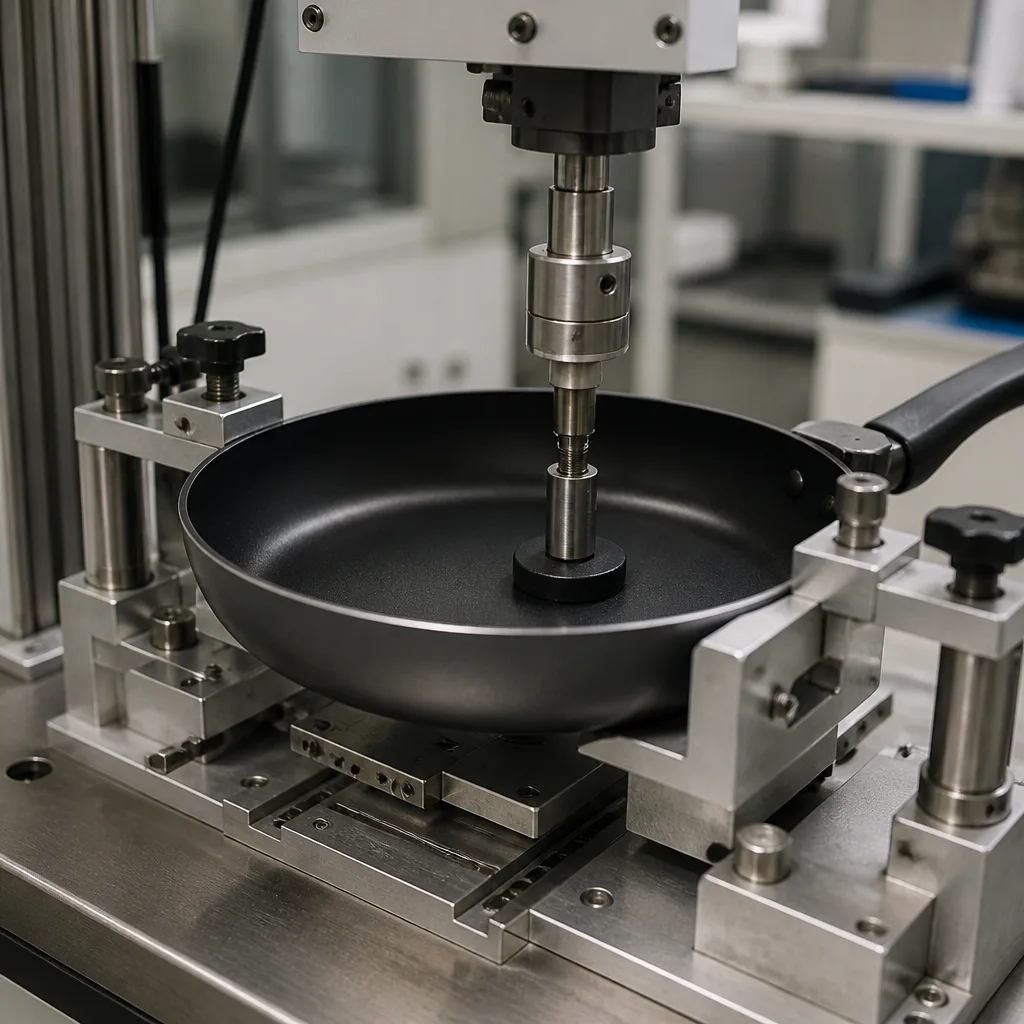
Household items coated with non-stick materials must be made from pure aluminum ores with a purity of 99 percent or more, and aluminum alloys according to the chemical composition specified in the standard “EN 60 Aluminum and aluminum alloys, castings, chemical composition of castings for use in contact with foodstuffs”.
For the purposes of this standard, the non-stick polytetrafluoroethylene material used in these containers is one that allows for easy removal of cooked food and ensures easy cleaning of the containers without scratching. The coating material may contain suitable additives for coloring or facilitating the production of the product, provided that these additives are not harmful to health and are difficult to remove from the coating material. The coating material is one that requires the use of spoons made of similar materials such as plastic or wood to avoid damaging the coating surface.
The ES 1481 standard includes requirements and test methods for household cookware coated with non-stick, unreinforced plastic coatings. These coatings are typically applied to the surfaces of cookware (e.g., frying pans and pots) to improve ease of use, prevent food from sticking, and enhance cleaning performance.
The ES 1481 standard applies to the following:
The basic requirements are stated in this standard as follows:
The ES 1481 standard defines the following test methods to verify compliance:
Cookware conforming to the ES 1481 standard must include the following:
Typical applications of this standard include:
The ES 1481 standard is based on three critical areas: safety, performance, and consistency. Without such a standard, both consumers and manufacturers could face significant risks and uncertainties. This standard is considered important for the following reasons:
This is crucial for preventing long-term health risks.
This prevents unsafe and low-quality products from reaching consumers.
This extends the product's lifespan and reliability.
This creates a level playing field in the market.
Without this standard, unsafe coatings could enter the market, products could spoil prematurely, consumers could lose confidence in nonstick cookware, or manufacturers could face increased health and legal risks.
In short, the ES 1481 standard is necessary because it ensures that nonstick cookware is safe to use, durable over time, and performs as expected. This standard protects consumers, guides manufacturers, and stabilizes the market.
In conclusion, the ES 1481 standard ensures that non-stick coated pots and pans used in homes are safe, durable, and effective. Coating quality focuses on adhesion, heat resistance, and food safety. This is vital for providing reliable kitchen products for both manufacturers and consumers.
For many years, our organization, with its competent and experienced team, has been understanding the needs of its clients, providing the advanced testing services they require, and assisting them in the establishment, implementation, and improvement of management systems. Within this framework, we also provide testing services compliant with the ES 1481 standard.
To get an appointment, to get more detailed information or to request an evaluation, you can ask us to fill in our form and reach you.

