EN 15338 Furniture Hardware - Strength and Durability of Extension Elements and Components
The European standard “EN 15338 Furniture hardware - Strength and durability of extension elements and components” describes the test methods and requirements for the strength and durability of all types of extension elements and components for all application areas, excluding table extensions.
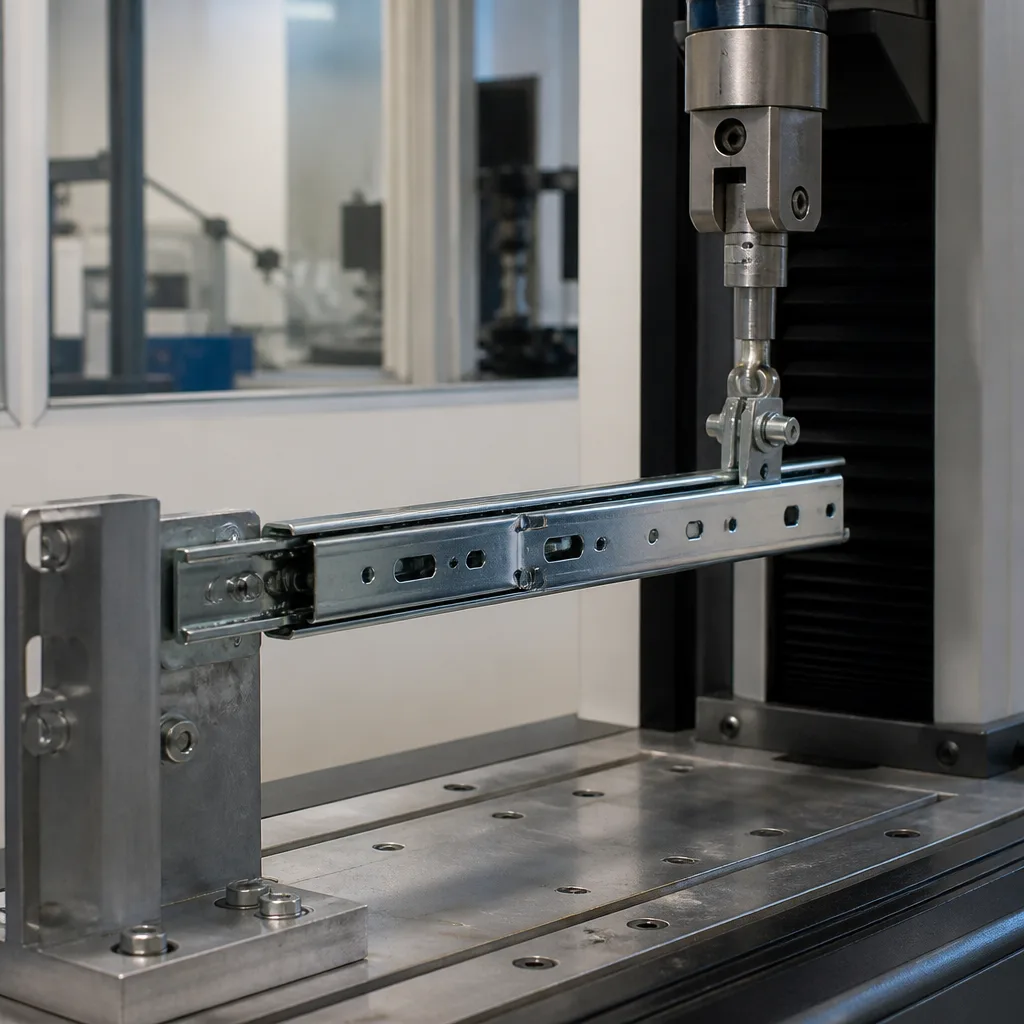
The tests consist of applying loads, forces, and velocities that simulate normal functional use as well as misuse that is reasonably expected to occur.
Except for the corrosion test described in this standard, the tests are designed to evaluate properties regardless of the material, design/structure, or manufacturing processes. Strength and durability tests are only relevant to extension elements and parts used for connection (e.g., screws).
Strength and durability tests are carried out within a test framework that has the specified characteristics. The test results are used only as a guide regarding the performance of a piece of furniture.
Test results are valid only for the extension element tested. Aging and the effects of heat and humidity are not included.
In short, the EN 15338 standard defines the test methods and requirements for the strength and durability of extension elements (e.g., drawer slides) and their components. This standard is critical for furniture manufacturers to ensure that drawers can withstand long-term use and heavy loads without failure.
The key aspects of this standard are as follows:
- Scope and application: This standard applies to all types of extension elements used in furniture (such as in kitchens, bathrooms, and offices), regardless of material or construction.
- Exclusions: This standard does not apply to the cabinet itself or the stability of the furniture; it focuses entirely on the mechanism and the movable drawer.
The EN 15338 standard defines various usage level categories to simulate different environments. These levels specify the weight and number of cycles the equipment must withstand:
- Level 1 (Light): Less frequent residential use.
- Level 2 (Medium): Typical residential or light commercial use.
- Level 3 (Heavy): Heavy-duty use, such as in public buildings or workshops.
The described test procedures include a series of rigorous mechanical testing methods to simulate lifetime wear and tear:
- Static load tests: By applying excessive vertical and horizontal forces to an open drawer, we check for permanent deformation or fracture.
- Durability (cyclic) test: The drawer is opened and closed for a specified number of cycles (e.g., 40.000 to 100.000 cycles) while fully loaded.
- Holding strength: This determines the mechanism's ability to stop when the drawer is pulled or pushed in with significant force.
- Holding test: The drawer is expected to remain on its tracks and not accidentally fall when fully extended.
To pass the EN 15338 standard, the extension element must meet the following criteria after testing:
- No structural defects: There should be no broken parts, cracks, or significant loosening of screws.
- Functionality: The drawer should continue to operate smoothly without requiring excessive force.
- Deflection: Sagging or vertical displacement under load must remain within specific millimeter tolerances.
The main reasons why the EN 15338 standard is considered important are as follows:
- Safety and injury prevention: The primary requirement is the protection of the end user.
- Anti-tipping: While focusing on standard features, this ensures a drawer doesn't separate or collapse under load, preventing heavy items (such as tools or glassware) from tipping over and falling.
- Overstretch protection: Ensures the stoppers are strong enough to prevent a fully loaded drawer from sliding completely out of the cabinet and falling to the floor when pulled.
- Quality standardization: This standard creates a common language for manufacturers and buyers.
- Comparability: Thanks to the EN 15338 standard, a furniture designer can compare two different brands of rail systems and know that if both have Level 3 (100.000 cycles) certification, they will perform similarly regardless of price or origin.
- Expectation management: Prevents manufacturers from making vague claims such as "unbreakable." They must prove this against specific static and dynamic loads as defined in the standard.
- Economic and legal protection with reduced liability:
- For furniture manufacturers, the use of EN 15338 certified components provides legal assurance. If a drawer malfunctions, it can be proven that parts tested according to European safety standards were used.
- Market access: To sell furniture in EU countries and many international markets, compliance with EN standards is often a prerequisite for major retailers and government contracts.
- Resilience and sustainability:
- Lifecycle accuracy: This standard simulates 40.000 to 100.000 cycles, ensuring a standard product isn't discarded after only two years of use. It encourages engineering for longevity by forcing manufacturers to account for metal fatigue and plastic wear.
- Material efficiency: Enables engineers to optimize materials. Instead of being over-engineered, each part can be specifically designed to meet the EN 15338 standard thresholds.
- Innovation and design: Standardization actually encourages innovation. It specifies that a drawer must withstand a certain load and leaves it to the engineers to figure out how to do it. This leads to the development of:
- Soft-closing mechanisms: These must still operate under the same durability requirements.
- Push-to-open systems: These add complexity but should remain as robust as traditional pull handles.
For many years, our organization, with its competent and experienced staff, has been understanding the needs of its clients, providing the advanced testing services they require, and assisting them in the establishment, implementation, and improvement of management systems. Within this framework, we also provide testing services in accordance with the EN 15338 standard.



