

The standard “CPSC-CH-E1001-08 Standard Operating Procedure for Determining Total Lead (Pb) in Children's Metal Products (Including Children's Metal Jewelry)” published by the U.S. Consumer Product Safety Commission (CPSC) provides detailed information on the test methods used to analyze the lead (Pb) content of children's metal products. The methods described determine the total lead content of metal products such as children's metal jewelry.
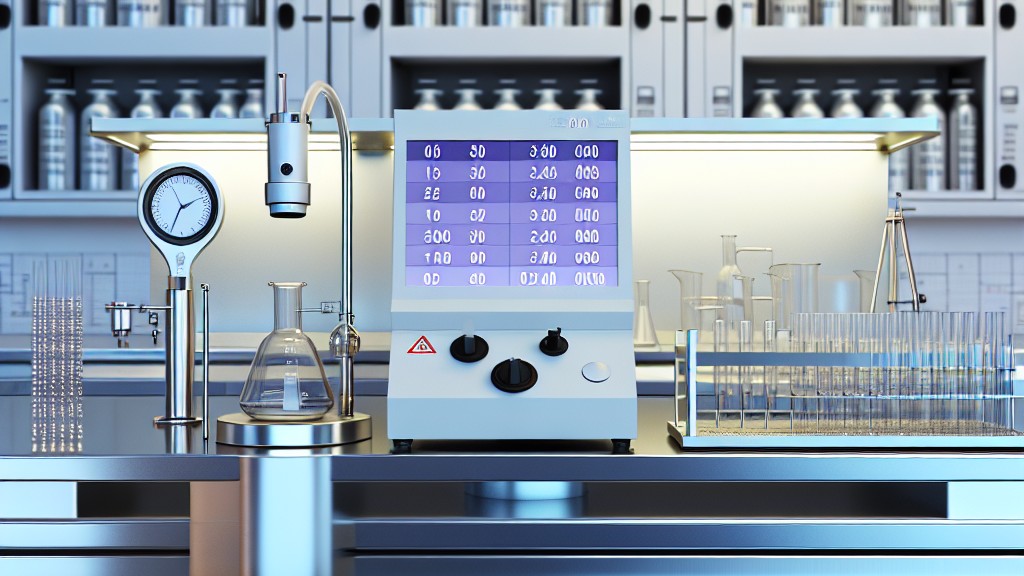
The test methods described are deemed adequate for determining lead content in most metal and metal alloy consumer product component parts. Adjustments may be required for products made from certain metal alloys and should be based on sound chemistry and materials science knowledge and appropriate acids for the alloy matrix. The test methods selected should be those that have been shown to provide the best total digestion of the sample material being analyzed. Test methods that are inconsistent with the stated application of the test method or that do not demonstrate optimal performance or ability to achieve complete digestion of the sample material should not be used.
These methods are applicable to metal and metal alloy components and are not recommended for other materials that will not dissolve under the conditions specified below or that will result in an inappropriate combination of materials that would be inconsistent with safe laboratory practices when combined with the specified acids.
The general approach is to pulverize any accessible component part of a sample, digest completely in a combination of hot concentrated nitric and hydrochloric acids, and analyze by inductively coupled plasma-optical emission spectroscopy (ICP-OES).
Other analytical methods such as inductively coupled plasma-mass spectrometry (ICP-MS) and flame atomic absorption spectroscopy (FLAA) and graphite furnace atomic absorption spectroscopy (GFAA) can be used as alternatives to ICP-OES under appropriate conditions, using valid, recognized analytical techniques for the alternative analytical method.
Total Pb in metals When preparing a sample in the digestion process, the laboratory must ensure that an aliquot of a component part of the sample is representative of the component to be tested and is free of contamination. Each unique, accessible component part from a sample must be analyzed for total Pb content. The testing laboratory uses one of two methods to determine the lead content in metal articles. One method is hot block digestion, which is based on the methodology found in Canadian Bureau of Product Safety Method C-02.4.1. The procedure referenced for determining the acid etchability of lead is not applicable to the determination of total lead content.
The other method used by the testing laboratory is a microwave digestion method based on EPA method 3051 A2.
Modifications of these methods may be required for certain alloys to account for acids suitable for digestion. Certified reference materials closely matching the alloy of the product being tested should be used to validate digestion and analysis methods.
In terms of sample preparation, either of the following two methods has been found to be suitable for the preparation of metal samples covered by this standard for subsequent elemental analysis:
A 50-30 mg aliquot of a component part is weighed in a labeled 100 ml digester. Component parts of children's articles, including metal jewellery, usually weigh several grams or more and an aliquot should be obtained (without paint or similar surface coating, but including any electroplating coating that is considered to be part of the substrate). Samples should be cut or ground into many small pieces to increase the rate of dissolution. If a grinding apparatus is used, contaminated parts should be thoroughly cleaned or discarded between uses to prevent cross-contamination. The actual weight of an aliquot of the ground component part is recorded to the nearest 0,1 mg.
A 30-100 mg piece of metal is weighed into a suitable microwave oven container fitted with a controlled pressure release mechanism. The component parts of children's articles, including metal jewellery, usually weigh several grams or more and should be obtained in aliquots (without paint or similar surface coating, but including any electroplating coating that is considered to be part of the substrate). Samples should be cut or ground into many small pieces to increase the rate of dissolution. If a grinding apparatus is used, contaminated pieces should be thoroughly cleaned or discarded between uses to prevent cross-contamination. The actual weight of the ground component part is recorded to the nearest 0,1 mg.
When analyzing samples using the ICP method for total lead in metals, diluted samples are analyzed for lead concentration using an ICP spectrometer (or atomic absorption spectrometer). The analysis procedures for ICP-OES and FLAA and GFAA are based on the methodology in “ASTM E1613-12 Standard Test Method for Determination of Lead by Inductively Coupled Plasma Atomic Emission Spectrometry (ICP-AES), Flame Atomic Absorption Spectrometry (FAAS), or Graphite Furnace Atomic Absorption Spectrometry (GFAAS) Techniques”. From the diluted sample, the total lead concentration in the component part is calculated, accounting for all dilution.
Our organization, which has been trying to support businesses from every sector with its testing, measurement, analysis and evaluation studies carried out in a wide range for years, has a strong staff that closely follows the developments in the world in the field of science and technology and constantly improves itself. In this context, testing services are also provided to businesses in accordance with the standard “CPSC-CH-E1001-08 Standard Operating Procedure for Determining the Total Lead (Pb) Content in Children's Metal Products (including Children's Metal Jewelry)”.
To get an appointment, to get more detailed information or to request an evaluation, you can ask us to fill in our form and reach you.

