

The standard “ISO/TS 16189 Footwear - Critical substances potentially present in footwear and footwear components - Test method for the quantitative determination of dimethylformamide in footwear materials” developed by the International Organization for Standardization (ISO) describes a method for determining the amount of dimethylformamide (DMF) in footwear and footwear components containing polyurethane (PU) coated material. In the footwear industry, when polyurethane (PU) is injected (reaction molding), this process does not require the use of DMF. The use of DMF is possible for PU coated material.
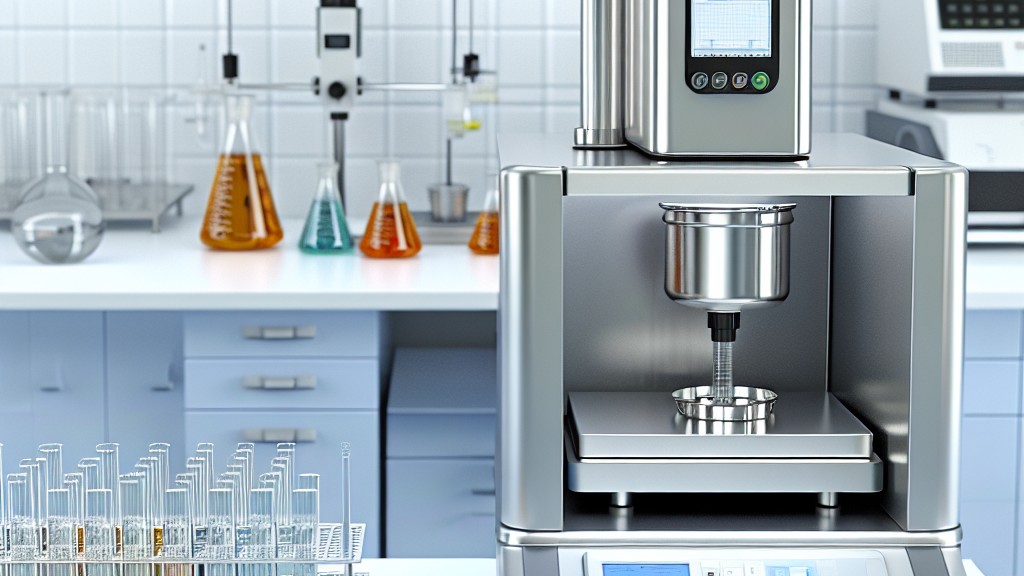
In principle, the sample is cut into small pieces and extracted with methanol in a closed bottle in an ultrasonic bath at 70 degrees for 1 hour. Then a portion (aliquot) of the sample is analyzed using a gas chromatograph with a mass selective detector.
In addition to the usual laboratory instruments and amber laboratory glassware, the following equipment is used in these tests:
Samples of polyurethane (PU) coated materials are cut into pieces with an edge length of approximately 3 mm to 5 mm. A maximum of three test samples of equal mass of the same material classification may be tested together, taking into account the limits of detection and quantification.
For extraction, weigh 1,00 g plus/minus 0,10 g of sample in a glass vial with an analytical balance, record the mass to the nearest 1 mg, add 1 ml of internal standard working solution and 9 ml of methanol, and cap the vial. The sample is held in an ultrasonic bath at 70 degrees plus/minus 5 degrees for 60 minutes plus/minus 5 minutes. After cooling to room temperature, the solution is filtered through a PTFE (Teflon) membrane filter (if necessary). A portion of the extract is transferred to a GC-MS vial and capped with a PTFE cap.
At least 4 calibration points should be used to construct the calibration curve. Examples of calibration solutions are given in the table. Examples of instrumental methods are included in the standard appendix (Annex A).
While evaluating the results, the linear regression function is established using the ratio obtained with the help of the equations given in the standard.
This method can detect dimethylformamide (DMF) in polyurethane (PU) coated materials with a quantification limit of 5 mg/kg or less.
In short, the main use of the ISO/TS 16189 standard is to identify harmful substances in footwear. This standard helps manufacturers identify and assess the presence of toxic or restricted substances, such as heavy metals (such as lead, cadmium, chromium VI), azo dyes, formaldehyde, phthalates and polycyclic aromatic hydrocarbons (PAHs). It supports industry efforts to eliminate or reduce hazardous substances, improve product safety and environmental compatibility.
The standard test method for quantitatively determining dimethylformamide (DMF) in footwear materials, particularly synthetic leathers, adhesives or plastics (e.g. polyurethane), usually follows gas chromatography (GC) or gas chromatography-mass spectrometry (GC-MS). Testing involves extraction of DMF from the material using a suitable solvent (usually methanol or water) followed by quantification using GC or GC-MS.
Our organization, which has been trying to support businesses from every sector with its testing, measurement, analysis and evaluation studies carried out in a wide range for years, has a strong staff that closely follows the developments in the world in the field of science and technology and constantly improves itself. In this context, testing services are also provided to businesses in accordance with the standard “ISO/TS 16189 Footwear - Critical substances potentially present in footwear and footwear components - Test method for the quantitative determination of dimethylformamide in footwear materials”.
To get an appointment, to get more detailed information or to request an evaluation, you can ask us to fill in our form and reach you.

