

The standard "GB/T 20810 Toilet paper (including toilet paper-based paper)" published among the National Standards of the People's Republic of China describes the terms and definitions, classification, requirements, test methods, inspection rules, marks, packaging and transportation and storage principles for toilet paper (including toilet paper-based paper). This standard applies to toilet paper used in daily life and toilet paper-based paper used in processing toilet paper sold externally.
The most well-known characteristic of toilet paper is its ply. Ply refers to the layers in the toilet paper. Single-ply toilet paper is thinner and more affordable, but people tend to prefer two- or three-ply toilet paper for a softer, thicker feel. Two- or three-ply toilet papers generally have a softer and thicker texture, and tend to be more durable and absorbent. Recycled toilet paper also saves up to 95 percent of the air pollutants generated during production. Meanwhile, recently, toilet paper is being produced not from trees, but from other fibers such as renewable bamboo, sugarcane, or a combination of these. Bamboo gives the toilet paper strength, and sugarcane fibers add softness. Bamboo fibers are soft, durable, and absorbent.
Technically, all toilet paper is natural and therefore biodegradable, whether it’s made from virgin pulp, recycled paper, or bamboo and sugar cane. However, standard toilet paper requires more water and takes longer to break down than true biodegradable toilet paper.
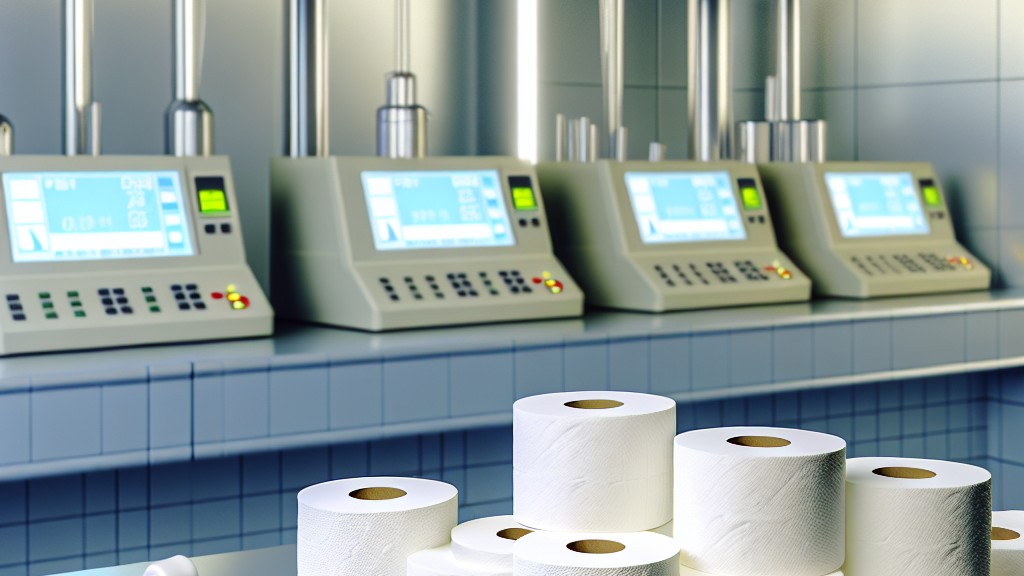
Toilet paper tests, including toilet tissue-based paper, mainly include testing properties such as microbial limit, moisture content, pH value, dimensional deviation, weight deviation, slip amount, return amount and leakage amount. Advanced laboratories provide full-range physical, microbial and hygienic performance testing services for paper products and provide necessary technical support services for improving the quality of paper products.
The test method developed to measure the water absorbency of toilet paper involves placing a piece of toilet paper of known area and mass in contact with a volume of water and allowing the water to be absorbed by the paper for a specified period of time. The mass of the wet paper is then measured and the water absorbency is calculated as the amount of water absorbed per unit area of the paper. This test is also used to evaluate the performance of paper products for applications where they will be exposed to moisture or water, such as packaging or printing applications. This test determines the overall physical strength and porosity of the materials.
The tests focus primarily on the following features:
Our organization has a strong staff that closely follows the developments in the world in the field of science and technology and constantly improves itself. Among the numerous test, measurement, analysis and evaluation studies provided for businesses in various sectors, there are also testing services in accordance with the "GB/T 20810 Toilet paper (including toilet paper-based paper)" standard.
To get an appointment, to get more detailed information or to request an evaluation, you can ask us to fill in our form and reach you.

