

The European standard "EN 12520 Furniture - Safety, strength and durability - Requirements for home seating" describes the minimum requirements for the safety, durability and durability of all types of home seating for adults. It also describes additional test methods for seat side-to-side durability and finger pinch, shear and compression.
However, this standard does not include requirements for:
This test method is based on use by individuals weighing up to 110 kg.
The standard annexes are arranged as follows:
For the purposes of this standard, the following terms and definitions apply:
The tests are performed on the same sample and in the order listed in the table, except for test number 15 (EN 13759), for which a separate sample may be used.
General safety requirements: The seat shall be designed to minimize the risk of injury to the user. When the seat is positioned in the intended use configuration, all parts of the seat with which the user comes into contact during intended use shall be designed to prevent physical injury or damage. This requirement is met if:
Movable and adjustable parts must be designed to prevent injury and accidental operation. Load-bearing parts of the seat must not loosen unintentionally. All parts lubricated to promote sliding must be designed to protect users from oil stains in normal use.
Holes in pipe or rigid components There shall be no holes at the ends of pipe components or in rigid components in accessible parts between 7 mm and 12 mm, but the penetration depth shall be less than 10 mm. This requirement shall be met if no hazard is present when tested in accordance with this standard.
The requirements in this standard for cutting and pressure points do not apply to electrically operated furniture. The requirements for electrically operated furniture are provided in the EN 17684 standard.
The seat shall meet the requirements of EN 1022 standard after the relevant tests listed in the table have been completed in terms of stability. In the case of a seat that may not meet the stability requirements before any testing is carried out, applicable stability tests may be carried out before starting the test series specified in the table.
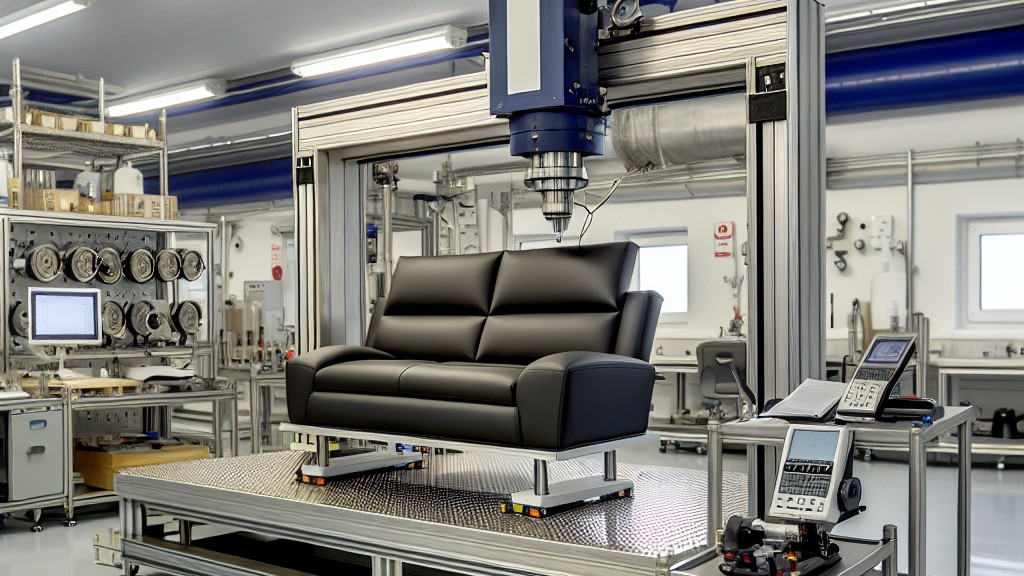
Seats are tested for strength and durability in the order given in the table and in accordance with the test conditions in the EN 1728 standard. Tests 1, 2, 3.1, 3.2, 5, 6, 7, 8, 9, 10, 11, 12 and 15 are considered important for safety.
The test methods included in the table given in the standard are as follows:
1. Seat static load and back static load test
2. Seat front edge static load test
3.1 Footrest static load test
3.2 Leg rest static load test
4. Armrest sideways static load test
5. Armrest down static load test
6. Combined seat and back durability test
7. Seat front edge durability test
8. Seat side-by-side durability test
9. Armrest durability test
10. Leg forward static load test
11. Leg sideways static load test
12. Seat impact test
13. Drop test
14. Back impact test
15. Durability of electrically powered seating product
Our organization, which has been trying to support businesses from every sector with its testing, measurement, analysis and evaluation studies carried out in a wide range for years, has a strong staff that closely follows the developments in the world in the field of science and technology and constantly improves itself. In this context, testing services in accordance with the "EN 12520 Furniture - Safety, strength and durability - Requirements for home living areas" standard are also provided to businesses.
To get an appointment, to get more detailed information or to request an evaluation, you can ask us to fill in our form and reach you.

