EN 20957 Fixed Training Equipment
The European standard "EN 20957 Stationary training equipment" consists of a number of subsections published under the same title. Namely,
- EN 20957-1 Part 1: General safety requirements and test methods describes the general safety requirements and test methods for fixed indoor training equipment. Other parts of this standard may modify the requirements contained in this standard. This standard also covers environmental aspects and a classification system.
This standard applies to all fixed training equipment. This includes equipment used in training areas of organisations such as sports associations, training institutions, hotels, gyms, clubs, rehabilitation centres and studios (classes S and I) (equipment to which access and control is specifically arranged by the owner, i.e. the person with legal responsibility), equipment for domestic use (class H) and other types of equipment, including motorised equipment, as defined in this standard.
The requirements of the other parts of the EN 20957 standard take precedence over the relevant requirements of this general standard.
This standard does not apply to fixed educational equipment designed for outdoor use. It also does not apply to fixed educational equipment designed for use by children under the age of 14. However, this provision does not apply if such fixed educational equipment is intended for educational purposes for children in schools and other educational settings under the supervision of a qualified adult instructor.
The EN 20957-1 standard does not apply to fixed training equipment (i.e. freely accessible) designed for use outdoors without supervision.
Equipment should be classified according to accuracy and usage classes. If the equipment's intended use is for more than one usage class, it must meet the requirements of each class.
Accuracy classes apply only to equipment that displays training data:
- Class A: High accuracy
- Class B: Medium accuracy
- Class C: Low accuracy.
The requirements for accuracy classes are shown in additional specific sections of this standard.
Usage classes are determined as follows:
- Class S (Studio): Professional or commercial use. This type of fixed training equipment is designed for use in training areas of organizations such as sports associations, educational institutions, hotels, clubs, and studios, where access and control are specifically arranged by the owner (person with legal responsibility).
- Class H (Home): Domestic use. This type of fixed training equipment is designed for use in private homes where access to the equipment is regulated by the owner (person with legal responsibility).
- Class I: Professional or commercial use provided for inclusive use by people with special needs (e.g., visual, hearing, physical, or learning disabilities). Such equipment must also meet the requirements of Class S. This type of fixed training equipment is intended for use in training areas of organizations such as sports associations, educational institutions, hotels, clubs, rehabilitation centers, and studios, where access and control are specifically arranged by the owner (person with legal responsibility).
The standard "EN 20957-2 Part 2: Strength training equipment, additional specific safety requirements and test methods" describes additional safety requirements for stationary strength training equipment. This standard is intended to be read in conjunction with the general safety requirements of EN 20957-1. This standard is applicable to stationary strength training equipment (training equipment) with stacked weight resistance or other resistance devices such as elastic cords, hydraulic, pneumatic, electric, magnetic, springs, and externally loaded weights (Type 2). It is classified as H, S, and I according to EN 20957-1.
- EN 20957-4 Part 4: Strength training benches, additional specific safety requirements and test methods" describes the safety requirements for fixed strength training benches and free-standing barbell racks in addition to the general safety requirements of EN 20957-1. This standard should be read in conjunction with EN 20957-1. This standard is applicable to fixed strength training equipment types (type 4) in classes S, H, and I according to EN 20957-1.
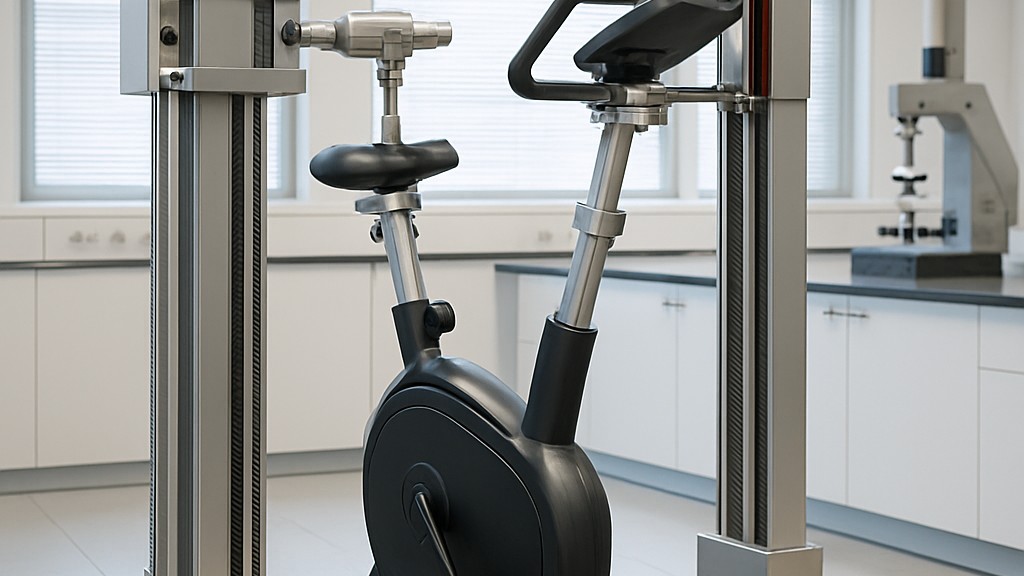
- The standard "EN 20957-5 Stationary exercise bicycles and upper-body crank training equipment, additional specific safety requirements and test methods" specifies the safety requirements for stationary exercise bicycles and upper-body crank training equipment in addition to the general safety requirements of EN 20957-1. This standard is applicable to stationary exercise bicycles and upper-body crank training equipment (type 5) within classes S, H, I and A, B, and C according to EN 20957-1. Any attachments provided with stationary exercise bicycles and upper-body crank training equipment for the performance of additional exercises are subject to the requirements of EN 20957-1. This standard does not apply to roller stands, as they cannot be reasonably secured.
- EN 20957-6 Part 6: Treadmills, Additional Specific Safety Requirements and Test Methods describes the safety requirements and test methods for treadmills, in addition to the general safety requirements and test methods of EN 20957-1. This standard is not to be applied in conjunction with EN 20957-1. This standard addresses significant hazards, hazardous situations, and incidents associated with stationary training equipment when used as intended and under conditions of misuse foreseeable by the manufacturer. This standard applies to powered and non-powered/hand-powered treadmills of the accuracy classes S, H, and I, and classes A, B, and C. It does not apply to treadmills manufactured before the publication of this standard.
- EN 20957-7 Part 7: Rowing equipment, additional specific safety requirements and test methods" describes the safety requirements for rowing equipment. This standard is intended to be read in conjunction with the general safety requirements of EN 20957-1. This standard is applicable to fixed rowing training equipment in classes H, S, and I and classes A, B, and C for accuracy.
- The standard "EN 20957-8 Part 8: Steps, stair climbers and climbers - Additional specific safety requirements and test methods" specifies the safety requirements for steppers, stair climbers and climbing machines, whether operated from a standing or sitting position. These requirements are in addition to the general safety requirements of standard EN 20957-1, with which this standard is intended to be read. This standard applies to stationary training equipment of the stepper, stair climber and climbing training equipment type within classes S and H. Additional requirements are provided for accuracy class A.
- EN 20957-9 Part 9: Elliptical Trainers, Additional Specific Safety Requirements and Test Methods" specifies additional safety requirements for elliptical trainers, supplementing the general safety requirements of EN 20957-1. This part of EN 20957 specifies safety requirements for cardiovascular equipment with closed-pattern motion or reciprocating motion performed from a standing or sitting position, designed to keep the user's feet in contact with the foot platform, but excluding steppers.
- The standard "EN 20957-10 Part 10: Exercise bicycles with or without fixed wheels - Additional specific safety requirements and test methods" describes the safety requirements for exercise bicycles with or without fixed wheels and free wheels having an inertia of at least 0,6 kg m2. These requirements are in addition to the general safety requirements of EN 20957-1, with which this standard is intended to be read. Any attachments provided with an exercise bicycle with or without fixed wheels for the performance of additional exercises are subject to the requirements of EN 20957-1.
In short, the EN 20957 series of standards is considered important because it includes minimum safety requirements for stationary exercise equipment such as treadmills, exercise bikes, elliptical machines, and strength training machines. This standard helps prevent:
- Mechanical injuries (e.g., compression, cutting, crushing)
- Imbalance and overturning
- Electrical hazards (for powerful equipment)
These standards provide test procedures to verify:
- Mechanical stability
- Strength under tension
- Load carrying capacity
- Performance of safety features (such as emergency stop or locking systems)
With these testing methods, consistency and objectivity in equipment evaluation are ensured.
Our organization, which has been supporting businesses across all sectors for years through a wide range of testing, measurement, analysis, and evaluation activities, has a strong team of employees who closely follow global developments in science and technology and are constantly improving themselves. In this context, we also provide testing services to businesses in accordance with the "EN 20957 Fixed Training Equipment" standard.



