

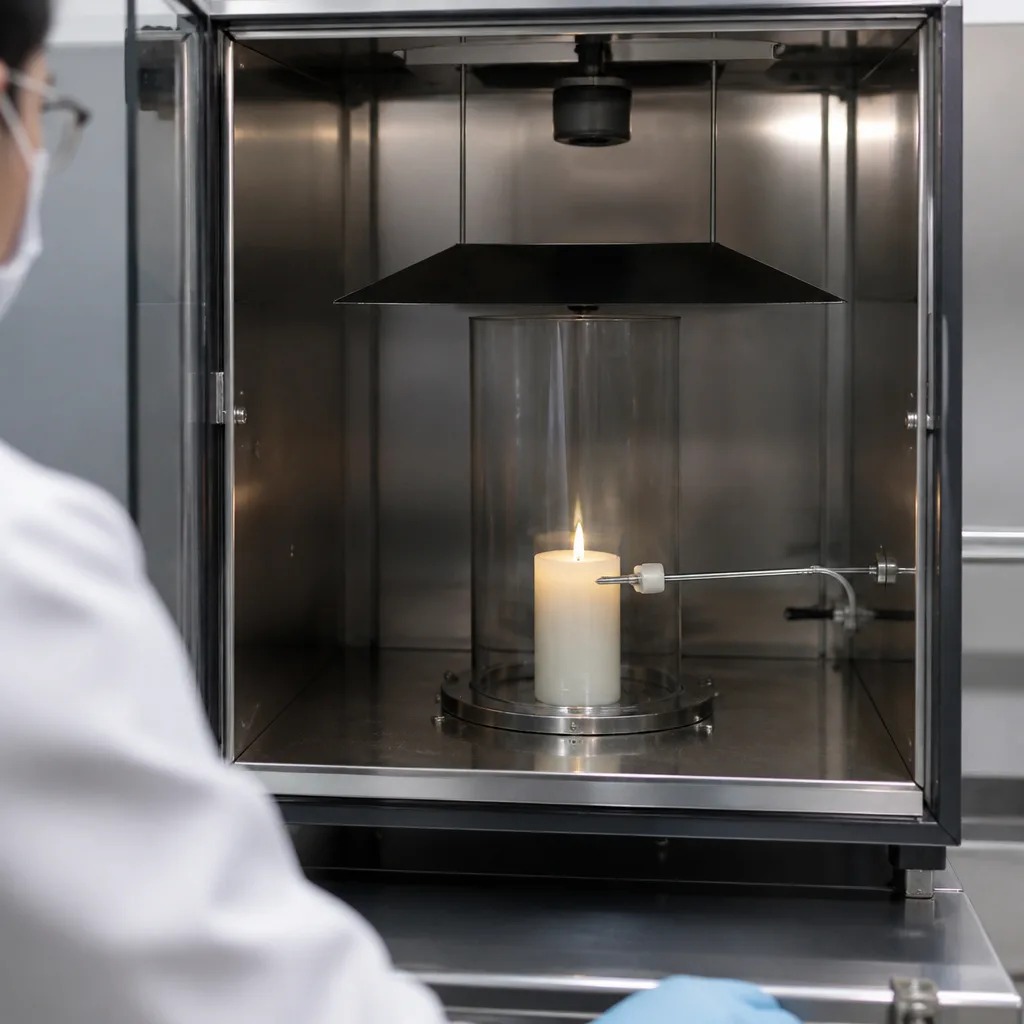
The European standard “EN 15426 Candles – Specification for soot generation behavior” describes the requirements and test method for evaluating the soot behavior of candles burned indoors. This standard applies to single-wick candles designed for indoor use with a diameter of up to 100 mm or equivalent cross-sectional area. The standard includes test setup, sampling, test conditions, and reporting to enable manufacturers and testing laboratories to reliably measure soot emissions.
Single-wick candles and multi-wick candles with a diameter greater than 100 mm or an equivalent cross-sectional area cannot be evaluated using this test method due to technical reasons. For these candles, evaluation of visible soot emission is possible.
In terms of sobriety behavior, when tested according to this standard, the average hourly sobriety index obtained from the three tests (samples) should be less than 1,0/hour.
In short, the EN 15426 standard specifies the requirements and standardized test methods for evaluating the amount of visible soot produced by burning indoor candles. This standard helps manufacturers produce cleaner-burning candles that are safer for consumers and less likely to stain indoor environments. The latest revision of this standard has introduced technical updates to improve test consistency and product evaluation.
The primary objectives of the EN 15426 standard are as follows:
The EN 15426 standard applies to:
However, this standard does not fully apply to the following:
The visible establishment for these products could still be evaluated, but the standardized testing method is not technically feasible.
Soot consists of microscopic carbon particles formed during incomplete combustion. Excessive soot formation can lead to:
Although soot levels in candles are generally low during normal use, poorly designed candles or incorrect burning conditions can significantly increase soot production.
The test method described in the EN 15426 standard evaluates soot formation while a candle is burning under controlled laboratory conditions. This method generally follows these steps:
Standardized testing minimizes variability caused by environmental conditions, ensuring comparable results across laboratories.
The EN 15426 standard acknowledges that soot formation depends on various design factors, including:
Properly optimizing these variables helps manufacturers achieve low smoke generation performance.
EN 15426 is one of several European candle standards that address different aspects of candle safety and quality.
Together, these standards provide comprehensive guidance on candle safety, labeling, and performance.
The EN 15426 standard is widely used by the following sectors:
Many retailers require candle products to comply with the EN 15426 standard before offering them for sale.
Manufacturers who comply with the EN 15426 standard gain several advantages:
Compliance also demonstrates commitment to product safety and environmental performance.
Although the EN 15426 standard provides a standardized method for assessing soot formation, it does not:
Manufacturers typically use the EN 15426 standard in conjunction with other relevant European candle standards to ensure comprehensive product compatibility.
In conclusion, the EN 15426 standard is an important European standard that helps ensure indoor candles burn with minimal visible soot under standardized conditions. By defining consistent test procedures and acceptance criteria, it enables manufacturers to develop cleaner-burning products, improve customer satisfaction, and meet European quality expectations. Along with other candle safety standards, the EN 15426 standard significantly contributes to the safety, performance, and environmental quality of candles sold across Europe.
For many years, our organization, with its competent and experienced staff, has been understanding the needs of its clients, providing the advanced testing services they require, and assisting them in the establishment, implementation, and improvement of management systems. Within this framework, we also provide testing services in accordance with the EN 15426 standard.
To get an appointment, to get more detailed information or to request an evaluation, you can ask us to fill in our form and reach you.

