NEMA LD 3-2005 High Pressure Decorative Laminates
The standard “NEMA LD 3-2005 High-pressure decorative laminates” developed by the American National Electrical Manufacturers Association (NEMA) describes a procedure for high-pressure decorative laminate sheets consisting of paper, fabric, or other core materials laminated at pressures greater than 5,0 MPa using thermoset condensation resins as binders.
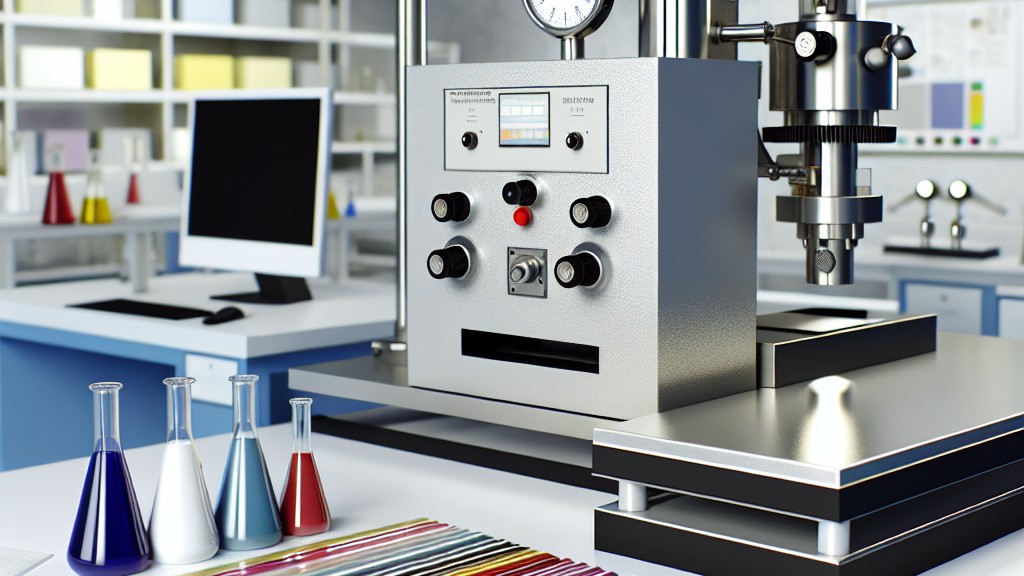
The types of high pressure decorative laminates covered by this standard and their descriptions are as follows. Where appropriate, the backs of the boards shall be sanded or prepared to be suitable for bonding with adhesives to a base material for mechanical support.
Types of laminate:
- General purpose type: This type is a high pressure decorative laminate designed for both horizontal and vertical applications where appearance, durability, resistance to stains and resistance to heat up to 135 degrees are required.
- Postforming type: This type is a high-pressure decorative laminate similar to the general-purpose type, but can be thermoformed under controlled temperature and pressure in accordance with the laminate manufacturer's recommendations.
- Flame retardant type: This type of laminate is a high-pressure decorative laminate that can provide flame retardant properties as determined by test methods required by the competent authority.
- High abrasion type: This type of laminate is a general purpose high pressure decorative laminate with increased surface abrasion resistance.
- Specific purpose type: This type is a general purpose high pressure decorative laminate for certain heavy duty applications such as transportation, door kick plates and other suitable applications.
- Compact laminate type: This type is a high pressure decorative laminate with increased thickness. Two general categories are normally recognised. The first category is single or double faced, approximately 2 to 6 mm thick, and must be rigidly supported without necessarily being bonded to a substrate. The second category is double faced, usually thicker than 6 mm, and is self-supporting. The thickness is selected according to the application and panel dimensions.
- Cabinet liner type: This type is a high-pressure decorative laminate designed for use in cabinet interiors only.
- Backing type: This type of laminate is a high-pressure decorative laminate without a decorative face designed to be used as a balancing board in panel construction.
- Other types: Various decorative effects have been developed to meet specific aesthetic requirements. These laminates may have special visual appeal, such as gloss finish, deep embossed textures and metallic surfaces. They are designed for specific installations and may not be suitable for all applications. Therefore, they are not included in these standards. Information on proper application, properties and maintenance should be requested from the manufacturer.
The Code of Federal Regulations, Title 21, Section 175.300 describes resinous and polymeric coatings that are safe to use as food contact surfaces when used in accordance with the conditions specified in the regulation. Section 175.300 should be consulted to determine if the resins commonly used in the production of decorative laminates are safe to use as food contact surfaces.
This standard does not specify the fire rating characteristics of individual products. These products are measured and reported in accordance with procedures published by the National Fire Protection Association and other code-setting organizations. The manufacturer should be consulted for specific fire ratings.
High pressure decorative laminates are typically surface materials bonded to substrate materials. Therefore, fire rating data should be developed by testing the bonded laminate, adhesive and substrate and consulted with the manufacturer.
High pressure decorative laminates have coatings that give the surface various degrees of gloss. The gloss levels of satin, furniture, high gloss and textured finish laminates are measured in accordance with this standard and must fall within the values in the table provided.
Laminates are normally sanded in the machine direction. Higher gloss readings and pattern direction do not necessarily indicate machine direction. Other finishes are available, but due to the nature of the surface texture, a standard test method has not yet been developed that adequately characterizes these finishes. High pressure decorative laminate with gloss levels above 50 may exhibit different performance characteristics than other finishes and may not meet all of the performance requirements in this standard.
The test methods defined in this standard are:
- Appearance: This test measures the visual and dimensional quality of high-pressure decorative laminate.
- Surface finish: This test measures the gloss level of high pressure decorative laminate. Gloss is determined by the smoothness of the surface and is measured by the amount of light reflected when the angle of incidence equals the angle of reflection.
- Light Resistance: These tests measure the ability of a high-pressure decorative laminate to retain its color when exposed to a light source with a frequency range similar to sunlight through window glass. They are not intended to demonstrate resistance to repeated exposure to outdoor weathering.
- Cleanability/stain resistance: This test measures both the easy cleanability of high-pressure decorative laminate and its stain resistance with common household substances.
- Resistance to boiling water: This test measures the ability of the surface of a high-pressure decorative laminate to retain its color and surface quality when exposed to boiling water.
- High temperature resistance: This test should use the hot wax or hot oil method. This test measures the ability of the surface of the high pressure decorative laminate to retain its color and surface quality when exposed to high temperatures.
- Scratch resistance (values are taken into account): The linear glass scratch method or the diamond scratch method is used for this test. This test measures the ability of the surface of a high-pressure decorative laminate to resist scratching by a material with a sharpness and hardness similar to silica or diamond.
- Sphere Impact Resistance: This test measures the ability of a high-pressure decorative laminate to resist fractures caused by impact with a large diameter sphere.
- Arrow impact resistance: This test measures the ability of a high-pressure decorative laminate to resist fractures caused by impact with a small diameter sphere.
- Radiant heat resistance: This test uses either the coil element method or the strip element method. This test measures the ability of the surface of a high-pressure decorative laminate to resist damage when exposed to a radiant heat source.
- Dimensional Change: This test measures the dimensional changes of high-pressure decorative laminate over extreme temperature and relative humidity ranges.
- Room temperature dimensional stability: This test measures the dimensional stability of high pressure decorative laminate over the extreme room temperature relative humidity range.
- Abrasion resistance: This test measures the ability of the surface of the high-pressure decorative laminate to resist abrasive wear of the decorative layer.
- Formability: This test measures the ability of a high-pressure decorative laminate to be subsequently shaped.
- Blister resistance: This test measures the ability of postforming high-pressure decorative laminate to resist blistering during postforming operations.
Our organization, which has been trying to support businesses from every sector with its wide range of testing, measurement, analysis and evaluation studies for years, has a strong staff that closely follows the developments in the world in the field of science and technology and constantly improves itself. In this context, testing services in accordance with the "NEMA LD 3-2005 High-pressure decorative laminates" standard are also provided to businesses.



