

The standard, "ASTM F1566 Standard Test Methods for Evaluating Spring Mattresses, Bases, Mattresses, or Bedding Ensembles," published by the American Society for Testing and Materials (ASTM), describes accepted test methods for testing mattress innersprings, bases, and finished mattresses or bedding ensembles, or both, to ensure uniformity of results. These test methods are applicable to unslab mattress core units, including but not limited to innersprings, air chambers, and foam cores; unslab foundations, including but not limited to bases and building foundations; finished foundations; and bed structures. The data developed are for comparative analysis without applicable pass/fail criteria.
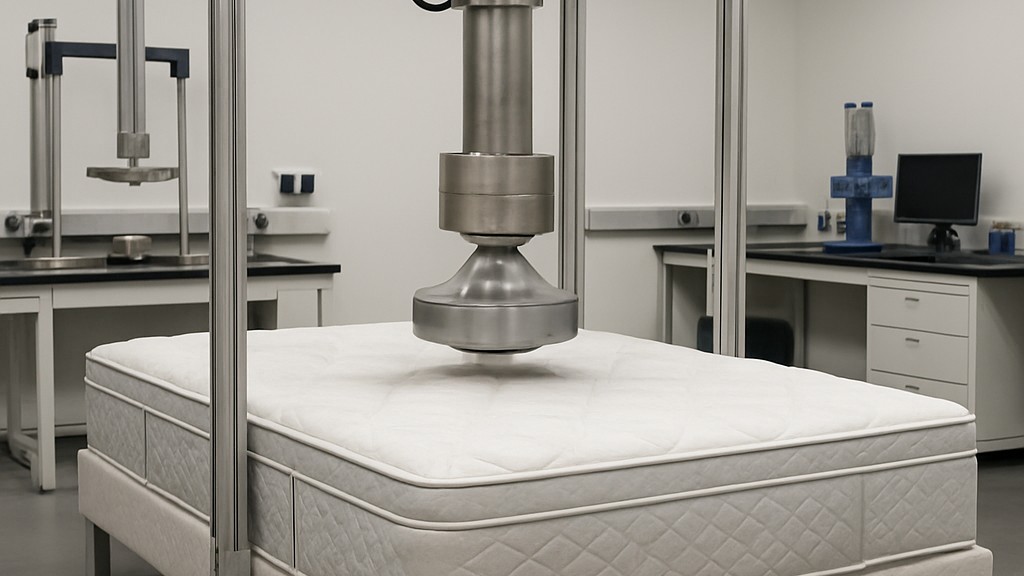
Durability testing, impact testing, and hardness retention/surface deformation testing require upholstered specimens. Hardness testing can be performed on unupholstered components, innerspring units, and flexible bases, or on finished mattresses or bedding sets. A standard upholstery package is specified when evaluating a mattress core or unupholstered base. These test methods are designed for use on newly manufactured products.
This standard includes two separate test methods for evaluating mattress components, innersprings and bases, and mattresses and bedding sets. The component innerspring and base test methods include measurements of hardness, hardness retention, durability, and impact. The mattress and bedding set test methods include measurements of hardness, hardness retention, durability, impact, and change in height. One or more test methods should be used individually or in combination to ensure appropriate evaluations.
When it comes to a good night's sleep, the components of a mattress system—springs, bases, mattresses, and bedding—play a critical role in comfort, support, and durability. Each element serves a different purpose, and their interaction determines the overall sleep experience. The ASTM F1566 standard ensures that these products meet rigorous performance criteria, but understanding their structure and function is crucial for consumers, manufacturers, and retailers.
Springs are the primary support system of many mattresses and consist of steel coil springs that provide structure and durability. The foundation of traditional mattresses, innerspring mattresses combine these coils with layers of foam, padding, or fabric for comfort.
Bases are supportive boxes placed under beds to increase height, absorb shock, and extend the life of the mattress. Traditionally, they consist of a wooden or metal frame covered with steel springs or slats covered with fabric. The primary functions of bases are to:
The ASTM F1566 standard evaluates bases with mattresses and performs structural integrity (e.g., 275 kg static load) and durability tests.
Mattresses are the basic sleeping surface that combines support cores (innersprings, foam, or air) with comfort layers (foam, latex, or fiber). Spring mattresses use steel coils for support and are covered with padding. They are known for their flexibility and affordability. Foam mattresses are made from polyurethane or memory foam, conforming to the body and providing pressure relief. Latex mattresses use natural or synthetic latex for durability and environmental friendliness. Hybrid mattresses combine spring mattresses with foam/latex for balanced support and comfort.
Mattress sets combine a mattress with a compatible base or box spring (sold together) to optimize performance. They enhance comfort and extend the life of the product by providing proper alignment and support. Performance is tested as a system according to ASTM F1566, and cohesive strength is guaranteed.
Springs, bases, mattresses, and bedding sets form the backbone of modern sleep systems, each contributing to comfort, durability, and safety. The ASTM F1566 standard ensures these products meet stringent criteria, fostering confidence and innovation in a competitive marketplace.
ASTM F1566 standard contains standardized laboratory test methods for evaluating the functional properties of mattresses and bedding, including innerspring mattresses, bases, and foam mattresses (e.g., polyurethane or latex). This standard focuses on three key areas: durability, strength, and structural integrity. It applies to products intended for residential use, excluding specialized products such as waterbeds, airbeds, or medical mattresses. By simulating years of typical use, ASTM F1566 ensures that mattress systems withstand mechanical stress without excessive wear, sagging, or failure, providing manufacturers with data to optimize designs and consumers with confidence in product life.
ASTM F1566 specifies three basic test methods performed under controlled conditions, with a temperature of 23 degrees Celsius, 50 percent relative humidity, and conditioning of specimens for at least 24 hours:
This standard uses precision equipment such as load cells, automatic cylinders, and digital indentation testers to ensure repeatable results. Tests simulate 7-10 years of average use, consistent with typical warranty periods.
The ASTM F1566 standard is an integral part of the bedding industry and is used in:
This standard is particularly important for innerspring mattresses and the growing foam and hybrid segments. It facilitates comparison with similar international standards, but differences exist; for example, the EN 1957 standard uses a 355 mm plate, while the ASTM F1566 standard uses a 330 mm plate. Compliance also supports eco-labeling, aligning with sustainability trends such as recyclable foams and organic materials.
Ultimately, ASTM F1566 is a vital standard for ensuring that mattresses and bearing systems meet high standards for durability, comfort, and safety. Rigorous, repeatable testing methods empower manufacturers to innovate while protecting consumers from substandard products.
Our organization, which has been operating for many years and meticulously follows global developments in science and technology, employs a skilled team and extensive infrastructure to conduct testing, measurement, and analysis in a wide range of areas for businesses across all sectors. In this context, we also provide testing services in accordance with ASTM F1566 Standard Test Methods for the Evaluation of Spring Mattresses, Bases, Beds, or Bedding.
To get an appointment, to get more detailed information or to request an evaluation, you can ask us to fill in our form and reach you.

