

The standard “ISO/TS 16181 Footwear - Critical substances potentially present in footwear and footwear components - Determination of phthalates in footwear materials” developed by the International Organization for Standardization (ISO) describes a test method to determine the presence of phthalate compounds. This test method is applicable to all footwear materials. This test method can also be used to determine plasticizers other than those listed in this standard, subject to validation.
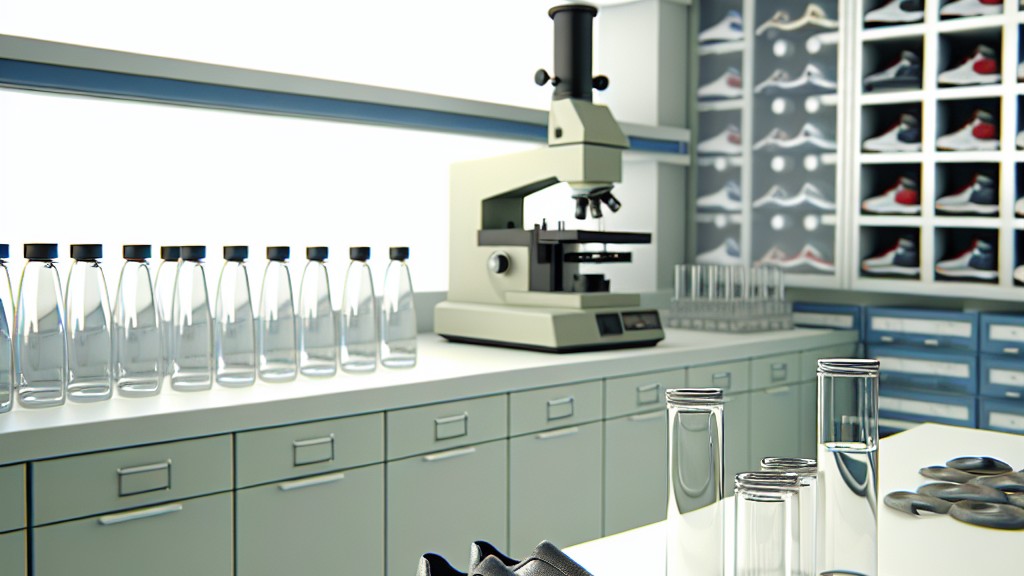
The purpose of the described test method is to remove phthalates in footwear materials such as leather, textiles, polymers, coated materials or others. This method uses extraction apparatus containing n-hexane/acetone as solvent. The total n-hexane/acetone extractable phthalate plasticizer content is calculated by weight by gas chromatography-mass spectrometry (GC-MS) detection to identify and quantify individual phthalates.
The test piece consists of a single piece of material taken from the shoe, such as leather, textile, polymer, coated material or other. Preparation of the sample shall involve the removal of individual materials from the shoe and the preparation of a test piece made of particles as small as possible (but at least 4 mm). It is possible to grind the sample.
When preparing the internal standard solution, a 500 µg/ml stock solution of the internal standard in n-hexane is prepared. A series of individual stock standard solutions of individual phthalates are prepared in n-hexane as shown in the table titled “Stock solutions”.
Appropriate phthalate calibration solutions in n-hexane are prepared from stock standard solutions. At least five suitable dilutions of the calibration sets are used to generate calibration plots, an appropriate amount of internal standard is added to each, and GC-MS analysis is performed. DIDP and DINP overlap in the chromatogram, the target ions to be selected are specified in the standard appendix (Appendix A).
For the extraction procedures, an appropriate amount of internal standard solution is prepared. A blank sample should be prepared for each test series. For the preparation of the blank sample, the entire procedure (extraction and GC-MS analysis) should be performed in a 50 ml glass bottle without sample.
For ultrasonic extraction, 2,0 g plus/minus 0,1 g of the representative sample is accurately weighed into a 50 ml glass bottle with a teflon stopper. 40 ml of n-hexane/acetone is added to wet the entire sample. The phthalate is extracted in an ultrasonic bath at 50 degrees for 1 hour and the extract is transferred to a 50 ml volumetric flask after filtration or centrifugation. It is filled to the mark with n-hexane. A known volume of the organic phase is transferred to a suitable GC sampling bottle, an appropriate volume of internal standard solution is added and GC-MS analysis is performed. If necessary, more diluted solutions are prepared using the original solution and the analysis is repeated after adding an appropriate volume of internal standard solution.
For the microwave extractor, accurately weigh 2,0 g plus/minus 0,1 g of the representative sample into a polytetrafluoroethylene (PTFE) container. A sufficient amount of n-hexane/acetone mixture is added to wet the entire sample. The phthalate is extracted in the microwave extractor. The following parameters can be used as a basis for optimizing the extraction: power 600 W, time 15 min, temperature 100 degrees and pressure 10 bar (1 MPa). The extract is transferred to a 50 ml volumetric flask. It is filled to the mark with n-hexane. A known volume is transferred to a suitable GC sampling flask, an appropriate volume of internal standard solution is added and GC-MS analysis is performed. If necessary, further diluted solutions are prepared using the original solution and the analysis is repeated after adding an appropriate volume of internal standard solution.
When calculating results, determine the content of each phthalate from the calibration chart, expressed as a percentage, corrected for the internal standard peak area, and interpolate the phthalate concentration in micrograms per milliliter, correcting for any dilution. The blank concentration is subtracted from the sample concentration using the equation given in the standard.
Our organization, which has been trying to support businesses from every sector with its testing, measurement, analysis and evaluation studies carried out in a wide range for years, has a strong staff that closely follows the developments in the world in the field of science and technology and constantly improves itself. In this context, testing services are also provided to businesses in accordance with the standard “ISO/TS 16181 Footwear - Critical substances potentially present in shoes and shoe components - Determination of phthalates in shoe materials”.
To get an appointment, to get more detailed information or to request an evaluation, you can ask us to fill in our form and reach you.

