EN 13843 Wheeled Sports Equipment - Inline Skates - Safety Requirements and Test Methods
The European standard "EN 13843 Roller sports equipment - Inline skates - Safety requirements and test methods" describes the requirements for inline skates designed for users with a body mass greater than 20 kg and less than 100 kg. This standard includes safety requirements for inline skates, specifications for test methods, markings, and information provided by the manufacturer to reduce the risk of injury to both third parties and the user during normal use.
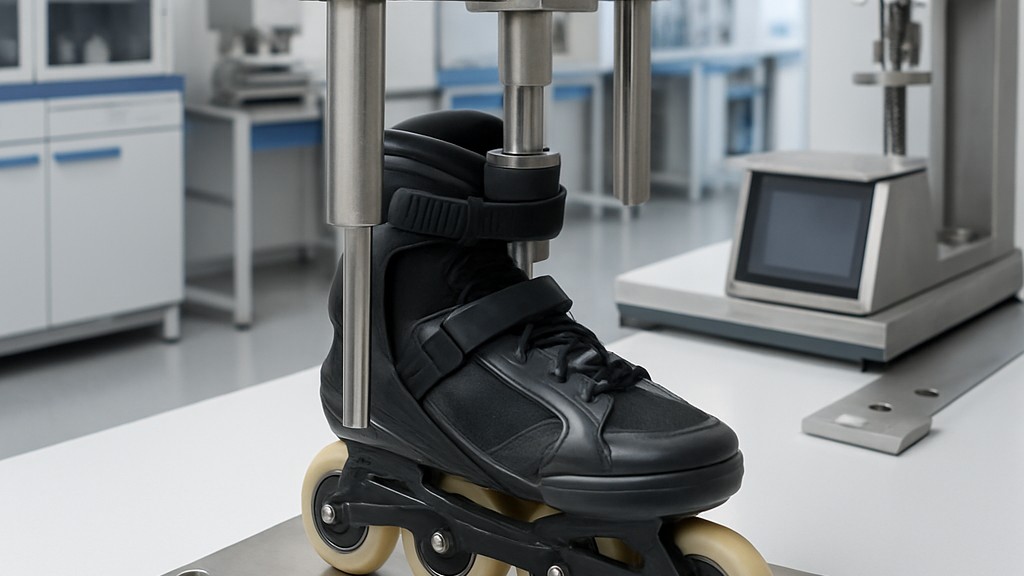
Inline skates used by a rider weighing less than 20 kg are outside the scope of this standard. They are considered toys. Furthermore, this standard does not apply to roller skates in accordance with EN 13899.
From an orthopaedic perspective, lateral support or similar requirements for inline skates are not included in this standard because these requirements vary from user to user and therefore cannot be covered by one standard.
For the purposes of this standard, inline skates refer to the following types of wheeled sports equipment with wheels arranged in line:
- Can be attached to the user's boot or shoe via straps
- Can be used as an integrated part of boots or shoes
- Can be used as a removable chassis for a custom-made boot or shoe
The requirements in this standard are specified as follows:
- For general tolerances, the “EN 22768 General tolerances” standard is valid.
- Classification of skates:
- Class A skates: Skates intended for use by people with a user mass between 20 kg and 100 kg.
- Class B skates: Skates with a user weight between 20 kg and 60 kg and a foot length not exceeding 260 mm.
- Security requirements:
- Protruding components and edges: All protruding components and edges on the skate that may come into contact with body parts during normal use must be deburred or otherwise constructed to prevent injury. Testing is carried out according to the method described in this standard.
- Fasteners: Fasteners must prevent unintentional separation from the user's foot. This requirement is deemed to be met if, after testing in accordance with this standard, the proper operation of the skate is not impaired by broken, disconnected or loose fasteners.
- Chassis: The chassis consists of one or more supports, axles, wheels, bearings, and fastenings. The chassis must withstand the impact loads, dead loads, and static loads to which it is subjected during use. The chassis must be connected to the shoe or shoe assembly in such a way as to ensure that it is secured against unintentional loosening. These requirements are met if, after testing in accordance with this standard, the correct operation of the in-line skate is not impaired by broken, disconnected, or loose fastening elements.
- Axles: Axles must be fastened and designed so that they will not loosen, shift, or deform during use. Wheels must be secured to the axles to prevent unintentional loosening. These requirements are met if the axles do not loosen, deform, or move to an extent that would prevent proper operation, and if the wheels do not become loose after testing in accordance with this standard.
- Wheels: Wheels must be made of non-slip material. This requirement is considered fulfilled if an adhesion coefficient of at least 0,3 is achieved in tests conducted in accordance with this standard. Wheels must not show any tearing after testing in accordance with this standard. Furthermore, they must not be loose or deformed to such an extent that they pose a risk of blocking.
- Bearings: Bearings must be designed to be functional after testing in accordance with this standard. They must be constructed in a way that allows for service in accordance with user instructions and does not compromise their operational safety.
- Starting and braking device: If a skate is equipped with a starting or braking device, this device must be unbreakable and secured against accidental loosening. Skidding must not cause unintentional interference with the movement of the skates. These requirements are deemed to be met if testing in accordance with this standard does not result in any visible loosening of the starting and braking device. A clearance between the starting and braking device and the ground is required to prevent unintentional braking. This requirement is deemed to be met if this clearance is at least 7 mm and not more than 17 mm.
At least two pairs of the same type shall be tested. If the type has a starting and braking device, one of the test specimens shall be equipped with it. Unless otherwise specified, in-line skates shall be conditioned and tested at a temperature of 23°C plus/minus 2°C and a relative humidity of 50 percent plus/minus 5 percent, or at a temperature of 20°C plus/minus 2°C and a relative humidity of 65 percent plus/minus 5 percent. Tests shall be conducted in accordance with this standard. The final specimen used in these tests shall meet the following requirements:
- Must be made of non-flexible material
- The size and fit must be appropriate to the test sample.
- It should be able to be firmly attached to the skate with the skate's binding elements.
The EN 13843 standard is particularly important for skateboarding facilities such as skate parks and roller rinks because it specifies the safety and operational requirements for skateboarding equipment. This standard is considered important for the following reasons:
- Ensures safety: This standard defines structural and design requirements to minimize the risk of injury to users of wheelchair sports facilities. It includes:
- Fall protection
- Surface quality
- Ramps, rails, and other skating features
- Materials and load-carrying capacities
These requirements are crucial to protecting skaters and operators from preventable accidents.
- Supports design and construction: This standard provides guidance to architects, builders, and manufacturers when designing skateparks or indoor rinks. It ensures all features are durable, fit for purpose, and built to withstand typical usage and environmental conditions.
- Regulatory compliance: In many European Union countries, following this standard is part of:
- Building regulations
- Insurance requirements
- Liability protection for plant operators and designers
Failure to comply with these standards could lead to legal issues if an accident occurs.
- Standardisation across Europe: By creating a common benchmark across European Union countries, it makes it easier for international manufacturers and builders to:
- Exporting equipment
- Issuing security certificates
- Collaborating on cross-border projects
- Protects all user groups: This standard takes into account different user abilities and ages, including children and beginners.
Our organization, which has been supporting businesses across all sectors for years through a wide range of testing, measurement, analysis, and evaluation activities, has a strong team of employees who closely follow global developments in science and technology and are constantly improving themselves. In this context, we also provide testing services in accordance with the EN 13843 Roller sports equipment - Inline skates - Safety requirements and test methods standard.



