

DIN 51032 Lead and Cadmium Emissions from Ceramic and Glass Products Used in Contact with Food

DIN 51032 Lead and Cadmium Emissions from Ceramic and Glass Products Used in Contact with Food

The German Standards Institute (DIN) published the standard “DIN 51032 Ceramics, glass, glass ceramics - Permissible limits for lead and cadmium emissions from products intended for use in contact with food”, which describes the maximum values ​​for lead and cadmium emissions during cold extraction of consumer goods made of ceramics, glass and glass ceramics, in accordance with DIN EN 1388-1 and DIN EN 1388-2 standards.
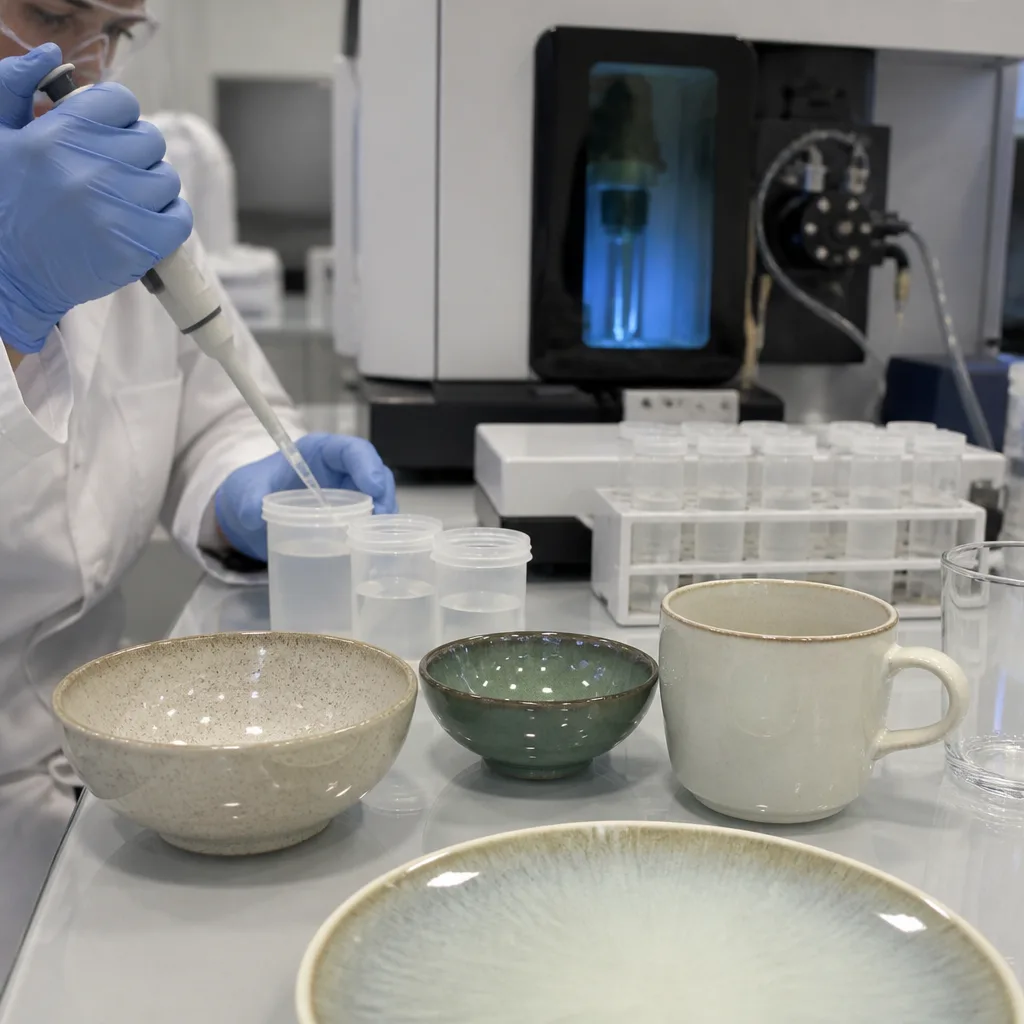
DIN 51032 Lead and Cadmium Emissions from Ceramic and Glass Products Used in Contact with Food

This standard applies to tableware and kitchenware, cooking and baking utensils, packaging and storage containers, as well as other consumer goods made of ceramic, glass and glass ceramics intended for contact with food. This standard also applies to decorative objects where contact with food during foreseeable use cannot be ruled out. However, it does not apply to doll cookware.

The DIN 51032 standard and regulations concerning ceramic and glass products in contact with food address the safety of ceramic, glass, and glass-ceramic products intended for contact with food and beverages. The primary objective of this standard is to establish permissible limits for the release of lead and cadmium from food-contact products into food-like substances under controlled test conditions.

Lead and cadmium are toxic heavy metals that can be found in ceramic glazes, decorative coatings, enamels, pigments, and some glass formulations. If these metals leach into food or beverages, they can pose significant health risks to consumers.

The DIN 51032 standard applies to the following products:

  • Ceramic tableware
  • Porcelain products
  • Earthenware and stone objects
  • glass containers
  • Glass-ceramic cookware
  • Beverage containers
  • Decorative items intended for contact with food.

The test method evaluates the amount of lead and cadmium that can be removed from the product under specified conditions.

This standard was developed for the following purposes:

  • To protect consumer health.
  • Limit exposure to toxic heavy metals.
  • To ensure food contact safety.
  • Harmonizing testing procedures.
  • Verifying the conformity of manufacturers' products.
  • To support international trade in food contact materials.

In terms of health, lead exposure can cause the following:

  • Neurological damage
  • Developmental disorders in children
  • Kidney damage
  • reproductive toxicity
  • Cardiovascular problems

Cadmium exposure can cause the following:

  • Kidney dysfunction
  • Bone demineralization
  • Respiratory disorders
  • Long-term toxic effects
  • Increased cancer risk after long-term exposure.

Because of these dangers, regulatory authorities strictly control their transfer to food.

The described test method typically follows these steps:

  • Cleaning the sample.
  • The sample is filled or immersed in a specific acetic acid solution (food simulator).
  • Maintaining contact for a specific period and at a specific temperature.
  • Collection of the extraction solution.
  • Measuring released lead and cadmium using analytical techniques such as those listed below:
    • Atomic absorption spectroscopy (AAS)
    • Inductively coupled plasma optical emission spectroscopy (ICP-OES)
    • Inductively coupled plasma mass spectrometry (ICP-MS)

The measured values ​​are compared with the specified crossing limits.

Different immigration limits may apply depending on the product category:

  • Category 1: Products that cannot be filled and have shallow contact surfaces. For example,
    • Flat plates
    • Plate coasters
  • Category 2: Refillable products. For example,
    • Cups
    • Cups
    • Bowls
  • Category 3: Cooking and storage containers. For example,
    • Pans
    • Casseroles
    • Large containers
  • Special products: Decorative and special food contact products may have different requirements.

European regulations have historically set maximum permissible emission values ​​for lead and cadmium based on product category. Typical limits are as follows:

  • Cutlery: Low lead migration limits, low cadmium migration limits.
  • Hollow containers: Intermediate lead migration limits for lead, intermediate migration limits for cadmium.
  • Storage/cooking utensils: Category-specific limits for lead, category-specific limits for cadmium.

Manufacturers must verify compatibility through laboratory testing.

Compliance helps manufacturers in the following areas:

  • Complying with regulations regarding food contact products.
  • To prevent product recalls.
  • To protect brand reputation.
  • To gain access to global markets.
  • To demonstrate product safety.
  • To reduce legal liability.

The affected sectors are:

  • Ceramic manufacturers
  • glass manufacturers
  • Cookware manufacturers
  • Tableware suppliers
  • Food service equipment companies
  • Retailers and importers

To ensure compliance, manufacturers typically follow these steps:

  • Raw material purity
  • Pigment composition
  • Secret formulation
  • Baking temperature
  • Surface quality
  • Production consistency

Regular testing ensures that lead and cadmium levels remain below legal limits.

The DIN 51032 standard is important because it helps ensure that ceramic, glass, and glass-ceramic products used with food and beverages do not release harmful levels of lead or cadmium into food. The main reasons why this standard is considered necessary are as follows:

  • Protects consumer health: Lead and cadmium are toxic heavy metals that accumulate in the human body over time. Lead can affect the brain, nervous system, kidneys, and blood-forming organs. Cadmium can damage the kidneys, bones, and other organs. This standard sets maximum migration limits allowed to minimize consumer exposure.
  • Ensures food safety: Food contact products such as plates, bowls, glasses, mugs, cookware and storage containers may come into direct contact with acidic foods and beverages. This standard verifies that these products remain safe during normal use and do not contaminate food.
  • It controls production quality: Emission levels can be affected by:
    • Raw Materials
    • Pigments and decorative coatings
    • Glaze composition
    • Cooking conditions

This standard encourages manufacturers to ensure strict process controls and consistent product quality.

  • It prevents product recalls and legal issues: Failure to comply with immigration limits can lead to the following:
    • Product recalls
    • Legal penalties
    • Import/export restrictions
    • Customer complaints
    • Liability claims

Compliance helps mitigate these risks.

  • Supports legal compliance: Many national and international regulations require ceramic and glass products that come into contact with food to be tested for heavy metal migration. This standard provides a recognized test method to demonstrate compliance.

In short, without such requirements, dangerous levels of lead or cadmium could enter the food chain through everyday tableware and cookware. Therefore, migration testing is a critical component of safety and quality assurance for food contact materials.

For many years, our organization, with its competent and experienced staff, has been understanding the needs of its clients, providing the advanced testing services they require, and assisting them in the establishment, implementation, and improvement of management systems. Within this framework, we also provide testing services in accordance with the DIN 51032 standard.

WhatsApp

