

In the EN 1186-2 standard, a European standard, test to determine the total migration of plastics intended to come into contact with an oily foodstuff by total immersion in olive oil for 40 days, 10 hours or 24 hours at 2 degrees Celsius, or for 70 hours at 2 degrees Celsius. methods are explained. These test methods are suitable for plastics in the form of films and sheets. These described test methods are valid for many types of plastics, although there are some plastics that are not known to be applicable.
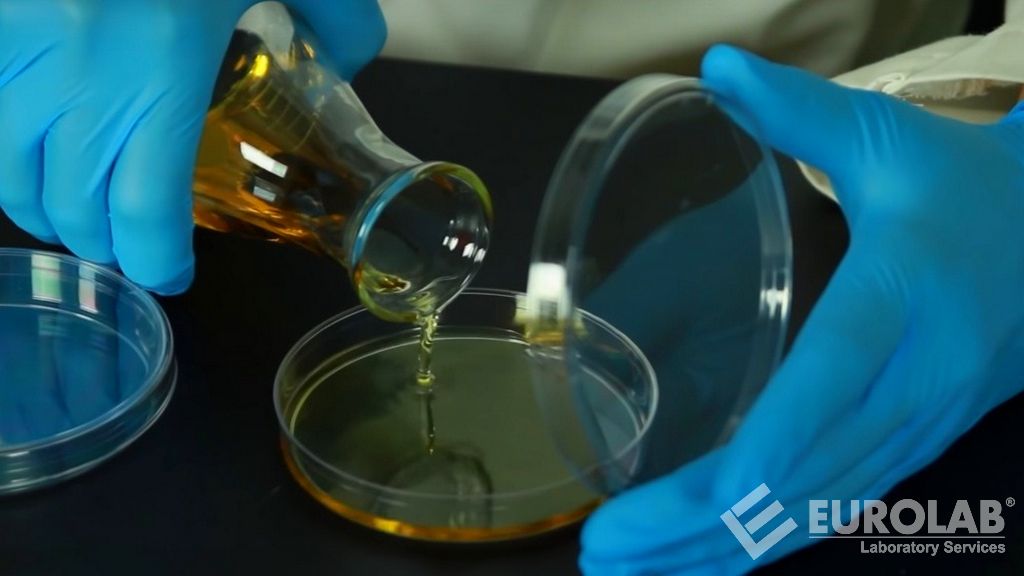
This test method is designed for use with fatty foods such as olive oil. The test method is also used with appropriate modifications with other fatty food analogues, which are a synthetic mixture of triglycerides, sunflower oil and corn oil.
In principle, overall migration from a plastic sample is determined as mass loss per unit of surface area intended to come into contact with foodstuffs. The selection of test conditions is determined by the conditions of use. Test samples of known mass are immersed in olive oil for a period of exposure at certain temperatures under the conditions described above, then removed from the olive oil and reweighed to determine the adhering oil.
Samples usually retain absorbed olive oil, which is extracted and quantified by gas chromatography after conversion to methyl esters. The transition to olive oil is calculated by subtracting the mass of olive oil retained by the test sample from the mass of the test sample after it has been removed from the olive oil, and then subtracting that mass from the initial mass of the sample.
The standard annex describes the following applications:
Our organization, among the numerous test, measurement, analysis and evaluation studies it has given for businesses in various sectors, with its trained and expert staff and advanced technological equipment, within the scope of EN 1186-2 standard, for plastics between materials and objects in contact with foodstuffs, by completely immersion. It also provides general migration testing services to olive oil.
To get an appointment, to get more detailed information or to request an evaluation, you can ask us to fill in our form and reach you.

