EN 12983-1 Cookware - Household Cookware for Use on the Stove Top, Cooking Pot or Cooking Range - Part 1: General Requirements
A European standard, “EN 12983-1 Cookware - Domestic cookware for use on hobs, cookware or cooking surfaces - Part 1: General requirements”, describes the safety and performance requirements for cookware for domestic use on hobs, cookware or cooking surfaces.
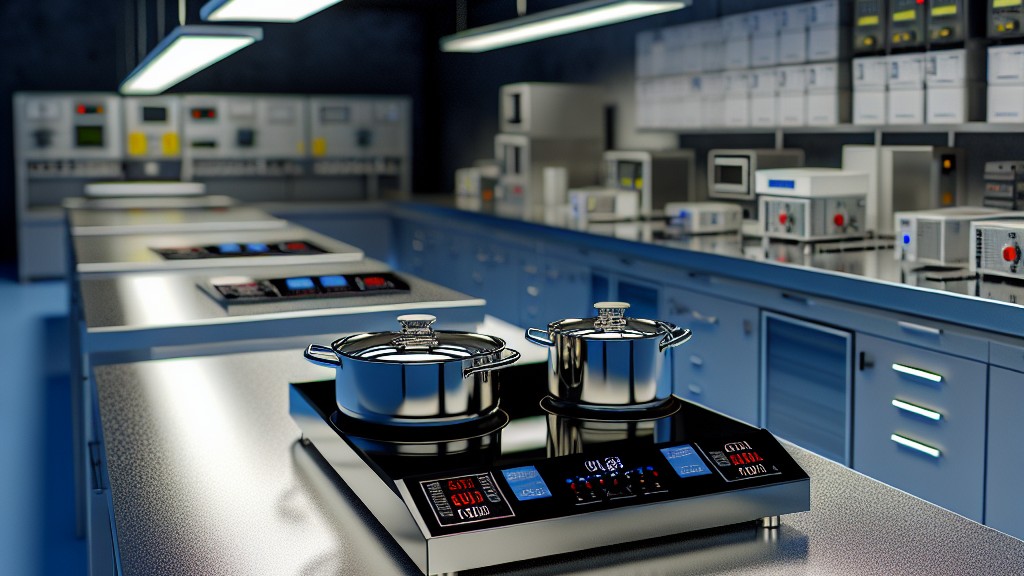
This standard applies to all cookware, regardless of material or method of manufacture. It also applies to cookware designed for both top-mounted and oven-mounted use. Cookware covered by this standard includes gas, electric solid plate, electric radiant ring, glass-ceramic radiant plate and glass-ceramic induction plate. However, this standard does not apply to pressure cookers, stovetop kettles and coffee makers.
The suitability requirements for use in automatic dishwashers are being reviewed by an expert group and will be amended and added when complete. Requirements for ceramics and glass ceramics are specified in Part II of this standard. Additional requirements for cookware for use on induction heating sources are covered in Part III.
For the purposes of this standard, the following terms and definitions apply:
- A cookware is a hollow container used to cook food or liquid on a stovetop, cooktop, or countertop and/or in the oven.
- A fastening system is the fastening method or methods used to attach a handle to the body of a cookware or to secure a knob to a lid.
- Capacity is the maximum volume of water an item can hold on a flat surface. 0,1 percent (mass fraction) of hand washing detergent should be added to the water to minimize surface tension.
- The usable capacity is two-thirds of the capacity. The actual usable capacity of the cookware will vary depending on the food being cooked. The figure given here is an average value intended for use in test cases only and is not intended as consumer information.
- A handle is an extension integrated into or fixed to the body of the cookware and designed to facilitate carrying and holding the item in normal use.
- The button is a short extension integrated into the lid of the cooking pot or fixed to the body, to facilitate positioning or removal in normal use.
- A shallow product is a cookware whose overall interior depth is 1/3 or less of the interior diameter at the mouth.
- A non-stick coating is a coating applied to the inside of a cookware to achieve a non-stick effect during cooking and to facilitate cleaning.
- The outer base diameter is the dimension measured around the maximum contact circumference on the outer base of the cookware when placed on a flat surface.
- The inner bottom diameter is the diameter measured on the inside of the cookware, excluding the radius of the body bottom to the body wall.
- Glass is an inorganic non-metallic material produced by the complete fusion of raw materials into a homogeneous liquid at high temperature and then cooled to a solid state essentially without crystallization.
- Ceramics are inorganic non-metallic materials made by firing a mixture of raw materials at high temperatures. The firing temperature is high enough to give the required strength to the already formed material, but lower than the temperature required to ensure complete fusion of the mixture.
- Glass ceramics are inorganic, non-metallic materials, mainly submicroscopic small crystallites, produced by completely fusing raw materials into a homogeneous liquid at high temperatures, then cooling into a hard material and heat treating it to achieve a certain degree of crystallization.
- Organic coating is a type of polymer coating whose main or primary components are based on compounds obtained from organic chemistry.
- Ceramic coating, also called sol-gel coating, is an inorganic, non-metallic solid and inert film. It consists mainly of silica and may contain some organic substances.
- The hard substrate is the base material of the body shape, such as aluminum, cast iron, steel.
- Concavity is the height difference between the outer sole diameter of the product and the outer sole center.
Cooking utensils must be made of materials of a type and purity that do not pose a toxic hazard under normal conditions of use or that do not in any way affect the organoleptic qualities of the food prepared in them. There are legal regulations in force regarding products intended for use in contact with foodstuffs.
Unless otherwise stated, tests shall be carried out at an ambient temperature of 23 degrees plus/minus 5 degrees. In cases where failure of a test may be due to stresses generated by a previous test, the failed test shall be repeated on a new product.
According to this standard, evaluations are made on the following basis:
- Structure
- General (stability, hygiene and mechanical hazards)
- Geometry (dimensions, capacity, diameters, dimensions for non-circular products, dimensions for non-circular products and base form)
- Furniture
- General
- Handle selection
- Handle position relative to the cookware
- Button design
- Cover design
- Resistance to burning
- heat resistance
- Torque resistance
- Flexural strength
- Fatigue resistance
- Resistance to pulling the handle assembly
- Thermal hazards
- Coatings
- Vitreous enamel and solgel on any substrate
- Hard anodized aluminum
- Organic outer coatings
- Internal non-stick coatings
- Performance
- Pouring
- Base stability under shock conditions
- Heat dissipation
- Suitability for use with various heat sources
Our organization, which has been trying to support businesses from every sector with its wide range of testing, measurement, analysis and evaluation studies for years, has a strong staff that closely follows the developments in the world in the field of science and technology and constantly improves itself. In this context, testing services are also provided to businesses in accordance with the standard “EN 12983-1 Cookware - Domestic cookware for use on hobs, cookware or cooking counters - Part 1: General requirements”.



