

The European standard “EN 645 Paper and cardboard intended for contact with food - Preparation of cold water extract” describes the preparation of cold water extracts for the examination of specific extractives in paper and cardboard intended for contact with food.
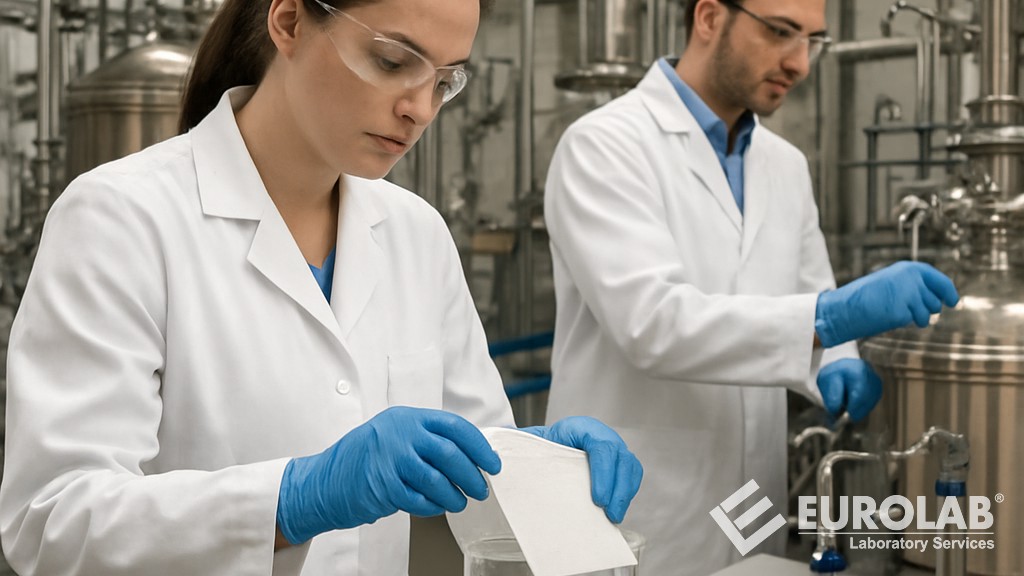
In principle, the sample is torn or cut and extracted with water at 23 degrees plus/minus 2 degrees for 24 hours, shaking occasionally. After extraction, the extract is filtered if necessary, and the extract or filtrate (cold water extract) is used for the examination of the extractive substances.
Sampling is performed in accordance with the ISO 186 standard. Fingers should not touch the test area of the sample or test specimen; protective gloves should be used. A minimum sample of 10 g is required for testing. If necessary, a separate sample is taken to determine the weight or moisture content according to the ISO 536 standard.
During testing, the sample is divided or cut into pieces of approximately 1 cm² to 2 cm². Protective gloves are used. 10 plus/minus 0,1 g test pieces are weighed with a precision of 0,01 g, placed in a conical flask, 200 ml of water is added, and the flask is sealed. This preparation is incubated at 23 degrees ± 2 degrees for 24 hours, shaking occasionally. The solution is drained, and any remaining test pieces are washed twice in the flash. The preparation is filtered if necessary. The extract and washes or filtrate are transferred to a marked volumetric flask and filled with water up to the mark. The contents of the flask are used for further research. Scaling can be done if necessary, but no more than twice.
In the world of materials science and manufacturing, standards play a crucial role in ensuring quality, safety, and consistency. One such standard, EN 645, outlines methods for preparing paper and cardboard samples for testing their physical properties. This standard is particularly important in industries such as packaging, printing, and pulp production, where rigorous assessment of the integrity of paper products is essential. Today, EN 645 remains a fundamental reference for laboratories and manufacturers. By standardizing the preparation process to eliminate variables that could affect test results, it provides reliable data on issues such as tensile strength, thickness, and moisture content.
The EN 645 standard outlines the sample preparation process step-by-step and emphasizes precision to preserve the representative properties of the material. Generally, the basic steps of this method are as follows:
This table summarizes the process, highlighting how each stage contributes to accurate testing.
Compliance with the EN 645 standard is often mandatory for quality certifications such as ISO 9001 or legal approvals within the European Union. For example, in packaging, it ensures that boxes withstand the rigors of transport without damage. A study by the European Pulp and Paper Association indicated that standardized preparation reduces test variability by up to 15%, thereby saving on R&D costs.
Globally, the EN 645 standard is closely aligned with the ISO 186 standard, supporting international harmonization. Manufacturers exporting to European countries must comply with this standard to meet CE marking requirements for paper-based products.
In conclusion, while the EN 645 standard may seem like a niche technical standard, its impact is reflected in everyday products ranging from books to cereal boxes. By standardizing sample preparation, this standard promotes innovation and reliability in the paper industry. As materials evolve with bio-based alternatives, standards like EN 645 continue to adapt and maintain the core strength of the industry.
For many years, our organization, with its competent and experienced staff, has been understanding the needs of its clients, providing the advanced testing services they require, and assisting in the establishment, implementation, and improvement of management systems. Within this framework, we also provide testing services to businesses in accordance with the "EN 645 Paper and cardboard intended for contact with food - Preparation of cold water extract" standard.
To get an appointment, to get more detailed information or to request an evaluation, you can ask us to fill in our form and reach you.

