Food Irradiation Test
Food irradiation is a processing and preservation technique that produces results similar to freezing or pasteurization. During this procedure, food is exposed to doses of ionizing energy or radiation. At low doses, irradiation extends the shelf life of a product. At higher doses, the process kills insects, molds, bacteria, and other potentially harmful microorganisms.
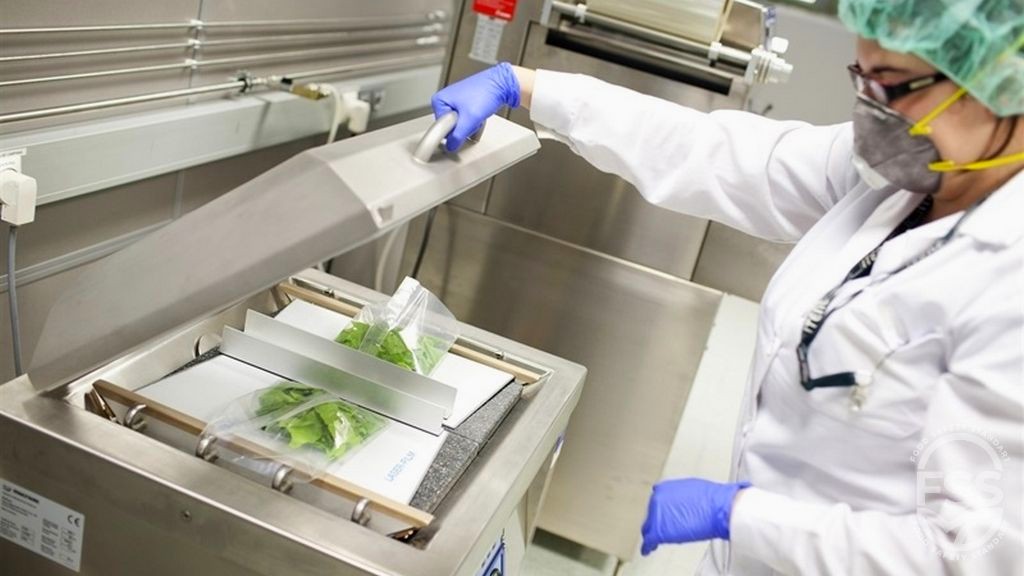
Considerable scientific research over the years has shown that food irradiation is a safe and effective form of processing. Food irradiation is approved in around 40 countries, including Australia, the United States, Japan, China, France and the Netherlands. In these countries, irradiated foods are clearly labeled so that consumers can make an informed choice.
Irradiation does not make food radioactive, reduce its nutritional quality, or significantly alter the taste, texture, or appearance of food. Food irradiation (the application of ionizing radiation to food) is a technology that increases the safety of food and extends its shelf life by reducing or eliminating microorganisms and insects. Irradiation can make food safer for the consumer, such as pasteurizing milk and canning fruits and vegetables. The U.S. Food and Drug Administration (FDA) regulates radiation sources used to irradiate food. The FDA only approves a radiation source for use in food after it has determined that irradiating the food is safe.
The main purposes of food irradiation are:
- Preventing foodborne illness: Effectively eliminating organisms that cause foodborne illnesses, such as Salmonella and Escherichia coli (E. coli).
- Preservation: Destroying or inactivating organisms that cause food to spoil and decay and extending the shelf life of food.
- Insect control: To destroy insects in or on tropical fruits. Irradiation also reduces the need for other pest control treatments that can damage the fruit.
- Delaying sprouting and ripening: Inhibiting sprouting (e.g. potatoes) and extending the life of the fruit by delaying its ripening.
- Sterilization: Irradiation can be used to sterilize foods, which can then be stored for years without refrigeration. Sterilized foods are considered beneficial for patients with severely weakened immune systems. Foods sterilized by irradiation are subjected to significantly higher levels of processing than those approved for general use.
There are three radiation sources allowed for use in food.
- Gamma rays are emitted from radioactive forms of the element cobalt (cobalt 60) or cesium (cesium 137). Gamma radiation is routinely used to sterilize medical, dental, and household products.
- X-rays are produced by reflecting a high-energy stream of electrons from a target substance (usually one of the heavy metals) into food. X-rays are also widely used in medicine and industry to produce images of internal structures.
- An electron beam (or e-beam) is a stream of high-energy electrons, similar to X-rays, that are pushed through food from an electron accelerator.
The FDA has been evaluating the safety of irradiated foods for many years and has declared the process safe. The World Health Organization (WHO) has also confirmed the safety of irradiated foods.
Various foods approved for irradiation include:
- Beef and pork
- Crustaceans (e.g. lobster, shrimp and crab)
- Fresh fruits and vegetables
- Lettuce and spinach
- Poultry
- Sprouting seeds (e.g. alfalfa sprouts)
- Eggs in shells
- Shellfish, molluscs (e.g. oysters, mussels and scallops)
- Spices and Condiments
The main specific food irradiation tests performed in advanced laboratories include:
- Photostimulated luminescence (PSL): A fast and reliable screening method for dry foods containing silicate minerals. This method is suitable for herbs, spices, dried fruits or nuts.
- Thermoluminescence (TL): It is a highly specific and sensitive method for foods containing silicate minerals. This method is suitable for herbs, spices, dried fruits, nuts, fresh fruits, vegetables, cereals, tubers, onions, seafood or shrimps.
- Electron spin resonance (ESR): A very reliable method based on the detection of paramagnetic compounds. Suitable for crystalline sugars (e.g. refined sugar), foods containing apatite (e.g. beef, chicken meat bones, fish bones, frog legs), mussel and snail shells, foods containing cellulose and, for example, walnut shells.
Among the numerous tests, measurements, analyses and evaluations carried out by our organization for businesses in various sectors, our organization also provides food irradiation testing services with its trained and expert staff and advanced technological equipment.



