

The European standard “EN 647 Paper and cardboard intended for contact with food - Preparation of hot water extract” describes the preparation of hot water extracts for the examination of specific extractives in paper and cardboard intended for contact with food.
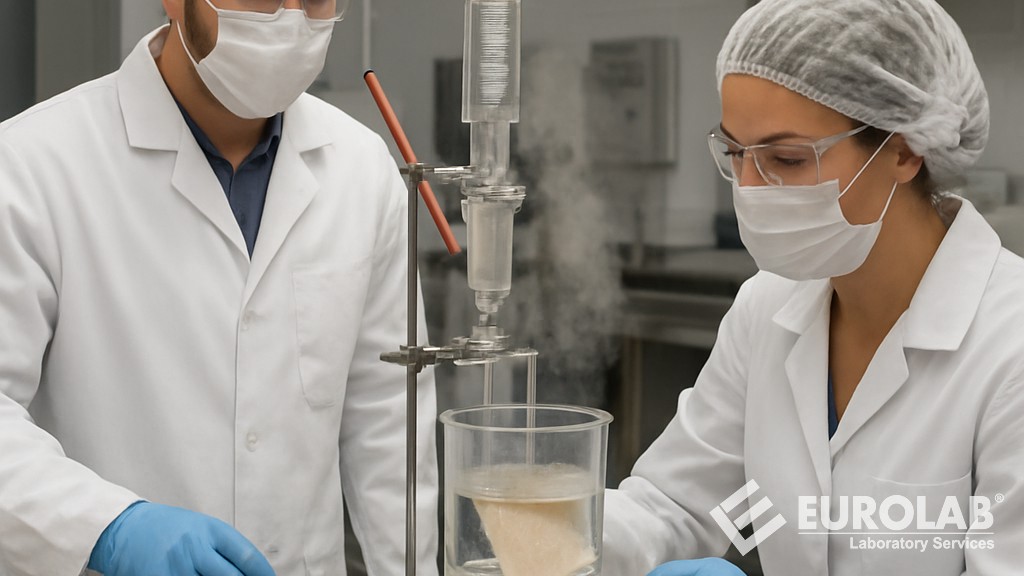
In principle, the sample is torn or cut and extracted with water in a water bath at 80 degrees plus/minus 2 degrees for 2 hours plus 5 minutes, with occasional shaking. After extraction, the extract is filtered if necessary. The extract or filtrate (hot water extract) is used in the study of extractives.
Sampling is performed in accordance with the ISO 186 standard. Fingers should not touch the test area of the sample or test specimen; protective gloves should be used. A minimum sample of 10 g is required for testing. If necessary, a separate sample is taken to determine the weight or moisture content in accordance with the ISO 536 standard.
During testing, the sample is divided or cut into pieces of approximately 1 cm² to 2 cm². Protective gloves are used. 10 plus/minus 0,1 g test pieces are weighed with a precision of 0,01 g, placed in a conical flask, 200 ml of boiling water is added, and the flask is sealed. This preparation is incubated in a water bath of 80 degrees plus/minus 2 degrees for 2 hours plus 5 minutes, shaking occasionally. The solution is drained, and the test pieces in the flask are rinsed twice with 80-degree water. The hot preparation is filtered if necessary. The extract and washes or filtrate are transferred to a marked volumetric flask, cooled to 23 degrees plus/minus 2 degrees, and filled with water up to the mark. The contents of the flask are used for further investigation. Scaling can be done if necessary, but no more than twice. The extract is reheated before subsampling. If precipitation occurs, the extract is stirred before subsampling.
In the world of food packaging, safety is paramount. Every material that comes into contact with food must be rigorously tested to ensure it does not leach harmful substances into the consumed product. This is where the EN 647 standard plays a crucial role. This standard incorporates a standardized method for simulating real-world conditions to assess the potential migration of extractive substances from paper and cardboard materials. This standard remains a fundamental element for manufacturers, regulators, and testing laboratories.
As consumer awareness increases and regulations tighten, EN 647 and similar standards are helping to bridge the gap between packaging innovation and the protection of public health.
Food contact materials encompass a wide range of products, from cardboard boxes for cereals to paper packaging for baked goods. Unlike plastics or metals, paper and cardboard are porous and are often treated with inks, coatings, and adhesives, which can leach chemicals into food under certain conditions (especially heat and humidity).
The EN 647 standard addresses this issue by focusing on preparing a hot water extract that mimics the interaction between hot and liquid foods (such as soups, sauces, or steamed vegetables) and packaging. The aim is to identify and quantify substances that can migrate from the material to the food, thus ensuring compliance with general migration limits set by regulations such as 1935/2004.
This standard does not test for all possible contaminants, but it serves as a fundamental step. Extracts prepared under EN 647 can then be analyzed for heavy metals, organic compounds, or even cytotoxicity using complementary methods such as the EN 15845 standard.
The EN 647 standard applies specifically to paper and cardboard materials intended for direct or indirect contact with food. It covers:
This standard does not cover materials intended for long-term storage (e.g., more than 24 hours) or anhydrous analogues such as ethanol or vegetable oils covered by other standards such as EN 645 (cold water extract).
The EN 647 standard includes a precise and repeatable method for preparing hot water extract. The basic steps of the process are as follows:
This method is simple, requiring minimal specialized equipment beyond a heating mantle, thermometer, and filtration setup. Laboratories often automate parts of this method for high-throughput testing.
The hot water extract is not the ultimate goal, but a starting point for further testing. Common follow-up steps include:
In the EU, compliance with the EN 647 standard tests is mandatory for CE marking and supports declarations of conformity.
For many years, our organization, with its competent and experienced staff, has been understanding the needs of its clients, providing the advanced testing services they require, and assisting in the establishment, implementation, and improvement of management systems. Within this framework, we also provide testing services to businesses in accordance with the "EN 647 Paper and cardboard intended for contact with foodstuffs - Preparation of hot water extract" standard.
To get an appointment, to get more detailed information or to request an evaluation, you can ask us to fill in our form and reach you.

