EN 13834 Baking Utensils - Baking Utensils for Use in Conventional Domestic Ovens
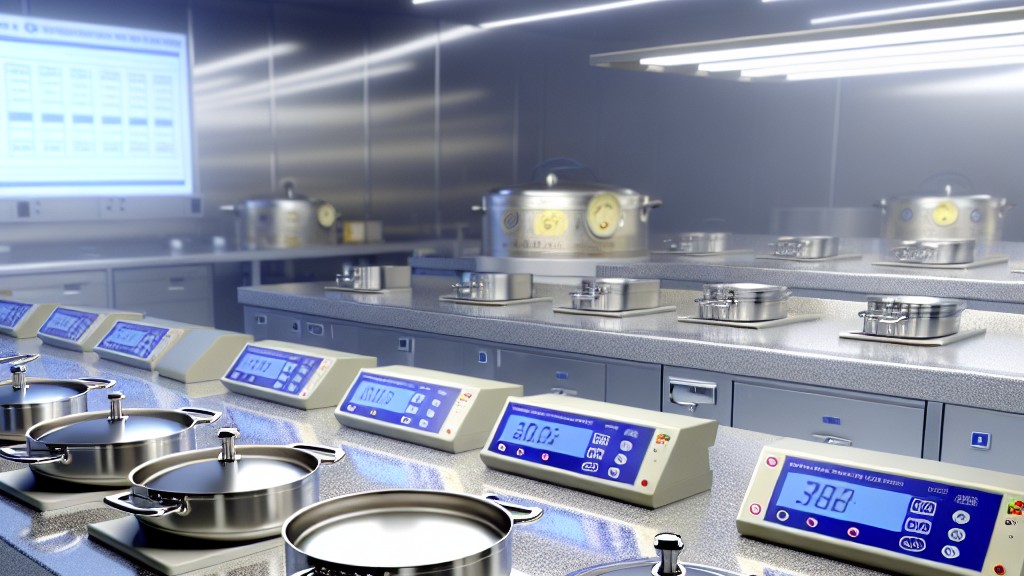
The European standard "EN 13834 Cookware - Ovenware for use in conventional domestic ovens" specifies the safety and performance requirements for ovenware for use in domestic ovens. This standard applies to ovenware, regardless of material or production method. It applies to products designed for use both on the hob and in the oven. However, this standard does not apply to single-use, disposable ovenware or ovenware designed for use only in microwave ovens.
For the purposes of this standard, the following terms and definitions apply:
- Baking pans are hollow or flat containers used to cook solid or liquid foods. Baking pans include, but are not limited to:
- Gratin and frying pans used in the preparation and cooking of vegetable and meat dishes
- Ceramic pots used for preparing and cooking meat or vegetables
- Baking utensils used in preparing and baking various dough mixtures (baking utensils may vary in shape and may contain removable parts)
- Pate mould used in the preparation and cooking of pates
- A fastening system is the fastening method or methods used to attach a handle to the body of a baking pan or to attach a knob to a lid when the handle or knob is not an integral part of the body or lid.
- Furniture are handles and knobs that are attached to the body or lid of the ovenware using a fastening system and are designed to facilitate carrying and holding the container in normal use.
- Removable furniture is furniture designed to be attached or removed from the body or lid of the ovenware without the use of tools.
- Capacity is the volume of water held when the baking dish is filled to the brim while standing on a flat surface.
- The usable capacity is two-thirds of the capacity. The actual usable capacity of the ovenware will vary depending on the food being cooked. The figure given here is an average value intended for use in test cases only and is not for consumer information purposes.
- A coating is a deposit or covering applied to a substrate to achieve specific performance characteristics, independent of the substrate's properties.
- Non-stick coating is a coating applied to the inside of the baking pan that is claimed to provide an anti-stick effect during cooking and make cleaning easier.
- Easy-clean coating is a coating applied to the inside of the baking pan that is claimed to make cleaning easier.
- Vitreous enamel is an inorganic non-metallic material composed of a mixture of mineral compounds, applied to a metallic substrate and melted at high temperature to form a homogeneous coating.
- Glaze is a substance obtained by melting or sintering inorganic components and designed to form a fused or fusible surface layer in one or more layers and with a firing temperature greater than 500 degrees.
- Organic coating is a material consisting of a mixture of resin and polymer, applied to a metallic substrate, cured at low temperatures to form a homogeneous coating.
Ovenware must be made of materials of a type and purity that do not pose a toxic hazard under normal conditions of use and do not in any way affect the organoleptic qualities of the food prepared in them.
Unless otherwise stated, all measurements should be made with unused ovenware at an ambient temperature of 23 degrees plus/minus 5 degrees.
The general structure of cooking utensils is defined in this standard as follows:
- Stability: The product must be stable when placed empty and without a lid on a 5 degree inclined surface in the most unfavourable position, i.e. it must not lean, its base must be in the desired contact with the surface.
- Hygiene: All surfaces intended to come into contact with food must be easily cleanable under normal conditions. When a dishwasher is used for cleaning, the requirements of standard EN 12875-1 must be met.
- Mechanical hazards: All components must be free of burrs, splinters or sharp edges that could cause injury or discomfort to the user.
- Handle position for ovenware The handles should be positioned above the centre of gravity of the ovenware when filled to capacity with sand.
- Lid design: The lid shall be capable of being removed from the body at any position at ambient temperature using a force equal to the weight of the lid plus 2 N. This test shall be carried out before and after the product, filled to its usable capacity with water, has been exposed for 20 hour to a temperature 1 degrees above the maximum temperature recommended by the manufacturer and cooled for 10 minutes in combination with the media. This test shall also be carried out when the product has cooled to ambient temperature. If the maximum temperature is not recommended, the temperature used shall be 250 degrees. The lid shall remain in place throughout the heating and cooling phases. If the lid is fitted with a locking device, this test shall be carried out with the device disabled.
- Lid knob design: It should be possible to use the knob for its normal purpose while using an oven mitt or cloth. The knob should also remain firmly attached to the lid after exposure to a temperature 20 degrees above the maximum recommended temperature by the manufacturer, or 250 degrees if no recommendation is given, for 1 hour.
- Thermal shock resistance of brittle materials: All ceramic, glass-ceramic and glass ovenware and lids must be tested in accordance with EN 1183 standard Method B. The test shall be carried out on three samples at a temperature difference of 180 degrees. Samples with nicks, cracks, breaks or fractures are considered to fail the test. If three samples pass the test, no additional testing is required. If one fails, 7 additional samples shall be tested.
- Heat resistance: After testing for 20 hour at a temperature 250 degrees above the maximum temperature recommended by the manufacturer, or at 1 degrees if the maximum temperature is not specified, the baking dish should not show any damage.
- Resistance to leakage: The design of ovenware, including those with folded seams and loose bottoms, should be such that they will not leak when prepared according to the manufacturer's instructions and filled with any preparation expected to be cooked in them.
This standard also describes requirements for furniture, coatings and stability and deformation testing.
Our organization, which has been trying to support businesses from every sector with its testing, measurement, analysis and evaluation studies carried out in a wide range for years, has a strong staff that closely follows the developments in the world in the field of science and technology and constantly improves itself. In this context, testing services in accordance with the "EN 13834 Cooking utensils - Ovenware used in traditional home ovens" standard are also provided to businesses.



