

The NMKL 173 standard, developed by the Scandinavian Food Analysis Committee (NMKL), defines a test method for determining the amount of ash in foods when calculating the energy content. This method can be applied to all foods, with minor modifications for certain types of food.
The test method described was jointly studied for ash content from 0,07 to 8,0 g/100 g. During the test, the sample is ashed up to a constant weight in a muffle furnace at 550 degrees.
Ash content is a measure of the total amount of minerals found in a food. Mineral content, on the other hand, is a measure of the amount of certain inorganic components, such as calcium, sodium, potassium, and chlorine, found in a food. Determination of ash and mineral content of foods is important for the following reasons:
Ash is the inorganic residue that remains after water and organic matter have been removed by heating in the presence of oxidizing agents, which provides a measure of the total amount of minerals in a food. Analytical techniques to provide information on total mineral content rely on measurably distinguishing minerals from all other components in a food. The methods used are based on the fact that minerals are not destroyed by heating and have lower volatility compared to other food ingredients. The three main types of analytical procedures used to determine the ash content of foods are based on this principle: dry powdery mildew, wet powdery mildew, and low temperature plasma dry powdery mildew.
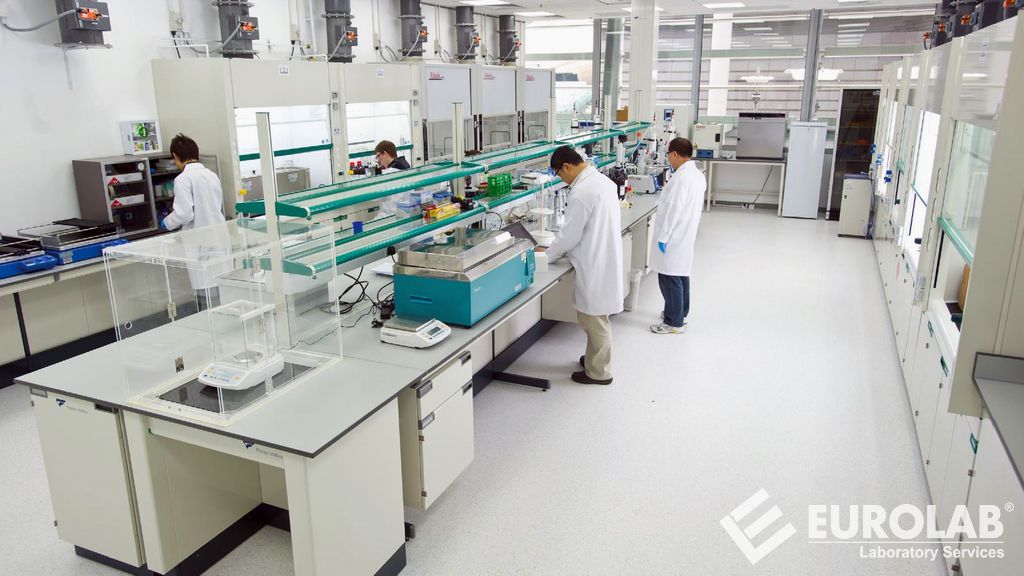
Our organization also provides gravimetric determination of ash in foods within the scope of NMKL 173 standard, with its trained and expert staff and advanced technological equipment, among the numerous test, measurement, analysis and evaluation studies it provides for businesses in various sectors.
To get an appointment, to get more detailed information or to request an evaluation, you can ask us to fill in our form and reach you.

