

The ISO 6579 standard, developed by the International Organization for Standardization (ISO), describes a horizontal method for the detection of salmonella, including salmonella typhi and salmonella paratyphi. This standard applies to products intended for human consumption and animal feeding, and to environmental examples in food production and food processing.
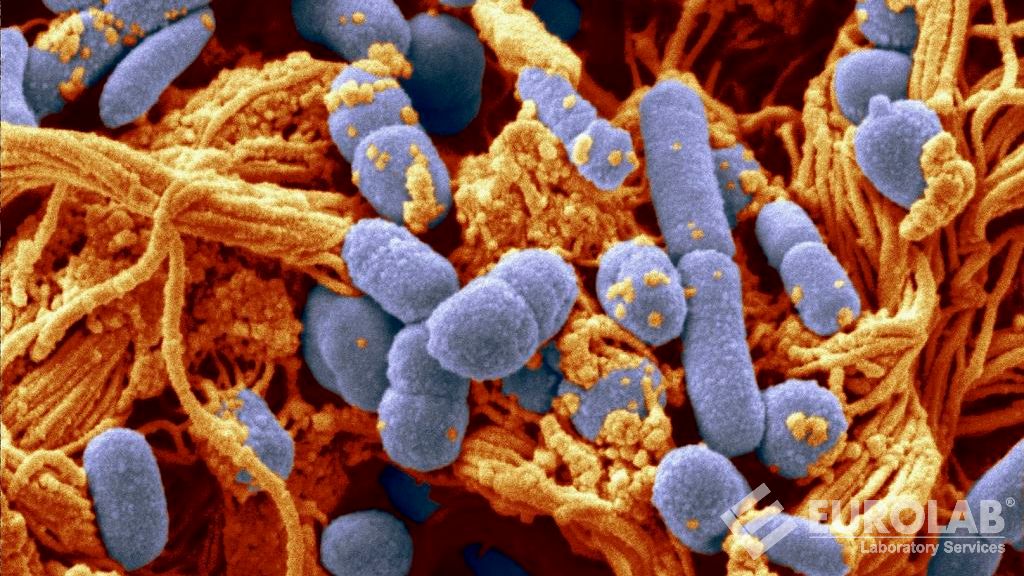
Essentially, this standard consists of the following subsections under the main heading "Microbiology of food and animal feed - Horizontal method for the detection of Salmonella spp.":
The ISO 6579-1 standard applies to:
With this horizontal method, it is aimed to detect most of the salmonella serovars. Additional culture steps are required to detect some specific serovars. The test method for salmonella typhi and salmonella paratyphi is included in the standard annex (Annex D). Semi-solid Rappaport-Vassiliadis agar modified on selective enrichment medium is designed for the detection of motile salmonella and is not suitable for the detection of non-motile salmonella strains.
For the purposes of this standard,
The ISO/TS 6579-2 standard describes a method for enumerating salmonella spp. Salmonella is commonly found in the following products: products for human consumption and animal nutrition, environmental samples in food production and food processing, animal feces and environmental samples from the primary production stage by calculating the most probable number. This test method is based on minimizing the dilution, pre-enrichment, and selective enrichment steps. Semi-solid Rappaport-Vassiliadis agar modified on selective enrichment medium is not suitable for the detection of motile salmonella. Also, this method can detect salmonella spp. in very low contaminated samples. Not suitable for counting.
For the purposes of this standard,
The ISO/TR 6579-3 standard provides guidance on the procedure for serotyping salmonella serovars and, regardless of the source from which they are isolated, pure salmonella spp. applied to the serotyping of cultures.
For the purposes of this standard,
The ISO/DTS 6579-4 standard includes a procedure for the identification of monophasic salmonella typhimurium and is still under development.
Our organization, among the numerous test, measurement, analysis and evaluation studies it has given for businesses in various sectors, with its trained and expert staff and advanced technological equipment, within the scope of ISO 6579 standard, microbiology of food and animal feeds, horizontal method for the detection of salmonella spp., salmonella spp. It also provides testing services on animal feces and environmental samples from the primary production stage.
To get an appointment, to get more detailed information or to request an evaluation, you can ask us to fill in our form and reach you.

