

The slotted pins defined in the DIN 1472 standard published by the German Institute for Standardization (DIN) have three longitudinal taper grooves that expand the diameter of the half-length tapered groove pin. The expanded diameter is pressed back to the nominal diameter when inserted into the straight hole. As the pin tries to expand to a larger diameter, the force against the wall of the hole tightens the fit. This creates holding power against shock and vibration.
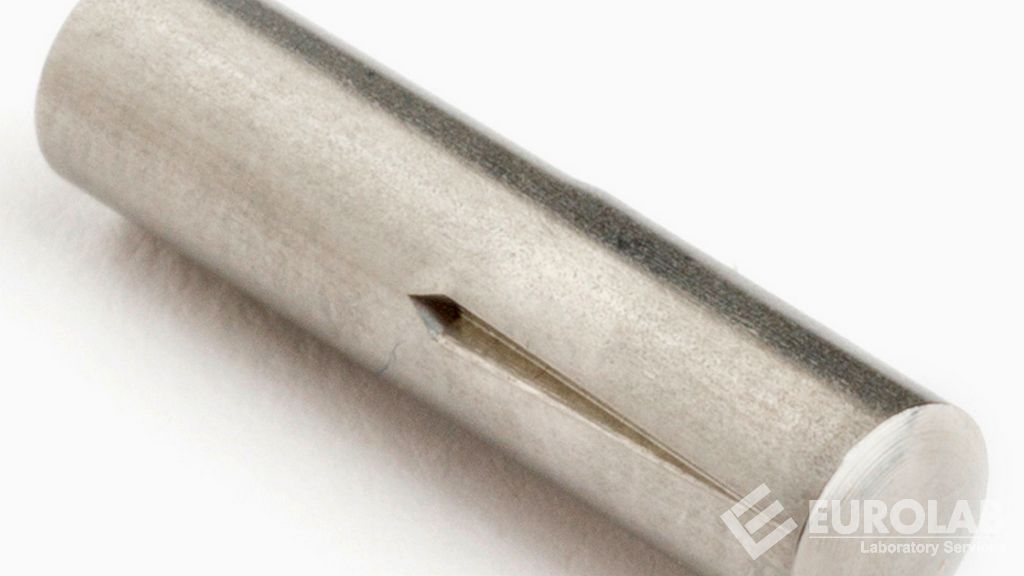
Similarly, in the ISO 8745 standard published by the International Standards Organization (ISO), half-length made of steel or austenitic stainless steel, with three equally spaced grooves, lengthwise, from 1,5 mm to 25 mm (inclusive) on their outer surfaces. length tapered grooved pins are described (ISO 8745 Grooved pins - Half-length tapered threaded). Material shifted to either side of the grooves forming an enlarged diameter with a larger nominal diameter causes a non-positive locking fit when these splined pins are forced into a drilled hole equal to the nominal diameter.
The requirements for half-length conical splines are included in the DIN 1472 standard under the following headings:
Stainless steels for DIN 1472 spring lock washers are divided into three groups: austenitic, ferritic and martensitic. Austenitic steel is by far the most common type (more than 90 percent of commercial fasteners). Steel groups and strength classes are indicated with four-digit letters and numbers as shown in the table in the standard. The DIN EN ISO 3506 standard contains the requirements for screws and nuts made of stainless steel.
Our organization, among the numerous tests, measurements, analyses, and evaluations it provides for businesses in various sectors, also offers testing services for half-length tapered threaded pins under the DIN 1472 standard and for half-length tapered threaded pins under the ISO 8745 standard, with its trained and expert staff and advanced technological equipment.
To get an appointment, to get more detailed information or to request an evaluation, you can ask us to fill in our form and reach you.

