

Washers defined in the DIN 6912 standard published by the German Standardization Institute (DIN), are precision fasteners with machine threaded cylindrical heads with an inner hexagon socket drive and are used in applications where head height clearance is limited. Unlike a standard hex socket drive, this standard features a cylindrical pilot hole at the bottom of the drive to accept a spherical structure of similar size to the end of the socket wrench, which functions to guide, align and better secure the drive in place.
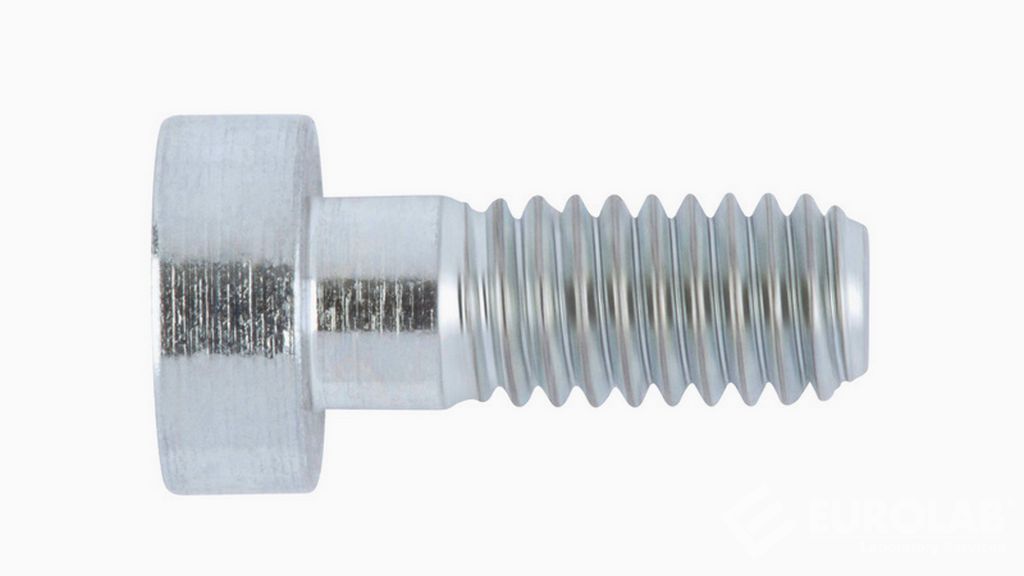
The requirements for pilot hole low socket cap screws are given in the DIN 6912 standard under the following headings:
Socket cap screws are widely used in industrial production and assembly lines, including the automotive industry, furniture manufacturing, machine tool applications and steelmaking.
These screws are a type of screw designed and manufactured with a hexagonal internal driver inserted into the head. Therefore, they are intended to be tightened and loosened with an Allen key or hex key as opposed to a conventional screwdriver.
Another common difference is that socket screws are usually square at the ends. These are often called flat head socket screws and are a feature found in many common applications.
In short, socket screws combine some of the enhanced performance features of other common hex fasteners with the convenience and ease of use of a standard format screw set. It is very comfortable to use especially in closed areas that do not have easy access to keyed hexagonal fasteners from the outside. In addition, potentially higher torque and clamping force are obtained with a socket screw as opposed to a normal screw.
Our organization, among the numerous test, measurement, analysis and evaluation studies it provides for businesses in various sectors, also provides testing services for pilot hole low socket cap screws, within the scope of DIN 6912 standard, with its trained and expert staff and advanced technological equipment.
To get an appointment, to get more detailed information or to request an evaluation, you can ask us to fill in our form and reach you.

