

Metric split pins (wedge pins), defined in the DIN 94 standard published by the German Institute for Standardization (DIN), are commonly used fasteners that hold the assemblies together. These pins are made of soft metal wire so the two resulting prongs can be inserted into a pre-drilled hole and bent to hold them in place. Cotter pins are typically made of soft metal for easy installation and removal. However, this also makes them poor locking devices when strong cutting forces are expected. Generally, diameters from M1 to M13 and up to 140 mm long are produced in steel and stainless steel.
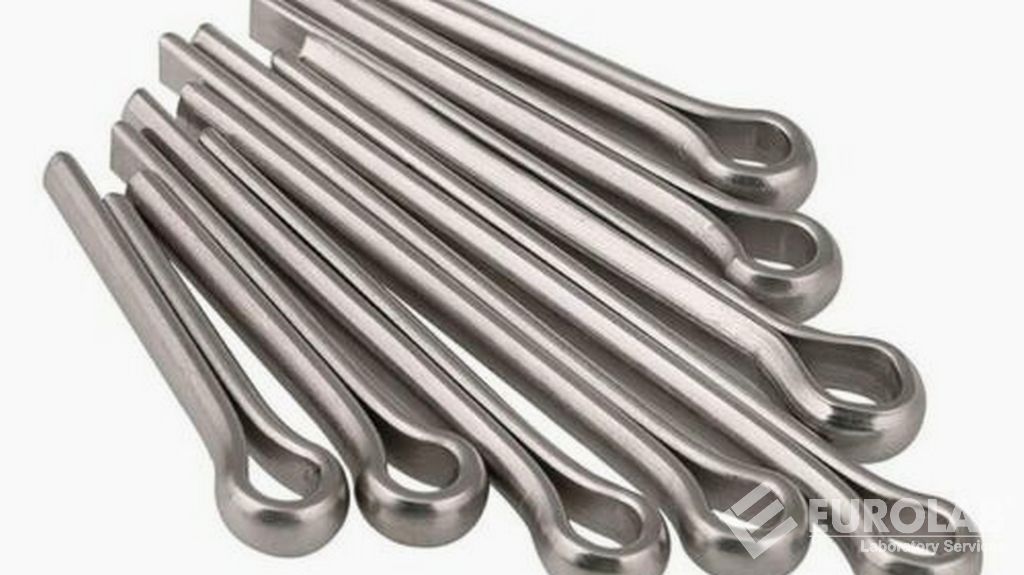
Similarly, in the ISO 1234 standard published by the International Standards Organization (ISO), the requirements for split pins are explained (ISO 1234 Split pins).
The requirements in the DIN 94 standard are under the following headings:
Metric cotter pins are a type of threadless fastener that is inserted into a hole to secure an object such as a grating nut or cotter pin in place. Cotter pins are round pins with a round head and a center split. After the cotter pin is inserted into a hole, the ends of the pin are bent to secure the pin in place. It is generally produced from non-hardened carbon steel and stainless steel.
A cotter pin (spring pin) is a metal fastener with two tabs that bend during installation, similar to a staple or rivet. Typically made of thick wire with a semicircular cross-section, split pins are produced in a variety of sizes and types. Split pins are often used to secure other fasteners such as split pins.
Our organization, among the numerous test, measurement, analysis and evaluation studies it has given for businesses in various sectors, with its trained and expert staff and advanced technological equipment, within the scope of DIN 94 standard, for split pins (wedge pins) and for split pins within the scope of ISO 1234 standard. It also provides testing services.
To get an appointment, to get more detailed information or to request an evaluation, you can ask us to fill in our form and reach you.

