

The hex socket head screws defined in the DIN 7991 standard published by the German Institute for Standardization (DIN) have flat countersunk head screws with internal hex drive suitable for hex / hex key or wrench. The internal drive is ideal where externally screwed screws are impractical, such as applications where space is limited. Also, the flat countersunk head ensures that the head is flush with the surface of the substrate.
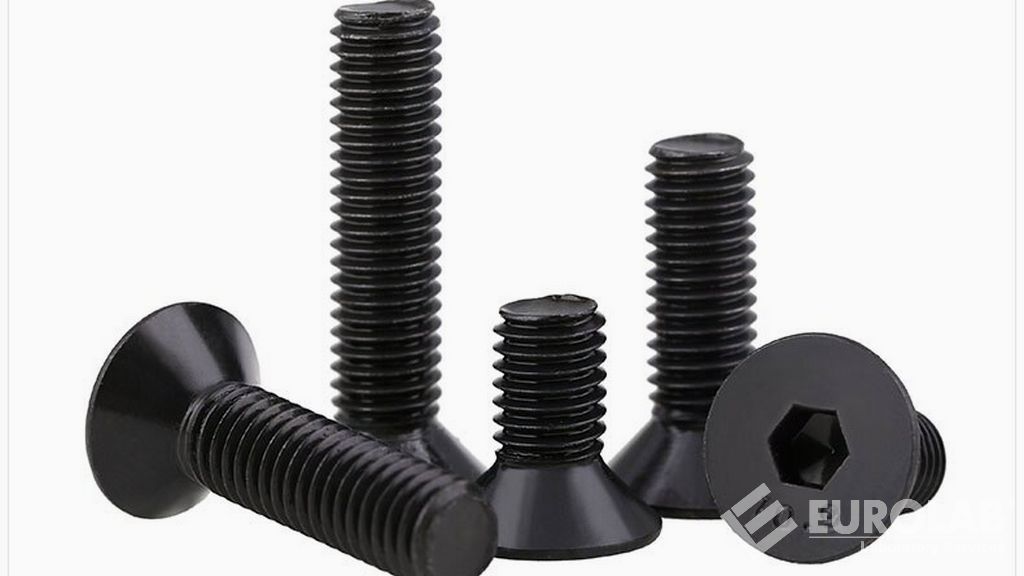
The requirements for these screws are included in the DIN 7991 standard under the following headings:
Similarly, the ISO 10642 standard published by the International Standards Organization (ISO) describes the characteristics of hex socket countersunk head screws with threads from M8.8 to M10.9, product class A and property classes 12.9, 3 and 20.
Another standard published on this subject is BS 4168, published by the British Standards Institute (BSI) . Socket head screws are typically used in machine parts, mold fixing, and clamping. Socket head screws are ideal for applications where there is not enough space to maneuver wrenches or sockets.
Flat socket head screws are threaded fasteners that taper at the bottom and a flat head at the top. These screws are designed to be used with a countersunk hole that matches the taper of the head and sit flush with the mating surface. It is turned using a hex-shaped wrench and can be tightened to much higher torque specifications than a cross-recessed or slotted drive fastener.
Among the numerous test, measurement, analysis and evaluation studies it has given for businesses in various sectors, our organization, with its trained and expert staff and advanced technological equipment, within the scope of DIN 7991 standard, for flat countersunk hex socket cap screw, within the scope of ISO 10642 standard, hexagonal recessed It also provides testing services for head screws and BS 4168 socket head screws.
To get an appointment, to get more detailed information or to request an evaluation, you can ask us to fill in our form and reach you.

