

The DIN 466 standard published by the German Standardization Institute (DIN) describes the requirements for high-type knurled nuts. Knurled nuts made of stainless steel are suitable for universal use and can be easily tightened and loosened without tools. In addition to the types defined in the DIN standard, an M12 threaded nut is also produced.
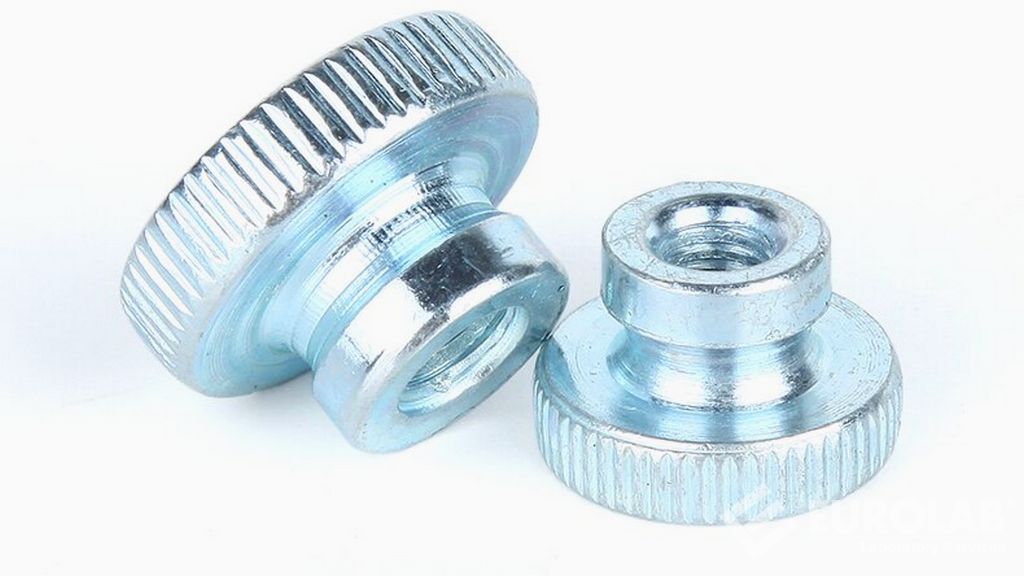
These knurled nuts are generally produced in three types:
Requirements for high type knurled nuts are included in the DIN 464 standard under the following headings:
Stainless steels are divided into three groups as austenitic, ferritic and martensitic. Austenitic steel is by far the most common type (more than 90 percent of commercial fasteners). Steel groups and strength classes are indicated with four-digit letters and numbers as shown in the table in the standard. The DIN EN ISO 3506 standard contains the requirements for screws and nuts made of stainless steel.
A knurled nut is a fastener that uses a knurled coating in place of hexagonal edges. Such a knurled nut can be loosened or tightened by hand without the need for a wrench. Knurled nuts, usually made of steel, are used in musical instruments, automobiles, electrical components and many more. Knurled nuts are also called thumb nuts. Because the circumference of the serrated surface can be easily guided by holding it between the thumb and forefinger.
A common practice in general is to use a knurled nut on a small diameter threaded rod (bolt). Larger bolts require a larger fastener and a wrench is required to loosen or tighten an appropriately sized nut.
Among the numerous test, measurement, analysis and evaluation studies it provides for businesses in various sectors, our organization also provides testing services for knurled nuts (high type) within the scope of DIN 466 standard, with its trained and expert staff and advanced technological equipment.
To get an appointment, to get more detailed information or to request an evaluation, you can ask us to fill in our form and reach you.

