

Spiral spring pins defined in the DIN 7343 standard published by the German Institute for Standardization (DIN), are also known as spiral pins. These are 2.25x rolled metal strips in roll form. These pins are used to align and fix components relative to each other. The resting diameter of the pin is larger than the hole diameter in which it will be inserted. When inserted into the hole, the spring action of the pin is compressed to fit the smaller diameter hole. The force applied to the wall of the hole tightens the seat as the pin tries to expand to the original diameter. This creates holding power against shock and vibration. The ends are chamfered to facilitate pin insertion.
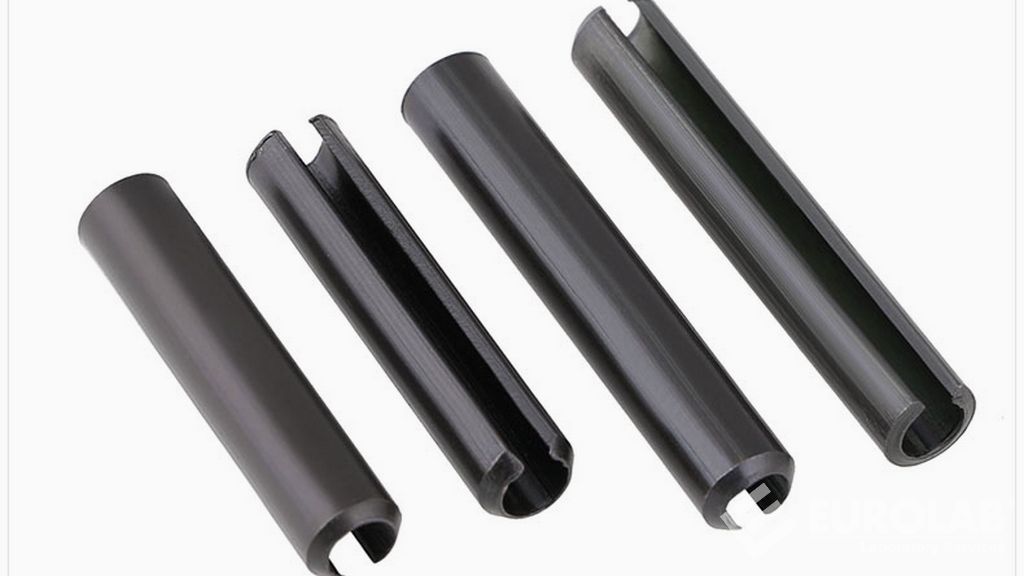
Similarly, the ISO 8750 standard published by the International Standards Organization (ISO) describes the characteristics of helical, standard-duty spring type flat pins made of steel with a nominal diameter of 0,8 mm to 20 mm or made of austenitic or martensitic stainless steel (ISO 8750). Spring type flat pins - Helical, standard duty).
In short, spring pins are a mechanical fastener that fixes the relative position of two or more parts of a machine. Spring type flat pins made of alloy steel, carbon steel and stainless steel with spring-like elastic properties are used as locking devices, positioning points, anti-friction surfaces, shafts or sleeves for wiring. Commonly known as spring pins, rolled pins or tension pins, they are hollow, cylindrical tubular style press-fit fasteners with threaded ends. Spring pins get stuck when inserted into a hole. The diameter of the pin decreases slightly as it is inserted into the hole. After assembly, elastic forces force the outer face of the pin against the inner wall of the mating hole, returning the pin to its resting state. The frictional force between the two surfaces holds the pin in place, preventing it from falling or accidentally being dislodged.
Our organization, among the numerous tests, measurements, analyses, and evaluations it provides for businesses in various sectors, also offers testing services for helical spiral spring pins under the DIN 7343 standard and for spring-type flat pins (helical, standard duty) under the ISO 8750 standard, thanks to its trained and expert staff and advanced technological equipment.
To get an appointment, to get more detailed information or to request an evaluation, you can ask us to fill in our form and reach you.

