

Hex nuts, defined in the DIN 428 standard published by the German Standardization Institute (DIN), are the most common type of nut used in general purpose tightening applications. Other types are chosen depending on the required application. Hex nuts are used when greater resistance to vibrations and torque is required. These nuts are widely used by various industries. Hex nuts are precision engineered products with superior coating and world class quality. It is uniform in structure and dimensionally correct, with fine finishing and smooth threading without any burrs.
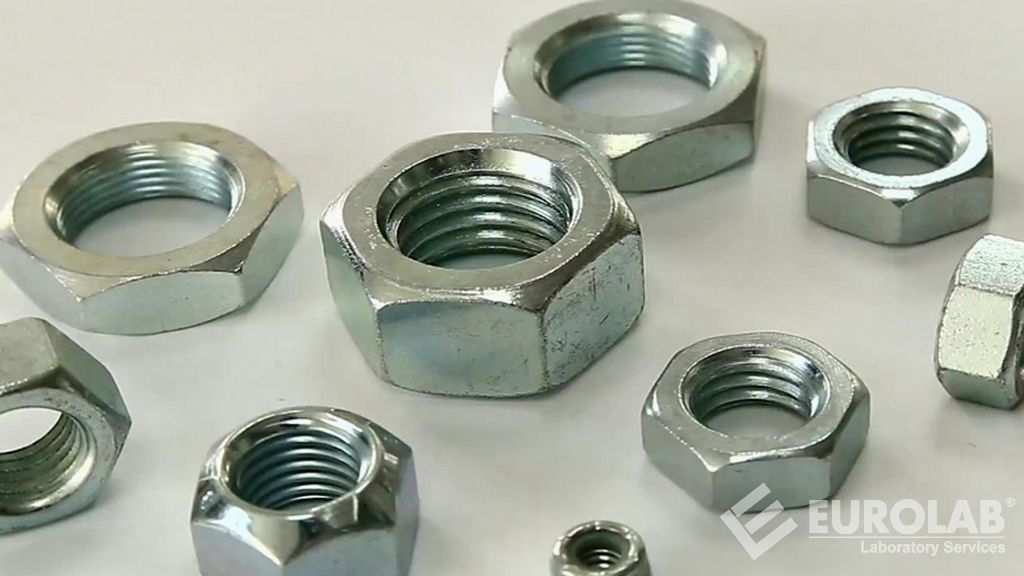
Similarly, the ISO 4034 standard published by the International Standards Organization (ISO) describes the characteristics of hexagonal regular nuts (product class C) with threads from M5 to M64 (ISO 4034 Hexagonal regular nuts, style 1 - Product class C). In special cases, if specifications other than those listed in this standard are required, international standards such as ISO 724, ISO 898-2, ISO 965-1 and ISO 4759-1 are used.
Materials such as steel, stainless steel, brass, mild steel, bronze, aluminum and titanium are used in the production of hex nuts. These nuts are generally used in machinery and equipment to fix external threaded fasteners such as bolts and screws. Suitable for most fixing and lighting applications.
The main benefits of using a hex nut are: Provides a self-locking feature, also known as a locknut. It has the most common usage area in industry and general purpose. It has a variety of nuts that fit coarse and fine threads. They are high strength mechanical fasteners. The shape of the nut provides good angle use for a tool. It also offers the maximum amount of torque and excellent grip for the user.
Our organization, among the numerous tests, measurements, analyses, and evaluations it provides for businesses in various sectors, also offers testing services for hexagonal nuts under the DIN 428 standard and for hexagonal regular nuts (product class C) under the ISO 4034 standard, with its trained and expert staff and advanced technological equipment.
To get an appointment, to get more detailed information or to request an evaluation, you can ask us to fill in our form and reach you.

