

The DIN 6797 standard published by the German Standardization Institute (DIN) describes the requirements for tooth lock washers. This standard includes two types of stamps:
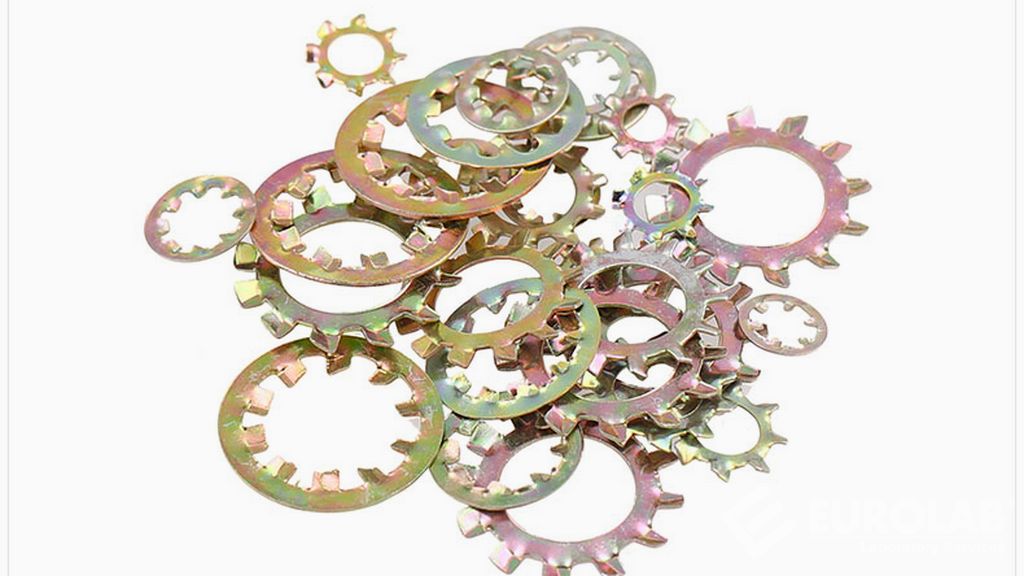
Form A has teeth that protrude from the outer edge of the washer. Form J has teeth extending inward from the inner edge of the washer. Internal thread arrangements are ideal for smaller head screws. In both cases, the teeth bite the surface of the substrate to resist any loosening forces. Flexible teeth also help absorb shock, vibration and slip.
The requirements for thread lock washers are included in the DIN 6797 standard under the following headings:
Thread lock washers (electrical contact washers) are designed to prevent bolted connections from loosening due to friction. Similar to serrated washers, thread lock washers have internal or external tooth-like serrations. They are fitted between the bolt head/nut and the mating surface , and then the bolted connection is tightened in the same way as with an unfastened nut. When the bolted joint is tightened, these teeth bite into the mating surface.
These washers work best on soft surfaces because hard surfaces flatten the teeth and prevent them from successfully biting into the surface and anchoring the joint.
An internal thread lock washer has teeth around the center hole, while an external thread lock washer has threads around the outer diameter. Both of these fasteners provide a locking mechanism that activates when the teeth bite the joint material, keeping it tight under pressure and vibration. External thread lock washers, sometimes known as star washers, must be used with larger diameter head screws and bolts to function properly.
Our organization also provides testing services for tooth lock washers within the scope of DIN 6797 standard, with its trained and expert staff and advanced technological equipment, among the numerous test, measurement, analysis and evaluation studies it provides for businesses in various sectors.
To get an appointment, to get more detailed information or to request an evaluation, you can ask us to fill in our form and reach you.

