

The EN 15283 standard, a European standard, describes definitions and requirements and provides test methods for felt-type fiber-reinforced gypsum boards.
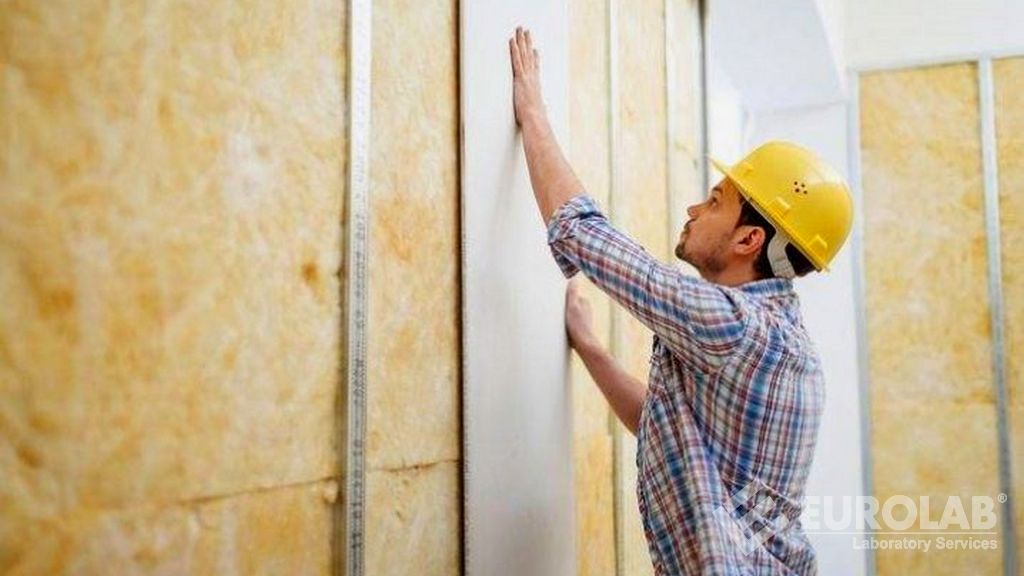
This standard covers the properties and performance of gypsum boards with mesh reinforcement intended for use in building construction, including those intended for secondary manufacturing processes. It includes boards intended for use directly as surface decoration or gypsum plaster.
The use of mat-reinforced or felt-type drywall sheets varies depending on the type, dimensions, thickness and edge profile. These sheets are used, for example, as dry cladding on walls, fixed and suspended ceilings, partitions or structural columns and beams. Other uses are for floors, ventilation ducts, smoke evacuation ducts, cable ducts and sheathing.
The EN 15283 standard mainly covers the following product performance characteristics:
However, the following performance characteristics apply to systems installed with felt-type (matt-reinforced) gypsum boards:
If needed, these tests should also be performed on mounted systems that simulate end-use conditions.
The EN 15283 standard also covers additional technical features and reference tests for these features that are important for the use and acceptance of the product by the construction industry. With these tests, the conformity of the product to this standard is evaluated.
However, this standard does not cover felt-type (matt-reinforced) gypsum boards that have undergone any secondary manufacturing process, for example insulating composite panels, thin laminated gypsum boards and similar processes.
Products within the scope of EN 520 or EN 13815 standards are outside the scope of this standard.
In the EN 15283 standard, the requirements are organized under the following headings:
1. Mechanical properties
2. Fire behavior
3. Acoustic features
4. Water vapor permeability (expressed as water vapor resistance factor)
5. Thermal resistance (expressed as thermal conductivity)
6. Hazardous substances
7. Dimensions and tolerances
The test methods offered in the EN 15183 standard are as follows:
Among the numerous test, measurement, analysis and evaluation studies it provides for businesses in various sectors, our organization also provides testing services for gypsum boards reinforced with felt type fibers within the scope of EN 15283 standard, with its trained and expert staff and advanced technological equipment.
To get an appointment, to get more detailed information or to request an evaluation, you can ask us to fill in our form and reach you.

