

Thumbscrews defined in the DIN 316 standard published by the German Standardization Institute (DIN) have two wing-like protrusions protruding from the head of the screw. This unique design makes it possible to use the thumb and index finger to turn and tighten the screw instead of a wrench or other tool, allowing easy quick assembly and disassembly with fingers only. Wing screws according to that standard are fully threaded and are used for many applications where fast hand tightening and clamping are required.
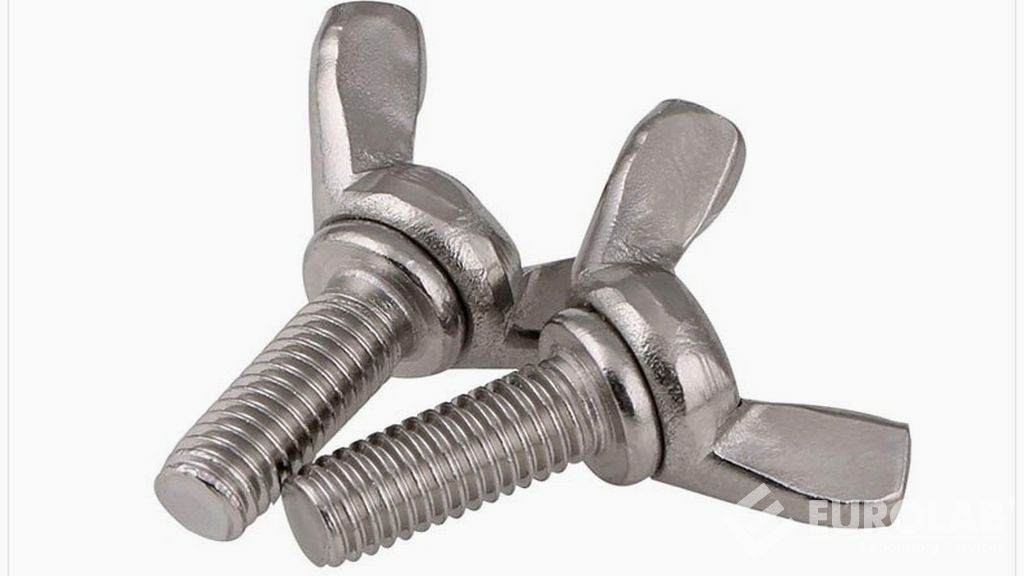
Requirements for wing screws are included in the DIN 316 standard under the following headings:
Stainless steels are divided into three groups as austenitic, ferritic and martensitic. Austenitic steel is by far the most common type (more than 90 percent of commercial fasteners). Steel groups and strength classes are indicated with four-digit letters and numbers as shown in the table in the standard.
The austenitic group is a higher quality steel group that is used in greater quantities than other stainless steel categories. Austenitic stainless steels have superior corrosion resistance to both ferritic and martensitic stainless steels. Stainless steel is a versatile engineering material chosen primarily for its corrosion and heat resistant properties.
The use of austenitic group stainless steel is as follows:
All stainless steels contain primarily iron and a minimum of 10,5 percent chromium. Chromium reacts with the oxygen and moisture in the environment and forms a protective oxide film that covers the entire surface of the material.
Our organization also provides testing services for fasteners and wing screws within the scope of DIN 316 standard, with its trained and expert staff and advanced technological equipment, among the numerous test, measurement, analysis and evaluation studies it provides for businesses in various sectors.
To get an appointment, to get more detailed information or to request an evaluation, you can ask us to fill in our form and reach you.

