

The DIN 977 standard, published by the German Institute for Standardization (DIN), describes the requirements for flanged hexagonal weld nuts.
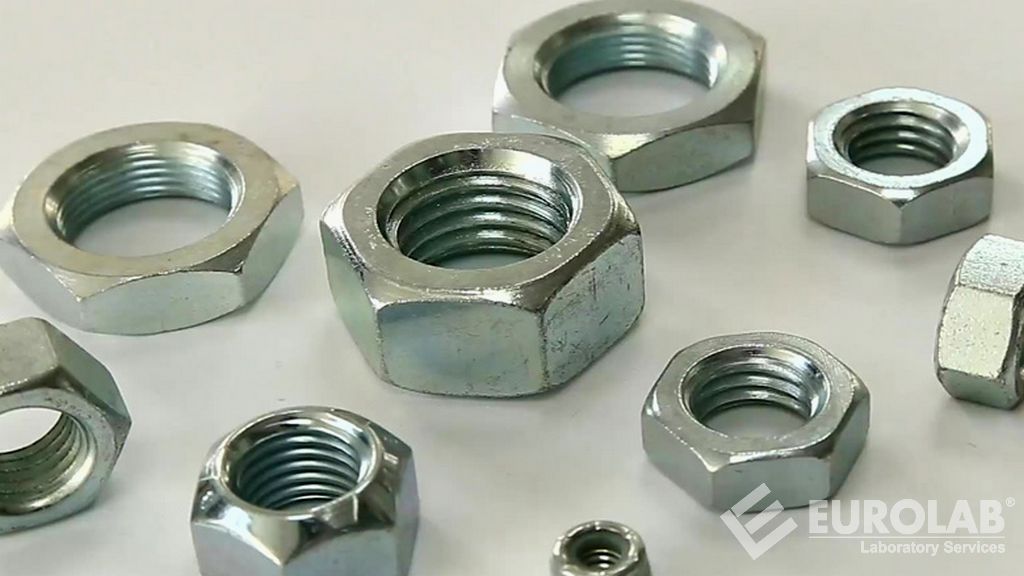
Similarly, the ISO 21670 standard, published by the International Organization for Standardization (ISO), describes the specifications for flanged hexagonal weld nuts of product class A with sizes M5 to M16 (coarse thread) or 8 mm to 16 mm (fine pitch) (ISO 21670 Fasteners - Flanged hexagonal weld nuts). Weld nuts conforming to this standard are suitable for use with bolts of specification classes up to 10.9 according to the ISO 898-1 standard.
The requirements in the DIN 977 standard are under the following headings:
Flange nuts are used in the construction of vehicles, machines, and equipment to close long holes. These nuts meet the most demanding requirements. For example, they are particularly suitable for minimizing the flattening of soft, thin bearing surfaces or for closing large holes, and also in applications where a nut is replaced by an additional washer. Hexagonal nuts are found in almost all everyday equipment . Their application areas are virtually limitless. Hexagonal nuts reliably hold together things that belong together in countless ordinary objects.
Flanged hex weld nuts are generally produced from carbon steel and stainless steel. Austenitic steel is a type of austenitic stainless steel. It contains a high percentage of nickel and chromium and provides great strength and corrosion resistance.
A weld nut is a type of nut specially designed to be welded to another workpiece. Different types of welding nuts are used for different purposes.
Our organization, among the numerous test, measurement, analysis and evaluation studies it has given for businesses in various sectors, with its trained and expert staff and advanced technological equipment, within the scope of the DIN 977 standard, for flanged hexagonal weld nuts and within the scope of ISO 21670 standard, fasteners, flanged hexagon It also provides testing services for welding nuts.
To get an appointment, to get more detailed information or to request an evaluation, you can ask us to fill in our form and reach you.

