

UN ECE R113 tests cover a series of tests carried out in accordance with the relevant regulation for the evaluation of L and T category vehicles in terms of headlights.
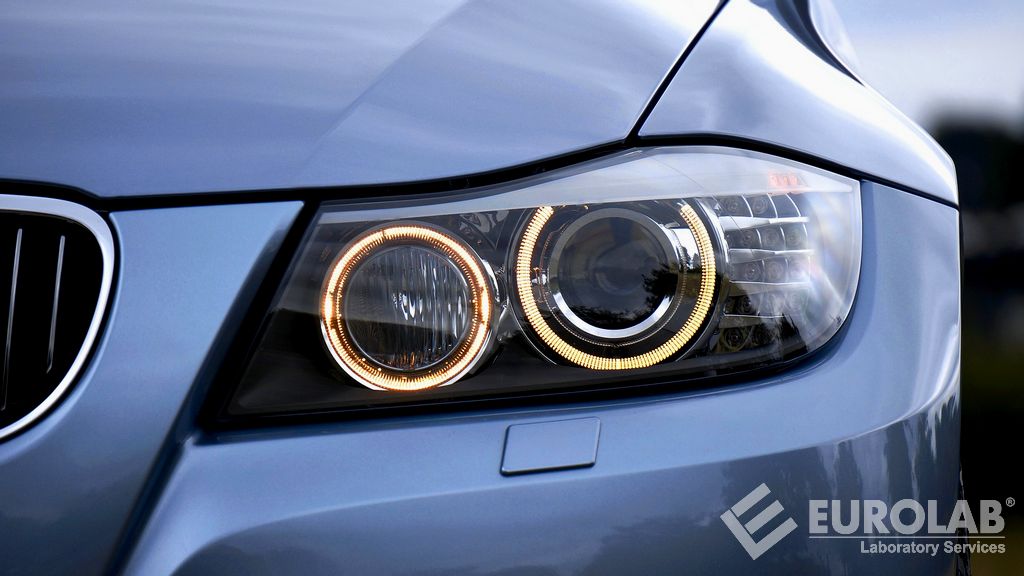
ECE regulations define cross-border technical regulations for establishing approval or uniform approval procedures for motor vehicles and motor vehicle parts. Automated commercial vehicles are already fully eligible for approval only through appropriate individual measures in the country in which they will be used. What is missing is a set of rules at the international ECE level.
Regulation 113 of the United Nations Economic Commission for Europe (UN/ECE) — Uniform provisions on the approval of filament, gas-discharge light sources or LED modules emitting a symmetrical low beam or high beam, or both, and the associated tests covers.
This Regulation applies to headlights for vehicles of category L and T. Headlights must be constructed in such a way that they retain their prescribed photometric properties and remain in good working order in normal use despite the vibrations to which they may be subjected.
A device shall be fitted to the headlights that allows them to be adjusted to comply with the rules applicable to vehicles. Such a device may or may not provide horizontal adjustment, provided that the headlights are designed to maintain smooth horizontal aiming even after vertical aiming adjustment. Such a device need not be fitted to units where the reflector and diffuser lens cannot be separated, provided it is limited to vehicles where the headlight adjustment can be adjusted in other ways.
When a low-beam headlight and a high-beam headlight are installed to form a combined unit, each equipped with its own filament lamp(s), gas-discharge light source or LED module(s), the adjusting device must provide: each optic individually so that the system is duly adjusted.
However, these provisions do not apply to headlight assemblies whose reflectors are indivisible. For this type of installation, the conditions in paragraph 6.3 of this Regulation apply. Approval is given if all samples of a type of headlight submitted for approval meet the provisions of this regulation.
Within the scope of the regulation, many mechanical, dynamic and environmental tests are carried out as well as measurements for the approval of the relevant equipment. For tests to be considered successful, test results must meet regulatory requirements.
To get an appointment, to get more detailed information or to request an evaluation, you can ask us to fill in our form and reach you.

