

UN ECE R94 tests cover a series of tests carried out in accordance with the relevant regulation for the evaluation of passenger safety in the event of a frontal collision of M2,5 category vehicles with a total mass not exceeding 1 tons.
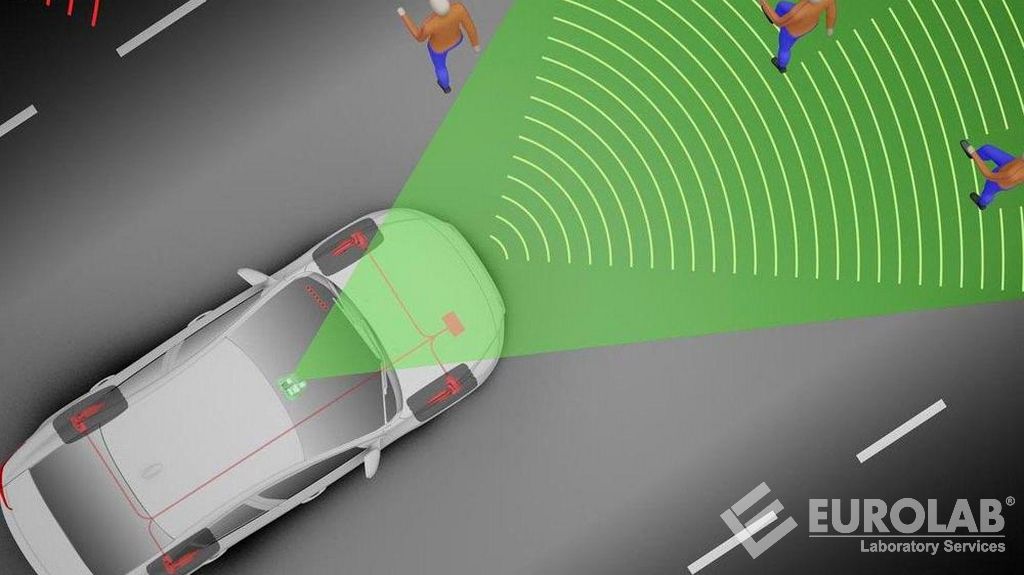
ECE regulations define cross-border technical regulations for establishing approval or uniform approval procedures for motor vehicles and motor vehicle parts. Automated commercial vehicles are already fully eligible for approval only through appropriate individual measures in the country in which they will be used. What is missing is a set of rules at the international ECE level.
Regulation 94 of the United Nations Economic Commission for Europe (UN/ECE) — Covers the uniform provisions regarding the approval of vehicles for the protection of passengers in the event of a frontal collision and the tests applied accordingly.
The purpose of this Regulation is to provide effective protection for vehicles of category M 1 or N 1 against running off the road of vehicles specified in this regulation in the event of a frontal collision. 'Protective system' means interior fittings and devices designed to restrain occupants and contribute to ensuring compliance with specified requirements.
The test area set up for testing should be large enough to accommodate the egress, barrier and technical setups required for testing. The last part of the course will be horizontal, flat and smooth at least 5 m before the barrier.
The front face of the barrier consists of a deformable structure as defined in Annex 9 of this Regulation. The front face of the deformable structure is perpendicular to the direction of movement of the test tool within ± 1°. The barrier is fixed to a mass of not less than 1 × 7 10 whose front face is vertical within ± 4°. The mass is fixed to the floor or, if necessary, placed on the floor with additional stopping devices to restrict its movement.
The barrier is oriented so that the vehicle's first contact with the barrier is on the steering column side. If a choice is made between carrying out the test with a right-hand drive or a left-hand drive vehicle, the test shall be carried out with the less favorable steering wheel, as determined by the technical service responsible for the tests. The vehicle must overlap the barrier surface by 40 ± 20 mm.
The test vehicle shall represent mass production, contain all normally fitted equipment, and be in normal operating order. Some components may be replaced by equivalent masses where they do not have a significant effect on the measured results.
Within the scope of the regulation, many mechanical, dynamic and environmental tests are carried out as well as measurements for the approval of the relevant equipment. For tests to be considered successful, test results must meet regulatory requirements.
To get an appointment, to get more detailed information or to request an evaluation, you can ask us to fill in our form and reach you.

