

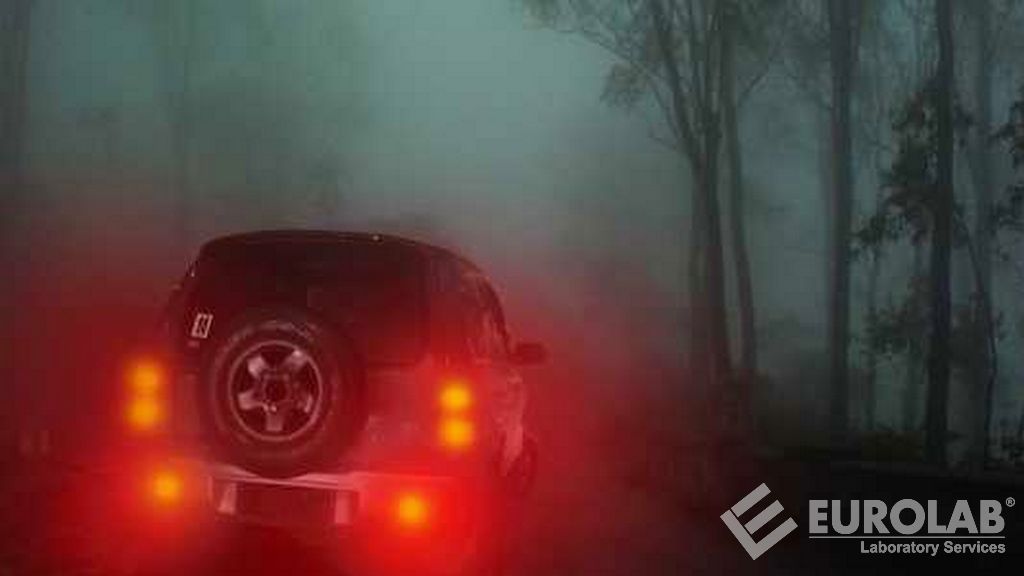
UN ECE R38 tests cover a series of tests carried out in accordance with the relevant regulation for the evaluation of vehicles in categories L3, L4, L5, L7, M, N, O and T in terms of rear fog lamps.
ECE regulations define cross-border technical regulations for establishing approval or uniform approval procedures for motor vehicles and motor vehicle parts. Automated commercial vehicles are already fully eligible for approval only through appropriate individual measures in the country in which they will be used. What is missing is a set of rules at the international ECE level.
Regulation 38 of the United Nations Economic Commission for Europe (UN/ECE) — It covers the uniform provisions regarding the approval of rear fog lamps for electric vehicles and their trailers and the tests applied accordingly.
According to the regulation, 'Rear fog lamp' means a lamp used to make the vehicle easier to see from behind by giving a more intense red signal than the rear position (side) lamps. Rear fog lamps must be designed and constructed in such a way that, in normal use, they will continue to operate satisfactorily and maintain the characteristics set forth in this Regulation, despite the vibration to which they may be subjected.
All measurements will be made photometrically and colorimetrically. In the case of a lamp with a replaceable light source, it is supplied with the voltage necessary to produce it, by a colorless or colored standard filament lamp of the category prescribed for the device, unless the electronic light source is provided by the control device or the variable intensity control.
In the case of a lamp equipped with non-replaceable light sources (filament lamps and others), it is rated at 6,75 V, 13,5 V or 28,0 V, respectively.
The lamp should be tested for one hour of continuous operation after a 20-minute warm-up period. The ambient temperature will be 23 °C ± 5 °C. The lamp used must be of the category prescribed for the lamp and must be supplied with a current at a voltage that will give the average power specified at the relevant test voltage.
Where only the maximum power is specified, the test should be performed by regulating the voltage to obtain a power equal to 90 percent of the specified power. The indicated average or maximum power referred to above should in any case be chosen from the voltage range of 6, 12 or 24 V, where it reaches its highest value.
In the case of light sources operated by an electronic control gear to produce variable luminous intensity, the test shall be carried out under given conditions at at least 90 percent of the higher luminous intensity.
No distortion, deformation, cracking or discoloration should be detected after the lamp has been stabilized at ambient temperature.
For tests to be considered successful, test results must meet regulatory requirements.
To get an appointment, to get more detailed information or to request an evaluation, you can ask us to fill in our form and reach you.

