

UN ECE R13 tests cover a series of tests carried out in accordance with the relevant regulation for the evaluation of the braking mechanism of vehicles in categories M2 , M3 , N and O.
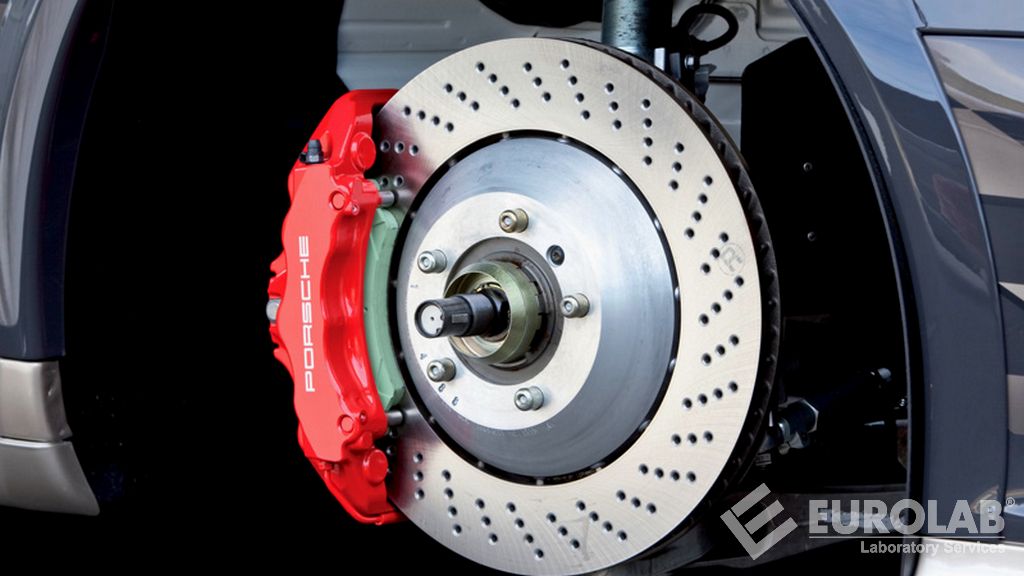
ECE regulations define cross-border technical regulations for establishing approval or uniform approval procedures for motor vehicles and motor vehicle parts. Automated commercial vehicles are already fully eligible for approval only through appropriate individual measures in the country in which they will be used. What is missing is a set of rules at the international ECE level.
Regulation 13 of the United Nations Economic Commission for Europe (UN/ECE) — Covers the uniform provisions for the approval of vehicles in categories M, N and O with regard to braking and the tests applied accordingly.
According to UN ECE R13 regulation, 'approval of a vehicle' means that the vehicle has been approved by successfully passing all tests regarding braking. According to the regulation 'Brake system' means a combination of parts whose function is to gradually reduce or stop the speed of a moving vehicle or to keep it stationary if it has already been stopped.
The 'brake' is the part where the forces against the vehicle's motion develop. It can have different forms such as friction brake, electric brake, liquid brake or engine brake. The application for approval of a vehicle type with respect to braking is made by the vehicle manufacturer or its duly accredited representative.
A vehicle representing the vehicle type to be approved is submitted to the technical service after approval tests. If the type of vehicle submitted for approval in accordance with the regulation meets the specified conditions, the approval of that vehicle type is given.
The predicted performance for braking systems is dependent on stopping distance and/or fully developed average deceleration. The performance of a braking system should be determined by measuring the stopping distance relative to the vehicle's initial speed and/or by measuring the average fully developed deceleration during the test.
The stopping distance is the distance the vehicle travels from the moment the driver starts activating the brake system to the moment the vehicle stops; the initial speed will be the speed at which the driver begins to actuate control of the brake system; the initial velocity shall not be less than 98 percent of the velocity prescribed for the test in question.
Speed and distance should be determined using instrumentation with an accuracy of ± 1 percent at the speed prescribed for testing. Average fully developed deceleration can be determined by other means than measuring speed and distance; in this case, the accuracy of the fully developed average deceleration should be within ± 3 percent.
For tests to be considered successful, test results must meet regulatory requirements.
To get an appointment, to get more detailed information or to request an evaluation, you can ask us to fill in our form and reach you.

